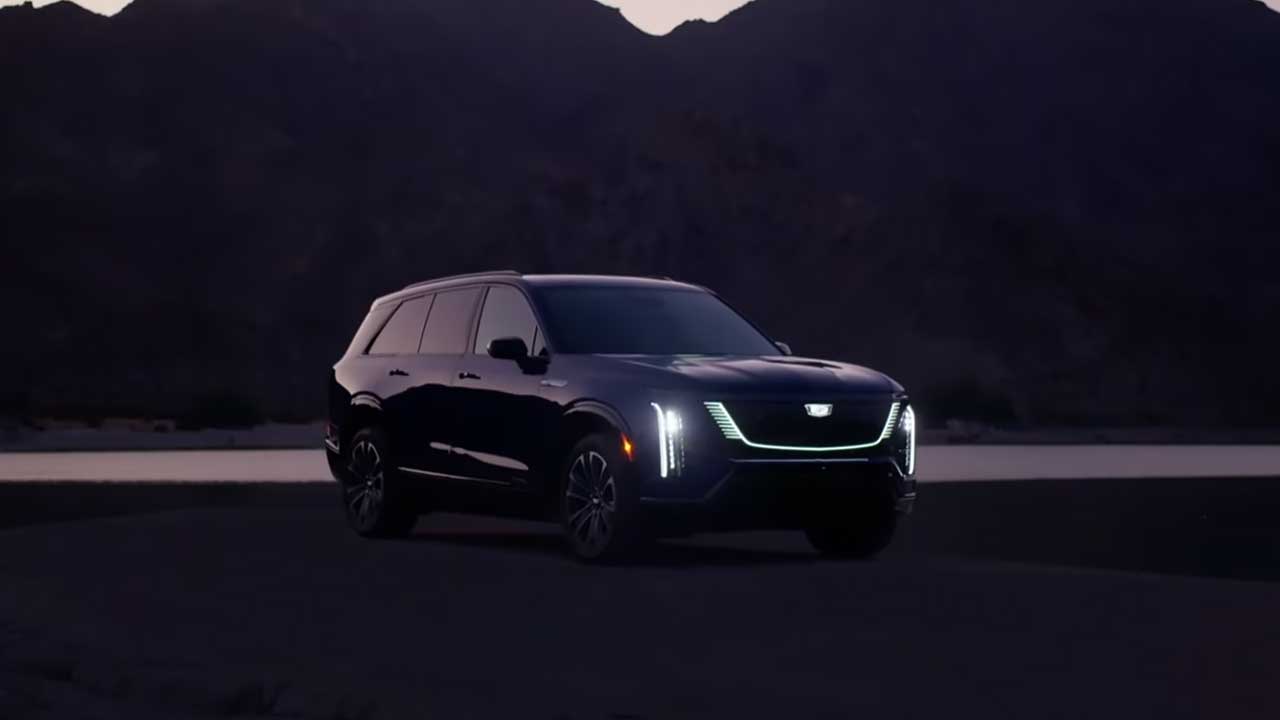

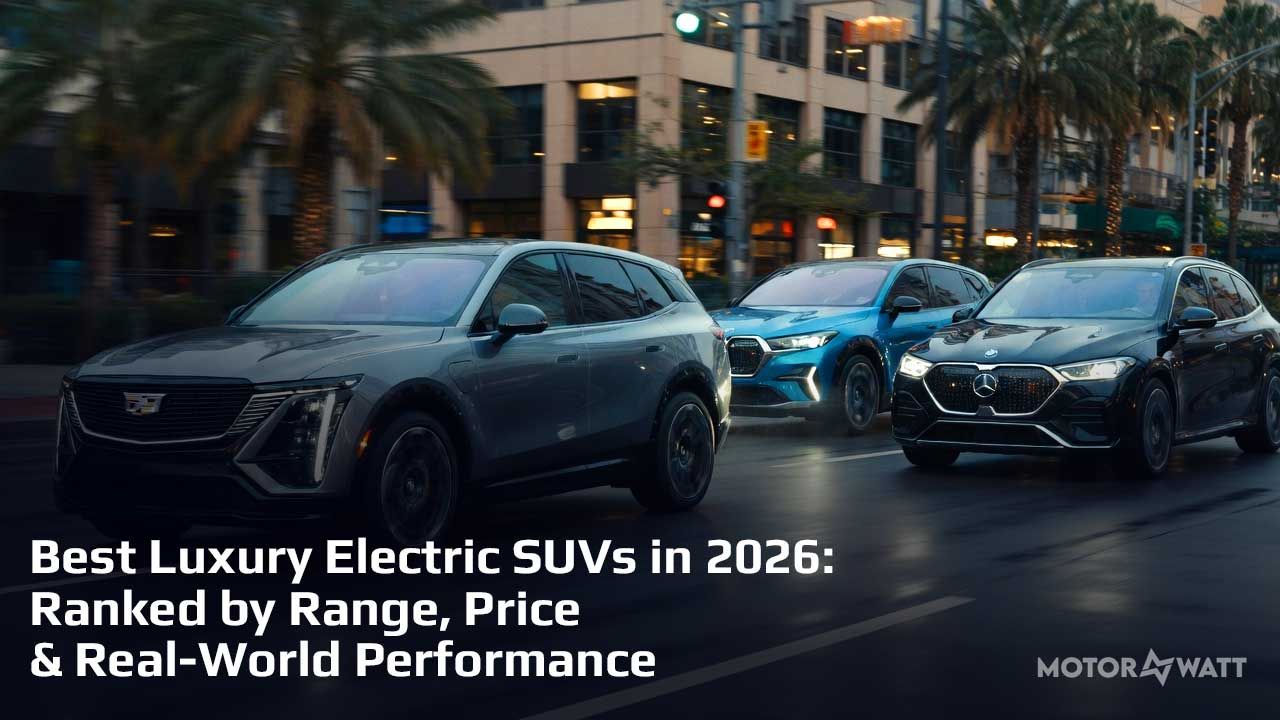
The luxury electric SUV market has reached a tipping point in 2026. Range anxiety is mostly solved — a dozen models now exceed 300 miles on a charge — and you can walk into a Cadillac or BMW dealer tomorrow and drive away in a genuinely luxurious electric SUV for under $60,000. The harder question isn't whether to go electric in the luxury segment. It's which one actually fits your life. This guide cuts through the noise: real specs, honest verdicts, and direct links to live inventory.
The best luxury electric SUVs right now: our top picks
Let's get to the verdict first. If you search "best luxury electric SUV" and dig through the results, you'll find a dozen ranked lists that mostly recycle the same five talking points from press releases. So here's what the data and real-world driving actually show in mid-2026.
The Cadillac Lyriq is the best value luxury electric SUV under $60,000. It's not close. For around $58,000, you get 314 miles of EPA-rated range, a genuinely premium interior with a 33-inch diagonal display, and DC fast charging at 190 kW that adds about 76 miles in 10 minutes. GM's Ultium platform has matured, and the Lyriq is where it shows.
The BMW iX xDrive50 takes the range crown among mainstream luxury SUVs at 324 miles EPA-rated, with 195 kW DC fast charging. It's softer to drive than you'd expect from a BMW — more GT car than sport SUV — but the interior is exceptional and the WLTP range of 380+ miles (611+ km) makes European road trips genuinely relaxed. Starting price around $88,000.
If performance is the priority, the Porsche Cayenne Turbo E-Hybrid hits 0-60 mph in 3.4 seconds while delivering real-world EV-only range of 50+ miles for daily commutes. Yes, it's a plug-in hybrid, not a full BEV — but at $172,000 and up, Porsche's approach to electrification is the most driver-focused in this segment.
For families who need a third row, the picture changed meaningfully when the Hyundai IONIQ 9 launched in early 2026 with a 335-mile EPA range estimate and seating for seven. We'll cover it in detail below.
Best overall: Cadillac Lyriq
The Lyriq does something rare in the luxury EV space: it's genuinely competitive at its price point without feeling like a compromise. The 102 kWh battery delivers 314 miles EPA-rated. Charging at up to 190 kW means a 10-80% charge in about 28 minutes on a DC fast charger. The one-pedal driving mode is strong enough to handle most stop-and-go traffic without touching the brake pedal.
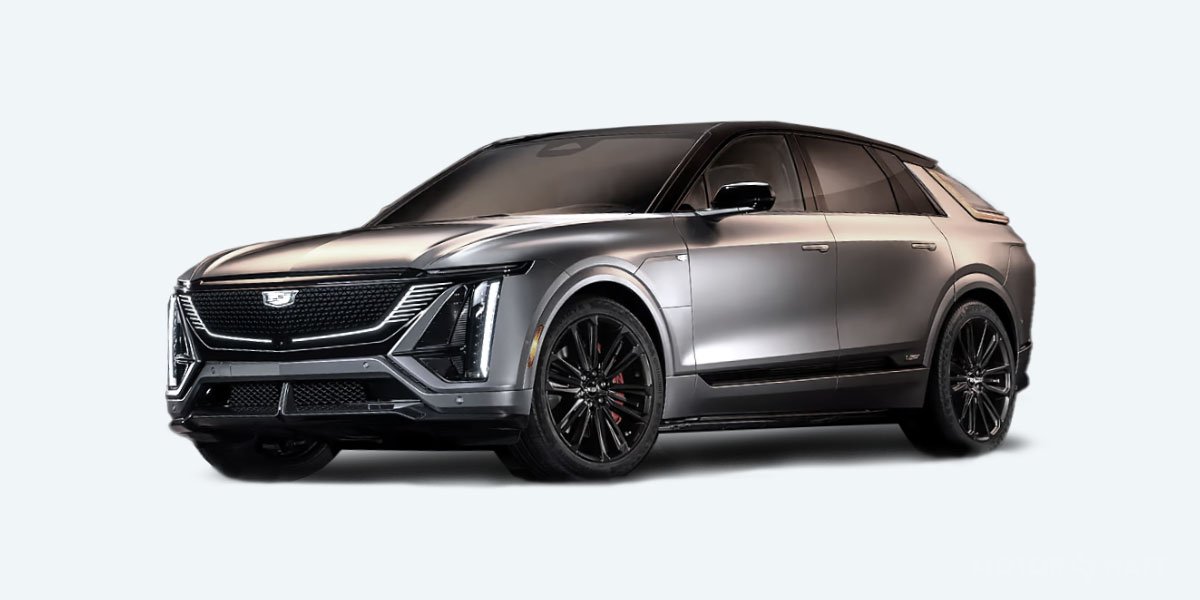
Where GM cut costs is mostly invisible — the suspension tuning (magnetic ride control on higher trims) is excellent, the sound deadening is thorough, and the cabin materials are legitimately premium. The main caveat: the infotainment system still has occasional lag, and Cadillac's charging network reliability trails Tesla's by a meaningful margin. If you're not near a reliable EA or EVgo station, plan ahead.
- MSRP: from $58,595
- EPA range: 314 miles / 505 km
- 0–60 mph: 4.9 sec (RWD) / 3.8 sec (AWD)
- Max DC charge rate: 190 kW
- Seats: 5
Best range: BMW iX xDrive50
The iX xDrive50 has been out since 2022, but the 2026 model year brought an updated battery chemistry that nudged EPA range to 324 miles. That's the best figure in the mainstream luxury SUV segment — only the Lucid Gravity (a purpose-built range machine priced accordingly) goes further.
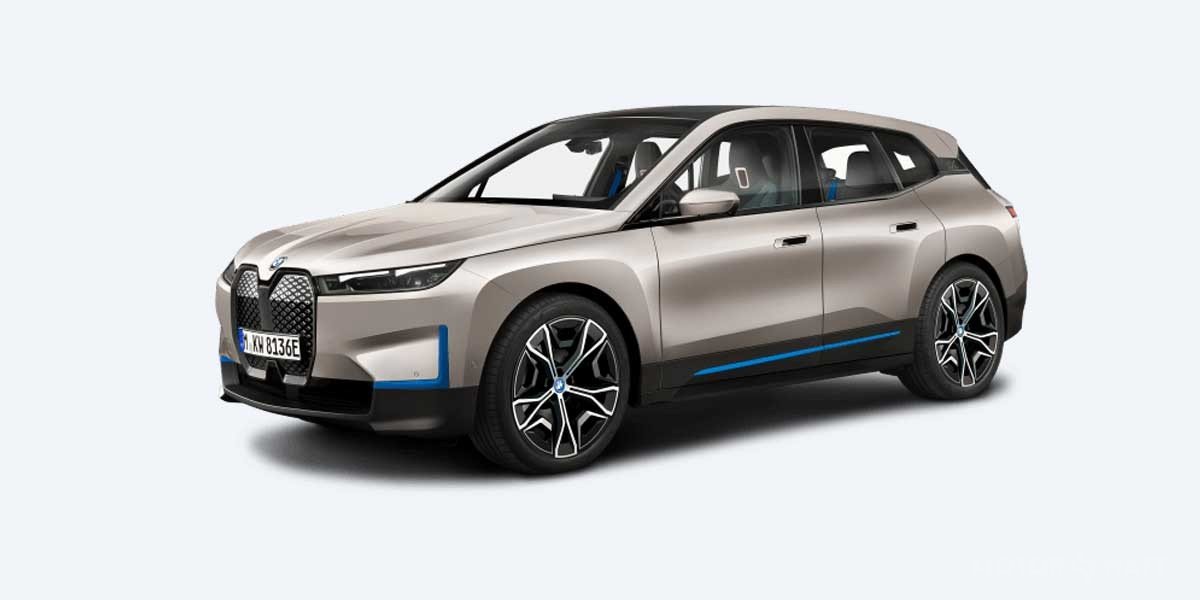
BMW's approach to the iX was deliberately different from the rest of its lineup. The interior uses sustainable materials, the dash is uncluttered to the point of sparse, and the driving experience prioritizes comfort over sport. If you drove an iX expecting it to feel like a 5 Series with a battery, you'd be disappointed. If you drove it expecting a premium touring machine, you'd be satisfied.
- MSRP: from $88,100
- EPA range: 324 miles / 521 km
- 0–60 mph: 4.6 sec
- Max DC charge rate: 195 kW
- Seats: 5
Best value luxury: Kia EV9
The EV9 is the quiet overachiever of this segment. At around $55,000–$75,000 depending on trim, it's priced as a premium SUV rather than luxury — but the 2026 GT-Line and GT trims have interior quality that genuinely competes with brands charging $20,000 more. More importantly, it's one of only a handful of electric SUVs that reliably seats seven adults with usable third-row legroom.
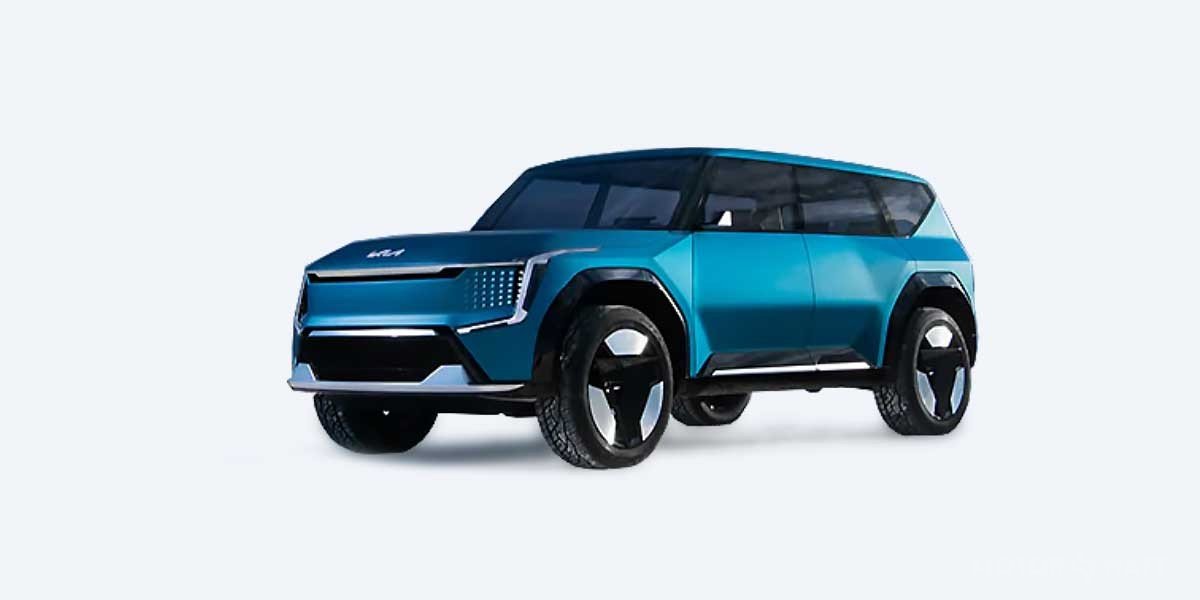
Range is 304 miles EPA-rated (RWD long range), and the 800V architecture means 240 kW DC charging — 10-80% in about 24 minutes. The EV9 also supports vehicle-to-load (V2L) power export, which is genuinely useful for camping or powering a worksite. Kia's 10-year/100,000-mile powertrain warranty is the best in class.
- MSRP: from $55,900
- EPA range: 304 miles / 489 km (RWD LR)
- 0–60 mph: 6.0 sec (RWD) / 4.5 sec (AWD)
- Max DC charge rate: 240 kW (800V)
- Seats: 6 or 7
Best ultra-luxury: Mercedes-Benz EQS SUV
The EQS SUV (450+ or 580 4MATIC) occupies a different category from everything else on this list. Starting at $105,000 and rising past $130,000 with the Hyperscreen option, it's the electric equivalent of a GLS — a proper chauffeur-grade large SUV with a drag coefficient of 0.26 Cd (better than most sedans). EPA range runs 305–350 miles depending on trim. The MBUX Hyperscreen — a single 56-inch glass surface spanning the full dashboard — remains the most dramatic interior statement in any production vehicle.
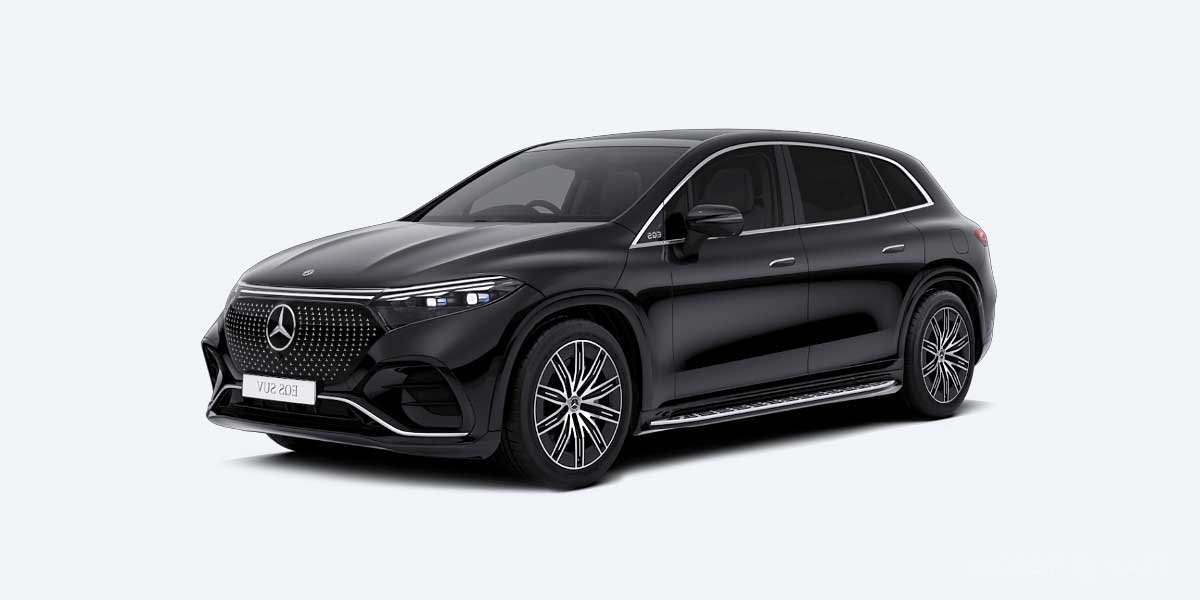
The EQS SUV isn't for the driver. It's for whoever sits in the rear seats, where the air suspension, massaging seats, and near-silent cabin create a genuinely transport-class experience. If that's what you need, nothing else at any price quite matches it.
- MSRP: from $105,400
- EPA range: 305–350 miles / 491–563 km
- 0–60 mph: 4.0 sec (580 4MATIC)
- Max DC charge rate: 200 kW
- Seats: 7
What makes a luxury electric SUV worth paying more for?
The gap between a $45,000 Volkswagen ID.4 and an $88,000 BMW iX isn't 2x the car. In a combustion vehicle, you're paying for a more powerful engine, better transmission, and mechanical complexity. In an EV, the powertrain is simpler and cheaper to build. So what are you actually buying? For a deeper look at how EVs compare on total ownership cost, see our EV vs gas car cost comparison.
Range and charging speed benchmarks for the luxury segment
Anything positioning itself as luxury in 2026 should deliver at least 280 miles EPA-rated range and support DC fast charging at 150 kW or above. Below 280 miles, range anxiety is still a real consideration on longer trips. Below 150 kW charging, a road trip stop stretches from 25 minutes to 45 minutes, which becomes noticeable quickly.
The 800V architecture divide is worth understanding. Kia EV9, Hyundai IONIQ 9, Porsche Taycan, and Audi Q8 e-tron are all 800V platforms — they can accept 240–300 kW charging at stations equipped to deliver it. Most other luxury EVs are 400V platforms capable of 150–200 kW. The practical difference on a road trip: 10-80% in 24 minutes (800V) vs. 30–38 minutes (400V). Over a 600-mile drive with two stops, that's roughly 30 minutes.
Interior tech, materials, and ride quality
This is where the luxury premium actually lives. Premium leather, real wood or aluminum trim, acoustic glass, active noise cancellation, and massage seats are the physical markers. But the softer factors matter more: how the seats position you after a 3-hour drive, how well the climate system eliminates drafts, whether the displays are readable in bright sunlight without squinting.
BMW, Mercedes, and Cadillac all do this well. Volvo (EX90) does it differently — simpler, Scandinavian, less maximalist — and many buyers prefer it. The Kia EV9 GT-Line does it surprisingly well at a lower price point. The Tesla Model X still has a genuinely excellent interior but lags the German brands on material quality and fit-and-finish.
DC fast charging speed: which luxury SUVs charge fastest
Maximum accepted DC charge rate (kW). Higher = faster charging stop. Sources: manufacturer specifications, 2026 model year.
Best 3-row and 7-seater luxury electric SUVs
There are seven-seat electric SUVs available in 2026. Six of them are real. One of them (the Tesla Model X) technically has a third row but the seats fold up from the cargo floor in a way that only works for children on short trips.
The genuine 3-row luxury EVs for 2026 are the Kia EV9, Hyundai IONIQ 9, Rivian R1S, Mercedes EQS SUV 450+, and — if you define luxury loosely — the Volvo EX90. Here's what actually distinguishes them.
Hyundai IONIQ 9: the new benchmark
The IONIQ 9 arrived in early 2026 and immediately reset what a 3-row electric SUV can do. On Hyundai's 800V E-GMP platform, it accepts up to 350 kW DC charging — the highest of any SUV in this segment. The third row has 38 inches of legroom (versus 32 inches in the EV9), which is actually usable by adults on trips under two hours. EPA range is estimated at 335 miles. Pricing starts around $65,000.
The IONIQ 9 is also wider than the EV9, which means three adults can sit in the second row without shoulder-to-shoulder contact. For larger families, that matters more than almost any spec on the sheet. MOTORWATT will update this guide as final EPA certification and real-world range data become available.
Kia EV9: still the value pick in 3-row
The EV9 remains the most practical 3-row luxury EV at its price point. The difference from the IONIQ 9 is mostly cabin size and charging speed — EV9's third row is tighter, and 240 kW vs. 350 kW makes a difference on a long family road trip. But the EV9 is around $10,000 cheaper, has the same excellent 800V architecture, and comes with Kia's class-leading warranty. For most families, it's still the right call.
Rivian R1S: off-road luxury with a third row
The R1S is unique in this segment: a genuine luxury SUV with genuine off-road capability. Air suspension, underbody protection, Rivian's Adventure Network (now available to other EVs via adapter), and a 321-mile EPA range make it the best choice if you split time between school runs and trail access. The third row is functional for children and teenagers on extended trips. Starting at $75,900 for the Dual-Motor configuration.
One thing worth noting about Rivian: over-the-air updates have meaningfully improved charging speeds and range since the R1S launched. The company's direct-sales model means software updates roll out faster than at traditional dealers. The 2026 model year R1S with the large pack also accepts up to 220 kW — a significant improvement from the 140 kW cap on older units.
Tesla Model X: the original, still relevant
The Model X has been the default 7-seat luxury EV recommendation for years, and it still earns that slot for specific use cases. The Plaid version's 2.5-second 0-60 time is genuinely absurd. Supercharger network access remains the best charging reliability of any EV brand in the US. And the falcon-wing doors, which seemed like theater when the car launched in 2015, turn out to be genuinely useful with car seats when parallel parked.
The caveat: the Model X is the oldest design in this segment and shows it. The interior lacks the material quality of comparable Mercedes, BMW, or Cadillac products, and the minimalist controls have frustrated enough owners that Tesla added back a stalk for the turn signals in 2024. At $79,990 for the Long Range AWD, it's priced competitively — but if interior quality is the priority, newer rivals do it better.
Luxury electric SUVs: full comparison table
|
Model
| |||||
|---|---|---|---|---|---|
|
Cadillac Lyriq
|
|||||
|
BMW iX xDrive50
|
|||||
|
Kia EV9 GT-Line
|
|||||
|
Hyundai IONIQ 9
|
|||||
|
Rivian R1S (Dual)
|
|||||
|
Tesla Model X LR AWD
|
|||||
|
Mercedes EQS SUV 450+
|
|||||
|
Volvo EX90 Twin Motor
|
|||||
|
Porsche Cayenne Electric
|
Chinese luxury electric SUVs: what global buyers should know
Every Western competitor list stops at European and American brands. That's a significant gap, because three Chinese manufacturers are building luxury SUVs that are technologically competitive with — and in some cases ahead of — what Mercedes and BMW offer. None of them are sold in the US yet (import tariffs make that economically unviable in 2026), but they're available across Europe, the Middle East, and Southeast Asia, and they show up frequently in MOTORWATT's global marketplace.
A note on US availability
None of the Chinese EVs below are sold new in the United States as of June 2026, due to 100% import tariffs on Chinese-made EVs. They are available in Canada, Europe, the UK, Australia, and most of Asia. MOTORWATT's global marketplace lists used and grey-market units in regions where they're available.
NIO ES8: the flagship with battery swap
The NIO ES8 is a full-size 6-seat luxury SUV competing directly with the Mercedes GLS and BMW X7. What makes it unusual is NIO's battery swap network: instead of charging, you drive into a swap station and a robot replaces your depleted battery with a charged one in about three minutes. NIO has over 2,400 swap stations in China and is expanding across Europe.
The 2026 ES8 runs on NIO's second-generation 100 kWh battery (or a 150 kWh option via subscription), delivering 345 miles / 555 km of CLTC-rated range (WLTP approximately 280 miles / 450 km). Interior quality is genuinely exceptional — the attention to material selection and the Nomi AI assistant integration put it ahead of many European competitors at its price point (approximately €80,000–€95,000 in Europe).
Li Auto L9: extended range for the range-anxious
Li Auto takes a different approach: the L9 is an extended-range EV, meaning it has a small petrol generator that charges the battery on the go. The result is a 6-seat full-size luxury SUV with over 800 miles / 1,300 km of total range and no dependence on charging infrastructure. For buyers who need long-range capability without charging network coverage — common in parts of Europe, the Middle East, and rural China — the L9 is genuinely compelling.
The interior is one of the most technology-dense in any production vehicle: four large displays, an air suspension with automated leveling, and a refrigerated center-console compartment. Pricing in China is approximately ¥459,800 (~$63,000 USD equivalent); European pricing is higher where available.
ZEEKR X9: ultra-luxury MPV
The ZEEKR X9 is technically an MPV (multi-purpose vehicle), but it occupies the same luxury space as a high-spec Mercedes V-Class or BMW 7 Series. Six reclining seats with leg rests, a 200W audio system, and a 140.8 kWh battery delivering 660+ km / 410+ miles CLTC range make it the most overtly luxurious Chinese EV available globally. Pricing starts around €85,000 in Europe.
For buyers willing to import or who live in markets where ZEEKR operates, it's worth a look specifically if you want the most premium interior experience in an electric vehicle without paying Rolls-Royce prices.
Best used luxury electric SUVs: get more car for less
Used luxury EVs are one of the genuinely good deals in the 2026 car market. The Audi Q8 e-tron (formerly e-tron) has depreciated sharply — a 2022 model with under 30,000 miles can be found in the $35,000–$42,000 range, about half its original MSRP. The Jaguar I-Pace, which won World Car of the Year in 2019, trades at $25,000–$35,000 used. A 2021 Tesla Model X Long Range can be found around $55,000–$65,000.
The two things to check when buying a used luxury EV:
Best used picks under $50,000
The Audi Q8 e-tron (2022–2023) sits in the $35,000–$45,000 range, delivers 222–285 miles depending on trim, and charges at 150 kW DC. The interior holds up well; just ask for a battery health report before signing.
The Jaguar I-Pace (2020–2022) is the design pick at $25,000–$38,000. Its 100 kW DC charging is the slowest here, which matters on road trips but is irrelevant for daily commutes under 150 miles. Check the software update history — early units needed several OTA patches to fix range estimates.
The Tesla Model X LR AWD (2021–2022) runs $55,000–$68,000 used and remains the most practical choice if Supercharger access is a priority. 320+ miles of range, Autopilot, and a charging network that actually works consistently.
The BMW iX3 (2021–2023) is mainly a European-market car, but at $32,000–$42,000 it's excellent value for the driving dynamics and build quality. 280 miles range, 150 kW DC. Verify local availability before pursuing.
What to check when buying a used luxury electric SUV
Battery state of health (SoH) is the single most important metric. A battery degraded to 80% SoH means a car with a 230-mile original range now delivers about 184 miles. Most manufacturers provide battery health reports on request — ask for one. Recurrent Auto's database covers Tesla, Chevy, Hyundai, and Kia used EVs with real-world range data from tens of thousands of vehicles. Our full EV battery degradation guide explains what to expect from different chemistries over time.
Also check: software update history (a car that never received updates may have unresolved issues), DC fast charging session count (high commercial-charging use degrades batteries faster than home charging), and whether the manufacturer's warranty has transferred. Most luxury EV warranties are transferable; Tesla's is not.
How to choose the right luxury electric SUV for you
The spec sheets matter less than this: how do you actually use the car? Three questions settle most decisions.
Daily commuter vs. long-distance driver
If you drive under 80 miles a day and charge at home, almost every car on this list works equally well. The charging speed differences only show up on road trips. In that case, buy based on interior quality, features, and price — not range or DC charging speed.
If you regularly drive 200+ miles in a day and rely on public charging, prioritize 800V architecture (Kia EV9, Hyundai IONIQ 9) and verified charging network reliability in your area. A 350 kW charger doesn't help if the nearest one is 40 miles off your route.
Family of 5+ vs. couple or executive buyer
For families with 5 or more people who take regular road trips: Kia EV9 or Hyundai IONIQ 9. Full stop. The third row is the deciding factor, and neither German nor American brand offers a competitive 3-row option at these price points.
For a couple or executive who wants the best possible driving and interior experience: BMW iX xDrive50 or Porsche Cayenne Electric, depending on whether you want comfort or sport. The Cadillac Lyriq is the value choice if the budget is under $65,000.
Home charging vs. apartment or public charging dependency
If you have a garage and can install a Level 2 charger, daily public charging is irrelevant — you wake up to a full battery every morning. This dramatically changes the calculus: a car with 300 miles of range and slower DC charging (like the Jaguar I-Pace) becomes perfectly practical for daily use.
If you rely on public Level 2 charging or DC fast charging for regular top-ups, DC charging speed becomes critical. Prioritize 150 kW+ DC charging minimum, and verify the density of compatible stations in your area before committing.
FAQ: luxury electric SUVs
- What is the best luxury electric SUV in 2026?
For most buyers, the Cadillac Lyriq offers the best combination of range (314 miles), interior quality, and price (from $58,595). For families needing a third row, the Kia EV9 or Hyundai IONIQ 9 are the top picks. For the highest-end experience without a budget constraint, the Mercedes-Benz EQS SUV is unmatched for rear-seat luxury.
- Which luxury electric SUV has the longest range?
The Mercedes EQS SUV 450+ leads at 350 miles EPA-rated, followed by the Tesla Model X Long Range AWD at 335 miles and the Hyundai IONIQ 9 at an estimated 335 miles. The BMW iX xDrive50 comes in at 324 miles. All of these figures are EPA-rated; real-world highway range at 70 mph runs approximately 20-25% lower.
- What is the cheapest 7-seater electric SUV?
The Kia EV9 starts at $55,900 and is the most affordable legitimate 7-seater electric SUV in the US. The Hyundai IONIQ 9 starts around $65,000. Both offer full third-row seating for adults (though the EV9's third row is tighter than the IONIQ 9's). The Tesla Model X technically seats 7 but the rear-most seats are only comfortable for children on trips over 30 minutes.
- Is it worth buying a luxury EV in 2026?
Yes, for most use cases. The technology has matured — ranges above 300 miles are common, charging infrastructure has improved significantly, and maintenance costs are genuinely lower (no oil changes, less brake wear from regenerative braking, fewer moving parts). The main caveat is if you regularly need to drive 400+ miles in a single day without planning stops: in that specific scenario, a plug-in hybrid luxury SUV like the Porsche Cayenne E-Hybrid is still more practical.
- What luxury electric SUVs qualify for the federal EV tax credit?
As of 2026, eligibility depends on where the vehicle is assembled and the buyer's income. SUVs with an MSRP under $80,000 assembled in North America generally qualify for the $7,500 federal credit under the Inflation Reduction Act (with income limits). The Cadillac Lyriq and Chevy Blazer EV qualify; the BMW iX, Mercedes EQS SUV, and Volvo EX90 do not (foreign assembly). Check the IRS's updated vehicle eligibility list before purchase, as this changes with model year.
- Are there any 7-seat electric vehicles available in 2026?
Yes — several. The Kia EV9, Hyundai IONIQ 9, Rivian R1S, Mercedes EQS SUV 450+, Tesla Model X, and Volvo EX90 all offer 7-seat configurations. The Hyundai IONIQ 9 (350 kW charging, 335-mile range) and Kia EV9 (240 kW charging, 304-mile range) are generally considered the best balance of practicality, range, and price in 2026.
The luxury electric SUV class in 2026 is genuinely competitive in a way it wasn't 24 months ago. Multiple brands deliver over 300 miles of real-world range, fast charging, and interiors that justify the premium. The decision comes down to how many seats you need, whether you prioritize driving engagement or passenger comfort, and what your charging situation looks like. Browse the full specs for every model mentioned in this guide — and current marketplace listings — on MOTORWATT's EV database. For road trip planning with any of these vehicles, see our EV road trip planning guide and our top electric SUVs by range ratings.
Related Video