
What Is the EV Battery Replacement Cost in 2026?
The short answer: EV battery replacement cost ranges from $5,000 to $22,000+ (approx. €4,570–€20,100) depending on battery size and brand — but most EV owners will never pay a dime out of pocket, thanks to 8-year / 100,000-mile warranties that cover virtually every real-world failure scenario.
Key Findings at a Glance
- Typical out-of-pocket range: $5,000–$22,000 (€4,570–€20,100) depending on pack size — but only 2.5% of EVs in the Recurrent community ever needed a replacement (Recurrent Auto, 2024).
- Battery pack costs have fallen 72% since 2012 — from $400/kWh to $111/kWh by end-2024 (Goldman Sachs Global EV Outlook, 2024). Chinese LFP cells already hit $56/kWh.
- All new EVs carry a minimum 8-year / 100,000-mile battery warranty — and many cover degradation below 70% state-of-health.
- Third-party remanufactured packs now undercut OEM prices by 30–50% — with Greentec Auto and re/cell offering refurbished units from $115/kWh.
- Labor adds $500–$2,500 (€457–€2,285) per job; total installed cost rarely falls below $6,000 (€5,484) or above $25,000 (€22,850) for any mainstream EV today.
- EV battery costs are projected to drop to $80/kWh by 2026 and $60/kWh by 2030 (BloombergNEF Battery Price Survey, 2024) — making replacement cheaper every year you wait.
What's Inside This Guide
What Is EV Battery Replacement — and Why Does It Matter?
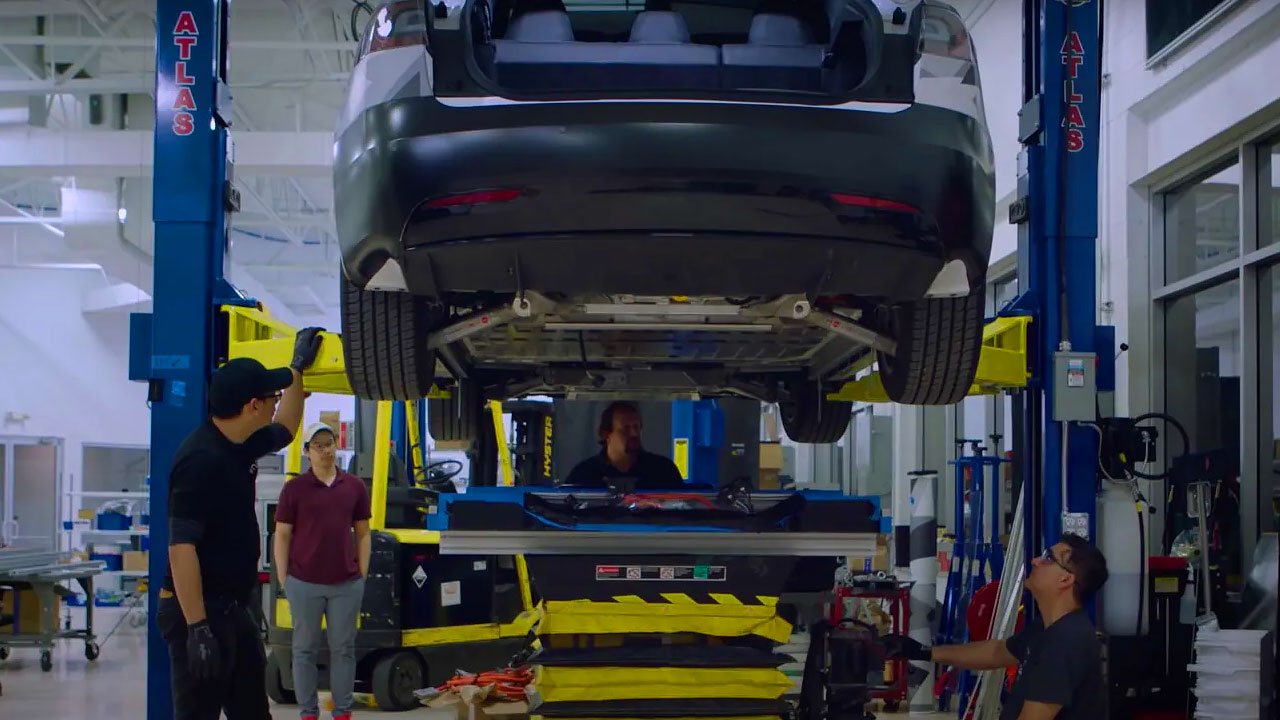
EV battery replacement means swapping out the high-voltage lithium-ion (or lithium iron phosphate) pack that powers the electric motor. Unlike a regular 12-volt car battery, a traction battery pack in a modern EV weighs between 300 lb and 1,200 lb (136–544 kg), contains hundreds of individual cells, and manages a staggering amount of energy: anywhere from 24 kWh in an early Nissan Leaf to 200 kWh in the biggest Tesla Semi configuration.
The good news? According to Recurrent Auto's dataset of more than 20,000 tracked EVs, the overall replacement rate is just 2.5% — and most of those were first-generation vehicles now 14+ years old. Modern battery management systems (BMS), thermal management, and chemistry improvements mean a 2022-or-newer EV battery may genuinely outlast the rest of the vehicle.
"EV batteries are proving far more durable than early skeptics predicted. The real question isn't whether your battery will fail — it probably won't — but what it costs if it does."
Why this topic matters now: Used EV prices have dropped sharply in 2025. Buyers are scooping up 5–8-year-old Leafs, Bolts, and Model 3s at bargain prices — but battery health concerns can torpedo a deal or leave new owners with an unexpected bill. Understanding real EV battery replacement costs helps you negotiate smarter, buy with confidence, and take steps to never need a replacement in the first place.
Old vs. New Approach: EV Battery Economics Then & Now
| Factor | 2015–2019 Reality | 2025–2026 Reality |
|---|---|---|
| Pack cost (per kWh) | ||
| A 75 kWh pack, materials only | ||
| Third-party options | ||
| Battery warranty (federal min.) | ||
| Degradation warranty threshold | ||
| Refurbished / remanufactured | ||
| Chinese LFP cells (pack-level equivalent) | ||
| Labor cost estimate |
How Much Does EV Battery Replacement Cost in 2026?
Let's cut through the noise. The full installed cost — battery plus labor plus taxes — for an out-of-warranty EV battery replacement in the United States in 2026 typically falls between:
2026 Total Cost Ranges by Battery Size
- Small packs (20–30 kWh) — Nissan Leaf 24/30 kWh, Chevy Volt: $4,000–$9,000 (€3,656–€8,226)
- Mid packs (40–60 kWh) — Chevy Bolt, VW ID.4 base, early Model 3: $7,000–$14,000 (€6,399–€12,796)
- Large packs (75–100 kWh) — Tesla Model 3 LR / Model Y, Ioniq 5, Mach-E: $10,000–$18,000 (€9,142–€16,455)
- Flagship/performance packs (100+ kWh) — Tesla Model S Plaid, Rivian R1T, Lucid Air: $15,000–$25,000+ (€13,713–€22,855+)
Note: 1 USD = approx. 0.914 EUR (April 2026). All Euro conversions use this rate.
Out-of-Pocket Replacement Cost by Battery Size — 2026 Midpoint Estimates
Are EV Battery Prices Falling? Yes — Faster Than You Think
This is the single most important fact about EV battery replacement cost: every year you wait, a replacement gets cheaper. According to BloombergNEF's 2024 Battery Price Survey, pack-level costs have fallen from $732/kWh in 2010 to $111/kWh in 2024 — a 85% reduction in 14 years. At this trajectory, packs are on track to hit $80/kWh by 2026 and $60/kWh by 2030.
EV Battery Pack Cost Decline ($/kWh) — 2010 to 2030 Projected
What does this mean practically? A 100 kWh pack that would have cost you $16,100 in materials alone in 2019 costs around $11,100 today (€10,146) — and will likely cost $8,000 (€7,312) by 2026. Chinese LFP cells from CATL and BYD are already trading at $56/kWh at the cell level, signaling what's coming to the US market as tariff structures evolve.
"The learning rate for batteries is relentless. Every doubling of cumulative production drops costs by roughly 18%."
What Does the EV Battery Warranty Actually Cover?
Before you panic about a five-figure bill, understand your coverage. Under U.S. federal law (Clean Air Act, Section 177), every new EV sold in the United States must carry a minimum 8-year / 100,000-mile battery warranty. California and several other states add additional protections. Many manufacturers now exceed these minimums:
| Brand / Model | Warranty Term | Degradation Threshold | Key Exclusions | Extended Available? |
|---|---|---|---|---|
| Tesla Model 3 / Y (LR) | ||||
| Chevy Bolt EV / EUV | ||||
| Hyundai Ioniq 5 / 6 | ||||
| Kia EV6 / EV9 | ||||
| Ford Mustang Mach-E / F-150 Lightning | ||||
| BMW i4 / iX | ||||
| Rivian R1T / R1S | ||||
| Nissan Leaf (current) |
What EV Battery Warranty Covers
- Unexpected cell failure / total pack failure
- BMS (battery management system) faults
- Thermal runaway due to manufacturing defects
- Degradation below the stated SoH threshold
- Defective modules causing range loss
- Software-induced capacity lock (Tesla-specific cases)
What It Does Not Cover
- Collision or impact damage to the battery pack
- Flooding / submersion damage
- Commercial / ride-share overuse (some brands)
- Non-approved aftermarket charging equipment damage
- Normal degradation above the SoH threshold
- Salvage-titled vehicles
Brand-by-Brand EV Battery Replacement Cost Breakdown
Here is the most comprehensive real-world cost dataset available in 2026, aggregated from dealer quotes, forum reports, third-party shops, and Recurrent Auto community data. All prices are installed (battery + labor + tax) unless otherwise noted. Conversions at 1 USD = €0.914.
Tesla Model 3 Battery Replacement Cost
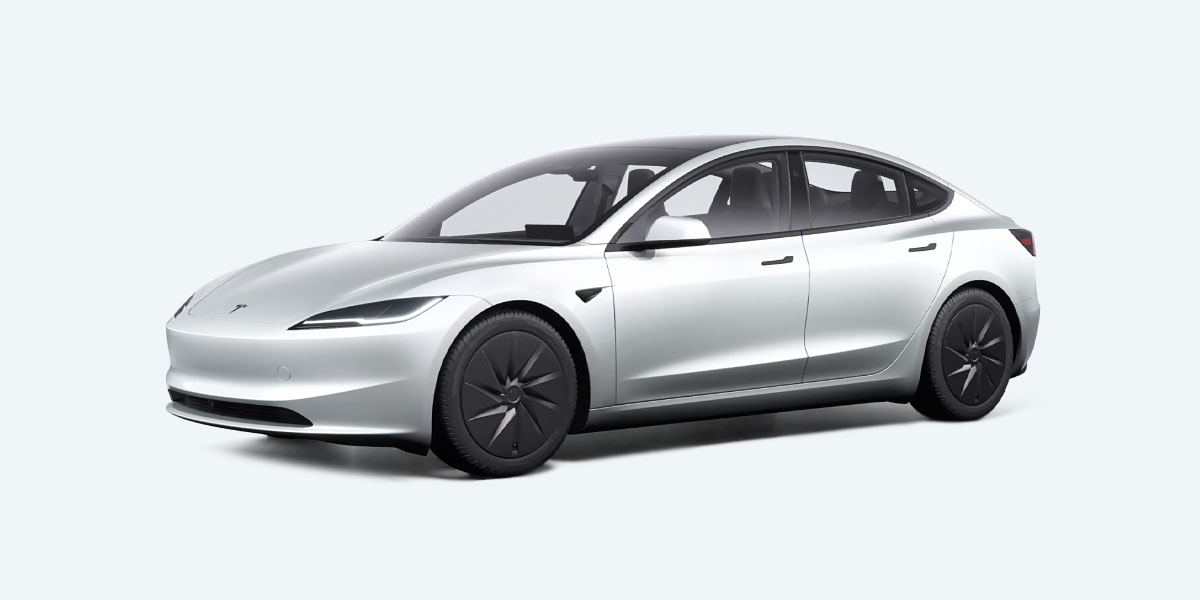
The Model 3 is the most replaced non-warranty EV battery in the US, with most data coming from high-mileage rideshare drivers and accident claims. OEM costs have declined sharply since 2020.
- 75 kWh (LR) OEM pack: ~$10,000–$12,000 (€9,140–€10,968) installed (2026)
- 2020 receipt: $15,799 total ($13,500 battery + $2,299 labor)
- 2023 estimate (Reddit verified): ~$13,000 (€11,882) installed
- Greentec Auto refurb OEM: $9,000 (€8,226) — $120/kWh
- re/cell refurb pack: $6,995–$8,999 (€6,394–€8,225)
- Labor estimate: $500–$1,500 (€457–€1,371)
- Extensive third-party options
- re/cell 2-yr / 24K mi warranty on refurb packs
- OTA updates can improve BMS efficiency
- Tesla OEM packs still pricey
- Non-Tesla shops may void other warranties
- Structural battery (Model 3 Highland) harder to service
Real-World EV Battery Replacement Cost Examples (Documented Cases)
| Vehicle | Year of Quote | Pack Size (kWh) | Battery Cost | Labor | Total (USD) | Total (EUR) | $/kWh | Source |
|---|---|---|---|---|---|---|---|---|
| Tesla Model 3 (75 kWh) | ||||||||
| Tesla Model S (85 kWh) |
Third-Party vs. OEM Battery: Which Option Is Right for You?
The third-party remanufactured battery market in the US is maturing fast. For older EVs, the economics overwhelmingly favor independent shops over dealerships. Here's how the main options stack up:
| Option | Best For | Typical Cost Range | Warranty | Models Supported | US Availability |
|---|---|---|---|---|---|
| OEM (Dealer/Brand) | |||||
| Greentec Auto (refurb OEM) |
"The Nissan Leaf is still the most popular EV receiving battery replacements and upgrades. Demand remains strong despite falling interest in other models."
How to Avoid EV Battery Replacement Entirely: 10 Expert Tips
Here's the most important fact in this whole guide: proper battery management can extend your EV battery to 15+ years, meaning you'll probably never need to replace it. Research from Idaho National Laboratory shows that EVs charged with smart Level 2 chargers and kept within the 20–80% state-of-charge window degrade at roughly half the rate of vehicles habitually charged to 100% or depleted to 0%.
Your 5-Phase Battery Protection Strategy
Set your daily charge limit to 80% for routine use and only charge to 100% the night before a long trip. Avoid dropping below 10–15%...
DC fast charging (50–350 kW) generates heat inside the cells and can stress the electrolyte...
Heat is a lithium-ion battery's worst enemy...
Aggressive acceleration from standstill causes high peak current draws that stress cells...
Use tools like the Recurrent Report, the OBD-II-based Leaf Spy (for Nissan), or your vehicle's built-in health dashboard to track state-of-health (SoH) over time...
Full 10-Tip Battery Care Checklist
- Charge daily to 80% max; reserve 100% for long-trip eves only
- Avoid depleting below 10–15% state of charge regularly
- Limit DC fast charging to road-trip use only
- Park in shade in summer; indoors or covered in winter
- Use scheduled pre-conditioning while plugged in before driving
- Accelerate smoothly — avoid jackrabbit starts that spike discharge current
- Stick to 65–70 mph (105–113 km/h) on highways to reduce battery load
- Keep tires properly inflated (recommended PSI reduces rolling resistance by 0.5–1%)
- Use seat heaters / seat ventilation instead of cabin HVAC when possible
- Monitor SoH annually with a Recurrent Report or OBD-II tool
Full Brand EV Battery Replacement Comparison Table 2026
| Vehicle | Pack Size | OEM Installed Cost | 3rd-Party Option | Warranty | Degradation Threshold | DIY Friendly | $/kWh (OEM) |
|---|---|---|---|---|---|---|---|
| Tesla Model 3 LR | |||||||
| Nissan Leaf (24 kWh) |
OEM Replacement Cost Per kWh by Vehicle
EV Battery Replacement Cost: FAQ
- How much does it actually cost to replace an EV battery in 2026?
Total installed cost (battery + labor + tax) ranges from roughly $4,000 for a small Nissan Leaf 24 kWh pack to $22,000+ for a Tesla Model S 100 kWh unit (€3,656–€20,108). The global average battery pack price was $111/kWh at end-2024 (Goldman Sachs), translating to about $8,325 materials-only for a 75 kWh pack. Add $500–$2,500 for labor and you have your total. Third-party remanufactured options can save 30–50% vs. OEM dealer prices.
- Will I ever actually need to replace my EV battery?
Probably not. Recurrent Auto's dataset of 20,000+ tracked EVs shows an overall replacement rate of just 2.5%, and most of those are first-generation vehicles 14+ years old.
- Does EV battery warranty cover degradation?
Yes, most do — but only below a specific threshold. The federal minimum requires manufacturers to cover batteries that drop below 70% of original state-of-health within 8 years / 100,000 miles.
- Is it worth replacing an EV battery in an older vehicle?
It depends on the car's value vs. the replacement cost. As a general rule, replacement is worth it when the installed cost is less than 80% of the vehicle's current market value.
- Will EV battery replacement costs keep falling?
Yes, consistently and reliably. BloombergNEF's 2024 Battery Price Survey projects pack costs dropping from $111/kWh today to ~$80/kWh by 2026 and ~$60/kWh by 2030.
- What is the cheapest way to replace an EV battery?
The most economical paths, in order: warranty claim, third-party remanufactured packs, used packs from eBay, then OEM dealer replacement.
Your EV Battery Replacement Action Plan: What to Do Now
Implementation Timeline & Next Steps
Pull up your EV's battery health info via the onboard display or a third-party app. Register your vehicle on Recurrent Auto for a free SoH baseline.
Set your daily charge limit to 80% in your EV's app or settings. Enable scheduled charging to shift to off-peak rates.
If your EV's range has dropped more than 30% from new, you almost certainly qualify for a warranty battery replacement or repair at no cost.
Contact your OEM dealer, one third-party specialist, and search eBay for used packs. Compare total installed cost — not just the battery price.
If your EV still functions, it may be worth waiting. At the current cost trajectory, a battery replacement that costs $12,000 today will likely cost $8,000–$9,000 by 2027–2028.
Check Your EV Battery Health Now
Browse MotorWatt's EV Database for battery health data, range estimates, and community reports on every major EV model sold in the US.
Sources & Methodology
- Recurrent Auto, "Electric Car Battery Replacement Costs," Updated December 2024. recurrentauto.com
- BloombergNEF, "Battery Price Survey 2024." BloombergNEF.com
- Goldman Sachs, "Global EV Outlook: Battery Cost Projections," 2024. GoldmanSachs.com
- Mack Institute for Innovation Management, Wharton School of Business, "Battery Pack Costs 2019." Wharton.upenn.edu
- Idaho National Laboratory, "Effect of DC Fast Charging on Battery Health," 2022–2023. INL.gov
- Leo & Sons EV Specialty Shop, Nissan Leaf Battery Pricing FAQ, 2024. leosons.com
- Greentec Auto, battery pricing and warranty data, April 2026. greentecauto.com
- re/cell, Tesla Model 3 and Model S pack pricing, April 2026. recell.com
- US DOE / EPA, Clean Air Act Section 177 Battery Warranty Requirements, 2026. epa.gov
- Russ Hensley, Senior Partner, McKinsey Center for Future Mobility, EV Analysis 2025. McKinsey.com
- Yayoi Sekine, Head of Energy Storage Research, BloombergNEF, Battery Learning Rate Analysis, 2024.
- MotorWatt EV Community Research, forum data aggregation, April 2026. motorwatt.com
Related Video