
⚡ Quick Answer: EV battery degradation averages 2.3% per year across 22,700+ vehicles in 2025–2026 (Geotab). That means a 77 kWh (≈ 287 Wh/lb) pack still holds 81.6% capacity after 8 years. High-power DC fast charging (>100 kW) is the #1 controllable risk factor. Keep charging between 20–80% SoC and your battery will comfortably outlast the car itself.
Annual battery degradation rate across 22,700+ EVs — Geotab
Modern EV batteries projected to outlast the vehicle
Degradation rate for EVs relying on >100 kW DC fast charging
Gen-3 EVs (2022+) needing a battery replacement — Recurrent
Key Findings at a Glance
- Average annual EV battery capacity loss is 2.3% in 2025–2026, up from 1.8% in 2024, driven by the surge in high-power DC fast charging sessions (Geotab, January 2026).
- A 77 kWh pack (e.g., Tesla Model 3 Long Range) losing 2.3%/yr still delivers ≈ 63 kWh effective capacity after 8 years — more than enough for daily driving.
- Vehicles using DC fast charging >100 kW for >12% of sessions degrade at up to 3.0%/yr, roughly double the rate of AC-only chargers (≈ 1.5%/yr).
- Hot-climate EVs degrade 0.4% faster per year than those in mild climates (fewer than 5 days above 80°F / 27°C or below 23°F / −5°C annually).
- The Tesla Model S (liquid-cooled) shows a 2.3% annual rate; the early Nissan Leaf (air-cooled) shows 4.2% — thermal management matters enormously.
- Battery replacement costs in 2025 range from $5,000–$20,000 (≈ €4,650–€18,600) depending on pack size, but only 2.5% of all EVs have ever needed one.
What Is EV Battery Degradation — and Why Should You Care?
EV battery degradation is the gradual, permanent reduction in a battery's ability to store or deliver energy. Think of it like a fuel tank that slowly shrinks over time. A brand-new 75 kWh (≈ 255 Wh/kg) pack rated for 358 miles (576 km) might deliver only 290 miles (467 km) a decade later — not because anything broke, but because chemistry happened.
This matters for three concrete reasons: daily range (how far you go on a charge), resale value (a degraded battery knocks thousands off a used-car price), and replacement cost (if degradation is severe enough to trigger a warranty claim or out-of-pocket replacement, you're looking at $5,000–$20,000 / €4,650–€18,600).
The good news? According to Geotab's landmark 2025–2026 study of 22,700+ real-world EVs, the average battery retains 81.6% of original capacity after 8 years — better than most people expect, and well above the 70% warranty threshold most manufacturers guarantee.
Did you know? Battery degradation in EVs is measured in State of Health (SOH). A 60 kWh pack at 80% SOH behaves like a 48 kWh battery — same vehicle, less range. Monitoring SOH regularly is the single best way to catch problems early.
Old Myths vs. Current Reality
| Old Misconception | Current Data (2025–2026) | Source |
|---|---|---|
| "EV batteries die after 8–10 years" | ||
| "Daily charging destroys the battery" | ||
| "Heavy use wears out batteries fast" | ||
| "Air-cooled batteries are good enough" | ||
| "Battery replacement costs $30,000+" | ||
| "Avoid charging to 100% every time" | ||
| "All fast charging is equally damaging" |
How Is EV Battery Health Actually Measured?
State of Health (SOH) is the universal metric. A new battery starts at 100% SOH. Geotab calculates it by measuring energy input during charging and output during driving, then tracking the change in State of Charge (SoC) over time. It's the most reliable real-world methodology because it uses actual vehicle telematics rather than lab simulations.
State of Health (SOH)
Current usable capacity ÷ original capacity × 100%. The master metric for battery condition. Below 70% often triggers warranty intervention.
State of Charge (SoC)
The current charge level as a % of current capacity — what the dashboard shows. Not the same as SOH; a healthy battery at 50% SoC ≠ a degraded battery at 80% SoC.
Cycle Count
One full equivalent charge cycle = discharging from 100% to 0%. Modern Li-ion EV cells are rated for 1,000–3,000 full cycles before significant capacity loss.
Calendar Aging
Degradation from time alone, regardless of use. A battery sitting in a hot garage for a year loses capacity even without driving. Time + heat = double trouble.
"Accurate state-of-health information, made possible by comprehensive telematics data, is key to helping people make the best use of electric vehicles."
What Are the 5 Root Causes of EV Battery Degradation?
Battery degradation isn't random — it follows predictable chemical patterns. Understanding the causes lets you control the controllable ones. Here are the five main culprits, ranked by impact on real-world fleet data.
1. Charging Power Level (Biggest Controllable Factor)
Geotab's 2025–2026 analysis identifies charging power as the dominant operational driver of degradation. Vehicles relying on DC fast charging above 100 kW for more than 12% of sessions degrade at up to 3.0% per year — double the rate of AC-primary users (≈ 1.5%/yr). High-voltage DC charging generates internal cell heat rapidly, accelerating chemical aging. The industry-wide shift toward 150 kW, 250 kW, and even 350 kW chargers is the main reason average degradation ticked back up to 2.3% in 2025 after improving to 1.8% in 2024.
2. Temperature Extremes (Heat Hurts More Than Cold)
Heat accelerates the chemical reactions that break down lithium-ion cells. EVs operating in hot climates degrade 0.4% faster per year than those in mild conditions. The early Nissan Leaf, with no active thermal management, degraded at 4.2%/yr in warm states like Arizona — nearly double the Tesla Model S rate of 2.3%/yr with liquid cooling. Cold weather temporarily reduces range but causes less permanent damage than sustained heat.
3. State of Charge Extremes (The 20–80% Rule)
Keeping a lithium-ion battery at very high or very low SoC for prolonged periods stresses the electrodes. Geotab's data shows degradation accelerates only when vehicles spend more than 80% of their total time at or near full or near-empty charge. Occasional 100% charges are not harmful — the problem is habitually parking an EV at 100% SoC overnight for weeks on end, or repeatedly depleting to near-zero.
4. Cycle Count (Usage Aging)
Every charge-discharge cycle causes microscopic changes in the electrode structure. Geotab found high-use vehicles degrade only about 0.8%/yr more than the lowest-use group — a surprisingly modest difference. This means fleet operators can maximize utilization without major battery penalties, provided they manage charging power levels.
5. Calendar Aging (Time-Based Degradation)
Even a parked, unplugged EV ages. Calendar aging is driven by electrolyte decomposition and lithium plating — processes that continue at low rates regardless of use. A battery stored at 50% SoC in a cool garage ages slowest. One stored at 100% SoC in a hot parking lot ages fastest. The practical advice: if storing an EV for weeks, target 40–60% SoC and park in a cool, shaded location.
Source: Geotab EV Battery Health Study 2025–2026. Chart based on aggregated real-world telematics data.
How Fast Do EV Batteries Actually Degrade in the Real World?
Here's the number that should put your mind at ease: most modern EVs retain over 80% of their original battery capacity after 8 years. Geotab's 2025 study — the most comprehensive to date — projects an average SOH of 81.6% at the 8-year mark based on a 2.3%/yr degradation rate.
For context, a 2024 Tesla Model 3 Long Range with a 75 kWh pack would still deliver approximately 61.2 kWh effective capacity after 8 years. That translates to roughly 290 miles (467 km) of real-world range — plenty for the average American driver who covers just 37 miles (60 km) per day.
The S-curve Reality: EV battery degradation follows a non-linear S-curve. There's a sharper initial drop in year 1–2 as the battery settles, then a long period of slow, near-linear decline, followed by an eventual steep drop at true end-of-life. Most EVs on the road today are comfortably in the slow-degradation middle phase.
Projected SOH based on Geotab 2025–2026 average 2.3%/yr degradation rate. Individual results vary by model, climate, and charging behavior.
"Our latest data shows that batteries are still lasting well beyond the replacement cycles most fleets plan for. What has changed is that charging behavior now plays a much bigger role in how quickly batteries age."
Does DC Fast Charging Really Damage Your EV Battery?
Yes — but only when used heavily and at high power levels. This is the clearest finding from Geotab's 2025 analysis of 22,700 EVs: vehicles relying on DC fast charging above 100 kW for more than 12% of all sessions degrade at up to 3.0% per year, compared to ≈ 1.5% for AC-primary users. That's roughly double the rate — a significant difference over 8–10 years of ownership.
Why does high-power DCFC damage batteries? DC fast charging bypasses the vehicle's onboard AC charger and pushes electricity directly into the battery pack at high voltage. The rapid ion movement generates significant heat inside the cells. Sustained heat accelerates the chemical reactions that degrade electrode materials and electrolyte. This is why thermal management systems (TMS) are so critical — liquid-cooled batteries handle fast charging better than passive air-cooled systems.
The "Occasional DCFC" Verdict
Good news for road-trippers: occasional high-power DC fast charging during long trips is not meaningfully harmful. The damage accumulates when DCFC becomes the primary daily charging method. Geotab's data shows the degradation threshold kicks in at >12% of total charging sessions using DC fast charge. For most home chargers, that number stays near zero.
Pros of DC Fast Charging
- 80% charge in 20–45 minutes on modern EVs
- Essential for long-distance road trips
- Power up to 350 kW on latest models
- Increasingly common on public networks
- Unavoidable for apartment/condo dwellers
Cons of Heavy DCFC Reliance
- 3.0%/yr degradation vs. 1.5%/yr for AC
- Generates significant heat inside cells
- Accelerated wear on >100 kW sessions
- Higher cost per kWh than home charging
- Increases long-term battery replacement risk
Pro Tip: At home, always use Level 2 (240V / 7–11 kW) AC charging. Reserve DCFC for road trips only. This single habit alone can cut your annual degradation rate in half — from ~3.0% down to ~1.5% per year.
How Does Climate Affect EV Battery Degradation?
Temperature is the second-biggest environmental factor after charging power. Geotab's 2025 study found that EVs in hot climates degrade approximately 0.4% faster per year than those in mild conditions. Over 10 years, that adds up to 4% extra capacity loss — about 3 kWh on a 77 kWh pack. Not catastrophic, but real.
The most dramatic example: the 2015 Nissan Leaf in Arizona. With no active thermal management and a passive air-cooled battery, some units in Phoenix showed degradation rates of 4.0–5.0%/yr — nearly three times higher than a liquid-cooled Tesla in the same climate. Compare that to the 2015 Tesla Model S averaging 2.3%/yr even in warm states, thanks to its liquid cooling loop that maintained cells at 20–40°C (68–104°F) — the ideal operating range.
Mild climate defined as <5 days/yr above 80°F (27°C) or below 23°F (–5°C). Source: Geotab / NimbleFins real-world fleet data.
Cold Weather: Temporary vs. Permanent Effects
Cold temperatures temporarily reduce range — lithium-ion chemistry slows in the cold, reducing both available capacity and charge acceptance. A battery at 14°F (−10°C) might deliver only 70–80% of its rated range. But critically, this is mostly reversible. Once the battery warms up, capacity returns. Permanent cold-weather degradation is far less severe than heat-induced degradation. Preconditioning the battery while still plugged in (warming it before departure) is the key mitigation strategy.
EV Battery Degradation by Model: Which Cars Hold Up Best?
Not all EVs degrade equally. Battery chemistry, pack architecture, thermal management design, and Battery Management System (BMS) sophistication vary widely across manufacturers. Here's how the most popular models compare based on available real-world data.
Tesla Model 3 & Model Y
Tesla's liquid thermal management system and sophisticated BMS make the Model 3/Y among the most resilient EVs for battery longevity. According to Tesla's 2023 Impact Report, Model 3 and Model Y Long Range variants showed an average degradation of just 15% after 200,000 miles (321,869 km). That's roughly 1% per year at typical U.S. driving rates — among the best in the industry. After 150,000 miles (241,402 km), a 2023 Model 3 rated at 270 miles still delivers approximately 247 miles (398 km) of real-world range.
Pros
- Industry-leading thermal management
- Consistent real-world SOH data shows slow degradation
- Module-level replacement possible in some cases
Cons
- Replacement pack: $10,000–$15,000 OEM (€9,300–€13,950)
- Heavy Supercharger use accelerates aging
- Limited SOH visibility for the average user
Nissan Leaf (2011–2017)
The original mass-market EV is both a success story and a cautionary tale about thermal management. Early Leafs with passive air cooling degrade at 4.2%/yr in warm climates — Geotab's most cited example. After 150,000 miles (241,402 km), a 2015 Leaf rated at 67 miles (108 km) delivers approximately 56 miles (90 km). The 2018+ Leaf with the 40 kWh pack and optional thermal system shows significantly better performance. For users in hot states, the early Leaf remains the clearest argument for liquid cooling.
Pros
- Lowest battery replacement cost in class
- Best documented real-world degradation dataset
- Good in mild/cool climates (<65°F / 18°C average)
Cons
- Air cooling causes rapid degradation in hot states
- 4.2%/yr in warm climates — worst of major EVs
- Legacy CHAdeMO charging standard
Chevrolet Bolt EV / EUV
The Bolt EV's liquid-cooled 60–66 kWh pack (≈ 363 kg / 800 lb) has proven surprisingly durable in real-world use. GM's Ultium-era BMS and passive liquid conditioning keep degradation in line with industry averages. Most out-of-warranty battery replacements for the Bolt run $8,000–$12,000 (€7,440–€11,160), though GM handled many early recall replacements under warranty. According to Recurrent, Gen-2 EVs like the early Bolt have a battery replacement rate of just 2% — far below first-gen EVs (8.5%).
Pros
- DCFC capped at lower power limits — slower degradation
- Solid real-world track record; Gen-2 replacement rate only 2%
- One of the most affordable used EVs with liquid cooling
Cons
- DCFC speed limited (not ideal for road-tripping)
- Out-of-warranty replacement: $8,000–$12,000 (€7,440–€11,160)
- Early 2017–2019 models subject to recall (resolved)
Hyundai Ioniq 5 & Kia EV6
Built on Hyundai Motor Group's 800V E-GMP platform, the Ioniq 5 and EV6 support ultra-fast 350 kW charging — but their onboard thermal management limits peak charge rate to protect battery health. The 10-year Hyundai warranty (Ioniq 5) is class-leading. Real-world degradation data is still maturing since most units are under 4 years old, but early indicators suggest performance on par with or better than the class average. Full pack replacement is estimated at $10,000–$16,000 (€9,300–€14,880) out of warranty, though few cases exist yet.
Pros
- 800V = faster charging with less heat generation
- 10-year warranty from Hyundai is class-leading
- Modern platform designed for frequent fast charging
Cons
- Long-term degradation data still limited (young fleet)
- Out-of-warranty replacement estimated $10,000–$16,000
- Higher purchase price than Bolt or used Leaf
Full Battery Degradation Comparison: Popular EV Models
| Model | Pack Size | Cooling Type | Avg. Degradation | Warranty | Replacement Cost (USD / EUR) | Verdict |
|---|---|---|---|---|---|---|
| Tesla Model 3/Y | ||||||
| Tesla Model S/X | ||||||
| Chevy Bolt EV/EUV | ||||||
| Hyundai Ioniq 5 | ||||||
| Kia EV6 | ||||||
| Ford F-150 Lightning | ||||||
| Nissan Leaf (2018+) | ||||||
| Nissan Leaf (2011–2017) |
EV Battery Replacement Costs in 2025–2026: What You'll Actually Pay
Here's the number that scares most EV shoppers: a full out-of-warranty battery pack replacement runs $5,000–$20,000 (€4,650–€18,600) depending on vehicle size. But context matters enormously. Only 2.5% of all EVs have ever needed a replacement, most of them first-generation models. Among Gen-3 EVs (2022+), the replacement rate drops to a remarkable 0.3%.
Battery pack prices at the manufacturing level dropped approximately 20% in 2024 alone, landing around $111–$130/kWh at the pack level. In early 2024, CATL and BYD LFP cells were selling as low as $56/kWh in China. By the time these savings filter through to consumer-facing replacement prices, expect continued cost reductions through the late 2020s.
Includes parts and labor. Based on 2024–2025 OEM and third-party pricing. Refurbished options typically cost 30–40% less. Labor adds $1,000–$3,000. EUR conversion: $1 ≈ €0.93 (March 2026).
Warranty Protection: What's Actually Covered
In the U.S., virtually every EV sold since 2012 includes a separate high-voltage battery warranty: typically 8 years / 100,000 miles, with a 70% capacity retention guarantee. If your pack drops below 70% SOH within that window, the manufacturer repairs or replaces it at no cost to you. Hyundai and Kia go further with 10-year / 100,000-mile coverage on recent models. The battery warranty transfers to subsequent owners in most cases — a significant used-car buying factor.
Used EV Buying Tip: Always request a battery State of Health (SOH) report before buying a used EV. Third-party diagnostic tools (like those from Recurrent or FIXD) can pull real-time SOH data. A battery above 85% SOH on a used EV is a green flag. Below 75% SOH on an older pack — negotiate hard or walk away.
The Smart EV Battery Charging Strategy: 5 Phases for Maximum Longevity
Here's your complete framework for keeping your EV battery healthy — whether you own a Tesla, Chevy Bolt, or any other electric vehicle. Follow these five phases in sequence for optimal results.
Set Your Daily Charge Limit to 80%
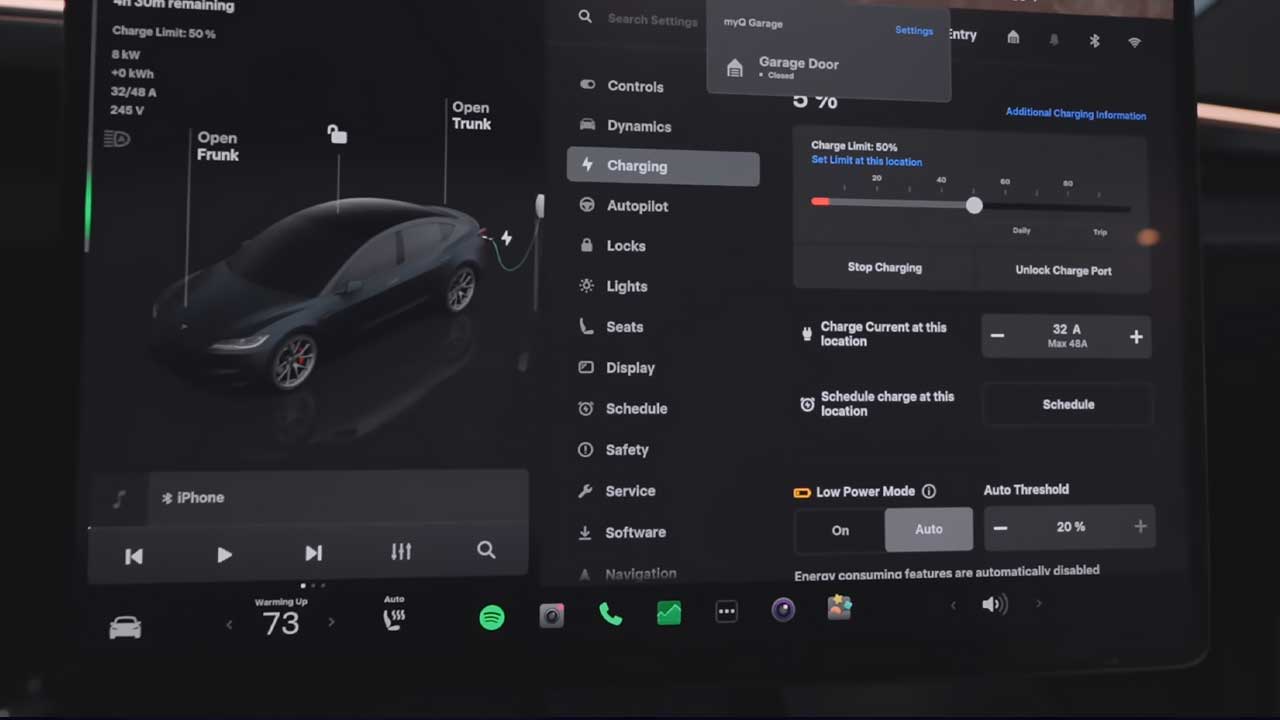
Configure your EV's charging schedule to stop at 80% SoC for all daily home charging. This single setting cuts stress on the positive electrode and is the #1 recommended habit by every major automaker. Only charge to 100% the night before a long trip — and drive out the next morning rather than letting it sit at full charge.
Use Level 2 AC Charging at Home (240V / 7–11 kW)
Level 2 charging adds 20–35 miles (32–56 km) of range per hour and is the gentlest daily charging method. It generates minimal heat — the primary enemy of battery chemistry. At ≈ 1.5%/yr degradation for AC-primary users vs. 3.0%/yr for high-power DCFC users, this choice alone can extend your pack's life by years.
Reserve DC Fast Charging for Road Trips Only
Use public DCFC — especially ultra-fast 150–350 kW stations — only when you genuinely need speed during long drives. Aim to keep DCFC sessions below 12% of your total charging frequency. Even for apartment dwellers without home charging access, finding a workplace or destination L2 charger is worth the effort for long-term battery health.
Precondition in Extreme Weather
In hot or cold climates, use your EV's preconditioning feature while still plugged in. In summer, cooling the battery before departure reduces heat stress during driving. In winter, warming the battery improves both range and charging speed. Most EVs (Tesla, Ioniq 5, EV6) support this via their mobile apps — set it as a routine before every commute in extreme weather.
Monitor Battery Health Regularly
Use third-party apps (Recurrent, ScanMyTesla, LeafSpy, EVNotify) or manufacturer dashboards to track real SOH quarterly. Catching unexpected degradation early can help you file a warranty claim before it lapses. Many automakers will replace or repair packs that drop below 70% within warranty — but only if you know to ask.
Old Approach vs. New Approach: How EV Battery Care Has Evolved
The conventional wisdom about EV battery management has shifted dramatically in just five years. Research from Geotab, Recurrent, and OEM warranty data has overturned several long-held beliefs. Here's what's changed:
| Situation | Old Advice (Pre-2022) | Current Best Practice (2025–2026) | Why It Changed |
|---|---|---|---|
| Daily charge limit | |||
| Fast charging | |||
| Driving to low SoC | |||
| Heavy daily use | |||
| Cold weather parking | |||
| Battery health checking |
What's Next? EV Battery Technology Trends for 2026 and Beyond
Battery technology is evolving faster than any previous automotive technology. Here's what's coming — and why degradation will become a far smaller concern within the decade.
Solid-State Batteries (2027–2030)
Toyota targets a 500,000-mile lifespan from solid-state cells. QuantumScape (VW-backed) claims 80% capacity after 800 cycles — vs. 80% after 1,200 cycles for Tesla's 4680 cells. Solid electrolytes run cooler and are inherently safer. Mass production expected post-2027.
LFP Chemistry Expansion
Lithium Iron Phosphate (LFP) cells sacrifice some energy density for dramatically longer cycle life — 3,000+ full cycles vs. 1,000–1,500 for NMC. BYD's Blade battery and CATL's cell-to-pack systems are already delivering outstanding longevity with minimal degradation, especially for fleet use.
AI-Powered Battery Management
Next-generation BMS systems use machine learning to predict degradation patterns in real time and adjust charging curves accordingly. Tesla's over-the-air BMS updates, Volkswagen's predictive charging algorithms, and GM's Ultium platform lead this trend. By 2026, predictive SOH alerts will be standard on most new EVs.
Second-Life Battery Economy
A battery at 70% SOH — the threshold for EV use — still holds substantial energy storage capacity for stationary applications. Companies like Nissan (xStorage), Volkswagen, and several California utilities are deploying degraded EV packs as grid-scale energy storage, extending total battery value cycles by 10–15 additional years.
Falling Pack Prices
Battery pack costs dropped from $400+/kWh in 2012 to around $111/kWh in late 2024 — a 72% reduction in 12 years. Industry forecasts project sub-$100/kWh packs by 2026–2027. That means a 77 kWh replacement pack could cost under $7,700 at the manufacturing level — making battery replacement far more economically viable.
Modular Battery Architecture
GM's Ultium, Volkswagen's MEB+, and Tesla's structural 4680 pack represent a shift toward modular battery design. Instead of replacing an entire $15,000 pack for a single cell group failure, technicians can swap one module for $2,000–$4,000. This fundamentally changes the out-of-warranty cost equation.
"With these higher levels of sustained health, batteries in the latest EV models will comfortably outlast the usable life of the vehicle and will likely not need to be replaced."
Frequently Asked Questions About EV Battery Degradation
- How much does an EV battery degrade per year on average?
According to Geotab's 2025–2026 analysis of 22,700+ real-world electric vehicles, the average EV battery degrades at 2.3% per year. This means the average battery will retain approximately 81.6% of its original capacity after 8 years. The best-performing modern EV models show degradation as low as 1.0%/yr, while older air-cooled systems in hot climates can degrade at 4.2%/yr. For a practical example: a 77 kWh pack at 2.3%/yr will effectively deliver around 63 kWh after 8 years — still more than enough for typical daily driving.
- Does DC fast charging really damage EV batteries?
Yes, but only when used heavily and at high power levels. Geotab's 2025 study found that EVs relying on DC fast charging above 100 kW for more than 12% of all charging sessions degraded at up to 3.0% per year — roughly double the rate of AC-primary users (≈ 1.5%/yr). Occasional fast charging during road trips is not meaningfully harmful. The damage accumulates when high-power DCFC becomes a daily routine. The recommendation is to use Level 2 AC charging at home whenever possible and reserve fast charging for long-distance travel.
- How long do EV batteries last before needing replacement?
Modern EV batteries are projected to last 20 years or more at current average degradation rates (Geotab). This means batteries in the latest EV models will comfortably outlast the vehicle's useful life in most cases. Only 2.5% of all EVs have ever required a battery replacement, and for Gen-3 EVs (2022+), that figure drops to just 0.3%. The standard U.S. battery warranty is 8 years / 100,000 miles with a 70% capacity retention guarantee — but real-world batteries routinely outperform this threshold significantly.
- Should I charge my EV to 100% every night?
For daily use, the best practice is to charge to 80% SoC for normal driving. However, charging to 100% occasionally — especially the night before a long trip — is not harmful, as long as you drive the car out the next morning rather than letting it sit at full charge for extended periods. Geotab's 2025 data confirms that degradation from SoC extremes only accelerates when vehicles spend more than 80% of their total time at or near full or near-empty charge levels. Occasional 100% charging is fine; habitual overnight parking at 100% SoC is not ideal.
- How much does EV battery replacement cost in 2025?
EV battery replacement costs in 2025 typically range from $5,000 to $20,000 (approximately €4,650 to €18,600), depending on vehicle type and pack size. Compact EVs like the Nissan Leaf run $5,500–$8,000 (€5,115–€7,440). Mainstream crossovers like the Tesla Model 3/Y run $10,000–$15,000 (€9,300–€13,950) OEM. Large luxury EVs and electric trucks can reach $15,000–$25,000 (€13,950–€23,250). However, battery replacement is rare — only 2.5% of EVs have ever needed one. Refurbished packs typically cost 30–40% less than OEM. Pack prices dropped approximately 20% in 2024 alone and will continue falling through the decade.
- Which EV has the best battery longevity?
Based on available real-world data, Tesla Model 3 and Model Y show some of the best battery longevity among high-volume EVs, with Tesla's own 2023 Impact Report showing only 15% degradation after 200,000 miles (321,869 km) — roughly 1%/yr. The Hyundai Ioniq 5 and Kia EV6 are also strong contenders thanks to their 800V architecture and 10-year Hyundai warranty. The weakest performers are early-generation Nissan Leafs (2011–2017) with passive air cooling, which degraded at 4.2%/yr in hot climates — nearly three times worse than liquid-cooled competitors in the same conditions.
- Does cold weather permanently damage EV batteries?
Cold weather temporarily reduces range but does not cause significant permanent degradation compared to heat. A battery at 14°F (−10°C) may deliver only 70–80% of its rated range, but capacity largely returns as the battery warms up. Permanent cold-weather damage occurs primarily through lithium plating during fast charging in extreme cold — most modern BMS systems limit charge rates in these conditions to prevent this. The best cold-weather practice is to precondition the battery while still plugged in, which warms cells to optimal temperature before departure without drawing down the pack.
- What is State of Health (SOH) and how do I check mine?
State of Health (SOH) is the primary metric for battery condition — the current usable energy capacity divided by the original capacity, expressed as a percentage. A new battery is 100% SOH; most EV warranties guarantee at least 70% SOH after 8 years. To check yours: Tesla owners can use a third-party OBD app or the S3XY App with a Commander dongle. Nissan Leaf owners can use LeafSpy (about $20 / €18.60 OBD adapter + free app). For other brands, Recurrent's telematics platform tracks SOH automatically for enrolled vehicles. Geotab fleet telematics provides the most accurate SOH calculations by measuring actual energy in/out over time.
- Will solid-state batteries solve the degradation problem?
Solid-state batteries are expected to dramatically reduce degradation rates compared to current lithium-ion chemistry. Toyota targets a 500,000-mile (804,672 km) lifespan from solid-state cells — roughly 5× current averages. QuantumScape's cells (backed by Volkswagen) claim 80% capacity retention after 800 cycles; Tesla's 4680 achieves the same at 1,200 cycles; solid-state targets may push that to 2,000+ cycles. Mass market availability is expected post-2027 to 2030. Until then, the practical advice remains: Level 2 charging at home, limited high-power DCFC, and the 20–80% SoC rule are the most effective tools available.
Bottom Line: EV Batteries Are More Durable Than You Think
The data is unambiguous: modern EV batteries degrade slowly, last for 20+ years under typical conditions, and rarely need replacement. The 2025–2026 Geotab study of 22,700+ vehicles confirms 2.3%/yr average degradation — and the main risk factor is entirely in your control. Stop relying on high-power DC fast charging as your daily charger, keep your battery between 20–80% SoC, and your pack will outlast your car.
Want to track your EV's battery health in real time? Explore the MotorWatt EV Database for model-specific degradation data and battery health benchmarks.
Explore EV DatabaseYour 30-Day Battery Protection Implementation Timeline
| Week | Action | Expected Benefit | Time Required |
|---|---|---|---|
| Week 1 | |||
| Week 1 | |||
| Week 2 | |||
| Week 2 | |||
| Week 3 | |||
| Week 4 |
Sources & Further Reading
- Geotab Inc. EV Battery Health Study: New Data on Fast Charging & Degradation. January 2026. geotab.com
- Geotab Inc. 2024 Battery Degradation Update. September 2024. geotab.com
- Recurrent Auto. How Long Do Electric Car Batteries Last? November 2025. recurrentauto.com
- Recurrent Auto. Electric Car Battery Replacement Costs. December 2024. recurrentauto.com
- NimbleFins. A Study on Real-Life Tesla Battery Deterioration. 2025. nimblefins.co.uk
- Tesla Inc. 2023 Impact Report — Battery Degradation Data. 2023. tesla.com
- Inside EVs. How Much Range EVs Really Lose After 150,000 Miles. January 2026. insideevs.com
- Recharged. EV Battery Replacement Cost 2025: Complete Guide. November 2025. recharged.com
- EV Battery Solutions. EV Battery Degradation Explained. 2025. evbatterysolutions.eu
- Charlotte Argue, Geotab. EV Battery Health Expert Commentary. January 2026.
Related Video