
Details
A hub for enthusiasts, engineers, and early adopters pushing the frontier of Full Self-Driving (FSD) tech. Share real-wo...
A hub for enthusiasts, engineers, and early adopters pushing the frontier of Full Self-Driving (FSD) tech. Share real-world data, software updates, safety insights, and edge-case scenarios from Tesla FSD, Waymo, Cruise, Zoox, and beyond. No hype—just verified miles, disengagement stats, and honest discussions on the path to Level 5 autonomy.
More
Members
Link copied to your clipboard
Filter Timeline:
Pinned Items
Recent Activities
  • Alex Garin uploaded a new video
    Starship Robots to Exit College Campuses

       Starship Technologies is winding down its autonomous food delivery service at U.S. universities to focus on grocery deliveries in cities across the U.S. and Europe.

       More than 1,200 robots from over 60 campuses will be redeployed to partner...

       Starship Technologies is winding down its autonomous food delivery service at U.S. universities to focus on grocery deliveries in cities across the U.S. and Europe.

       More than 1,200 robots from over 60 campuses will be redeployed to partner with grocery retailers. While campus service is expected to continue through summer (with some extensions into fall), the shift prioritizes higher-margin urban grocery operations, where robots can cut delivery costs by up to $4 compared to traditional couriers.  
       Colleges have provided a controlled testing ground since 2018, and students widely loved the service for late-night snacks. Starship, founded in 2014 by Skype veterans, has completed over 10 million deliveries with 3,000+ robots globally.

    More
    0
    0
    0
    0
    0
    0
    Comments (0)
    Post is under moderation
    Stream item published successfully. Item will now be visible on your stream.
  •   Alex Garin commented on this post about 2 weeks ago
    Alex Garin uploaded a new video
    Engineering tests of the first production Cybercab have begun in Austin

    Tesla Announces Engineering Tests of First Production Cybercab in Austin 

    Tesla has kicked off engineering tests of its first production Cybercab robotaxi on public roads in Austin, Texas. The milestone, shared directly by the company, marks a...

    Tesla Announces Engineering Tests of First Production Cybercab in Austin 

    Tesla has kicked off engineering tests of its first production Cybercab robotaxi on public roads in Austin, Texas. The milestone, shared directly by the company, marks a key step toward scaling its purpose-built autonomous vehicle. 

    Tests include a safety monitor onboard as the vehicle navigates real-world traffic, including rush-hour conditions in Austin. 

    Production of the Cybercab began at Giga Texas earlier in 2026, with initial slow output ramping up later in the year. This moves beyond prototypes to real production hardware.

    This development builds on Tesla's expanding unsupervised robotaxi operations in the Austin area and broader testing of Cybercabs across the US. It underscores progress toward commercial robotaxi service, potentially starting in limited form later in 2026. 

    More
    Post is under moderation
    Stream item published successfully. Item will now be visible on your stream.
  • Alex Garin uploaded a new video
    Zoox Robotaxi Review: A Purpose-Built Autonomous Pod That's Truly Different.

    Zoox Robotaxi Review: A Purpose-Built Autonomous Pod That's Truly Different 
    Zoox (an Amazon subsidiary) stands out in the robotaxi space with a vehicle designed from the ground up as a driverless ride-hailing pod, rather than a retrofitted car....

    Zoox Robotaxi Review: A Purpose-Built Autonomous Pod That's Truly Different 
    Zoox (an Amazon subsidiary) stands out in the robotaxi space with a vehicle designed from the ground up as a driverless ride-hailing pod, rather than a retrofitted car. It features no steering wheel, no pedals, bidirectional driving, and a symmetrical "toaster" or pod-like design. As of 2026, it's offering rides in cities like Las Vegas and San Francisco (with free or limited public access expanding), positioning it as one of the first purpose-built robotaxis in commercial-like service. 

    Key Specifications

       Dimensions: Approximately 142.9 inches (11.9 ft) long and 76.2 inches tall — compact footprint similar to a Fiat 500 but taller for easy entry/exit. 
       Seating: Up to 4 passengers in a face-to-face "carriage" configuration (two benches facing each other). No trunk; luggage goes in the cabin. 
       Powertrain: Fully electric with a 133 kWh battery pack (split front/rear for balance and redundancy). Offers up to ~16 hours of operation before charging. Dual motors (or more with redundancy) support bidirectional driving. 
       Performance: Top speed of 75 mph; four-wheel steering for tight maneuvers (turning circle around 28 feet in earlier specs). Smooth in urban environments but optimized for city speeds. 
       Sensors: Extensive 360-degree suite including ~28-40+ cameras (some thermal), ~20 radar units, multiple LiDARs, and long-wave infrared sensors. AI-powered perception, prediction, mapping, and planning with no single point of failure. 
       Design Highlights: Symmetrical (no distinct front/back), sliding side doors (subway-style), panoramic moonroof, starry "Starmap" ceiling lighting, individual seat touchscreens for climate/music/trip info, wireless charging, USB-C, cupholders, and ambient lighting. Recent 2026 updates include softer padded seats, brighter screens, larger cupholders, improved ergonomics, and better exterior cues. 


      Ride Experience and Performance

      Riders describe the Zoox as a novel, communal experience. The face-to-face seating encourages conversation, and the lack of a "driver" end makes it feel like a moving lounge. Pickup uses app-based hailing with distinctive LED "eyes" and sound cues for easy identification. 
       Driving behavior is very safe and conservative — sometimes overly cautious with abrupt stops or delayed merges in construction zones, resembling a new driver prioritizing caution over smoothness. It handles urban navigation well with excellent obstacle detection but can feel jarring over potholes due to the low ride height and wheel placement. Passengers note it's smoother than some traditional rideshares in traffic, with no distracted driver issues. 
       Comfort: Recent interior refreshes improved seating (softer with better headrests) and ambiance, but seats remain relatively firm. The glass doors and moonroof provide good visibility sideways, though forward/rear views are limited. Climate control and audio per seat are nice touches. It's spacious for four without luggage but can feel tight with bags. 
       Safety: Redundant systems, custom airbag setup, real-time AI prediction, and constant mapping emphasize safety. Zoox has faced some investigations/recalls on test vehicles (e.g., sudden braking in retrofitted models), but the purpose-built units focus heavily on crash avoidance. 

    Pros

       Innovative, rider-centric design with bidirectional efficiency (great for pickups/dropoffs without U-turns).
       Spacious, tech-filled interior focused on passenger experience.
       Strong sensor suite and redundancies for all-weather/urban perception.
       Electric and efficient for fleet operations; potential to reduce urban congestion and ownership costs long-term.
       Fun, futuristic feel with lights, sounds, and starry ceiling. 


    Cons

       Conservative driving style can feel abrupt or inefficient in traffic.
       Firm ride over rough roads; limited storage.
       Early-stage service (geo-fenced, expanding slowly); availability and pricing for full paid rides still rolling out.
       No high-speed highway prowess emphasized yet (focus is urban).


     The Zoox Robotaxi is a bold step toward the future of mobility. It's not just another self-driving car — it's a reimagined pod that prioritizes riders over drivers, with impressive engineering in autonomy and redundancy. While the driving isn't as polished as a skilled human (yet), its safety focus and unique experience make it highly promising, especially as production ramps up in 2026. 
       Compared to competitors like Waymo (retrofitted vehicles), Zoox feels more purpose-built and communal. It's ideal for short urban trips, groups, or anyone wanting a novel, hands-free ride. As the fleet grows and software matures, it could be a game-changer for safe, efficient city transport. 

    If you're in Las Vegas or San Francisco, download the app and try it — the "toaster on wheels" is worth experiencing.
    Note: Specs and experiences based on public reviews and official info as of mid-2026; real-world performance can vary by location and software updates.


    More
    0
    0
    0
    0
    0
    0
    Comments (0)
    Post is under moderation
    Stream item published successfully. Item will now be visible on your stream.
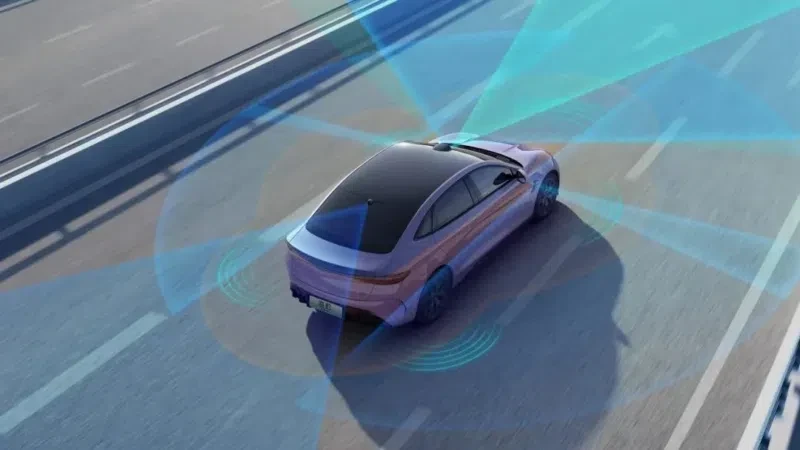
  • On May 28, 2026, during the Intelligent Strategy Event, BYD announced a new policy that effectively removes the burden of liability from the user, positioning itself as the first automaker globally to provide a “double guarantee” covering...
    On May 28, 2026, during the Intelligent Strategy Event, BYD announced a new policy that effectively removes the burden of liability from the user, positioning itself as the first automaker globally to provide a “double guarantee” covering both urban pilot assist and intelligent parking systems.
    Under this new initiative, BYD is offering comprehensive coverage for its “God’s Eye” A/B smart driving systems. For new owners, the coverage begins upon vehicle delivery, while existing owners will gain access after updating to the “God’s Eye 5.0” version via OTA. This policy provides one year of full liability coverage for urban pilot assist functions.
    The terms of the guarantee are notably generous: provided the system is used in compliance with regulations, BYD will cover all costs associated with at-fault traffic accidents, including repairs to the owner’s vehicle as well as third-party property damage and personal injury. Crucially, this service requires no additional purchase of “intelligent driving insurance,” features no payout cap, and will not impact the owner’s commercial insurance premiums for the following year.
    BYD’s “God’s Eye B” smart driving package is currently priced at 12,000 yuan (1,800 USD) for a one-off purchase.
    More
    0
    0
    0
    0
    0
    0
    Comments (0)
    Post is under moderation
    Stream item published successfully. Item will now be visible on your stream.
  • Alex Garin uploaded a new video
    WeRide and Geely Farizon Partner to Deliver 2,000 Robotaxi GXRs in 2026
       Guangzhou, China – March 9, 2026 — Autonomous driving leader WeRide (NASDAQ: WRD, HKEX: 0800) has deepened its strategic collaboration with Geely’s Zhejiang Farizon New Energy Commercial Vehicle Group (Geely Farizon), announcing plans to...
       Guangzhou, China – March 9, 2026 — Autonomous driving leader WeRide (NASDAQ: WRD, HKEX: 0800) has deepened its strategic collaboration with Geely’s Zhejiang Farizon New Energy Commercial Vehicle Group (Geely Farizon), announcing plans to deliver 2,000 upgraded, purpose-built, mass-produced Robotaxi GXRs throughout 2026.

       The agreement, signed on March 8-9, 2026, represents a shift toward an integrated ecosystem for large-scale global Robotaxi commercialization. The vehicles will target both domestic Chinese markets and international deployments, supporting WeRide's ambition to scale operations significantly.

       The upgraded Robotaxi GXR—a purpose-designed L4 autonomous vehicle based on Farizon's commercial platform—features advanced enhancements including WeRide's Gen8 Sensor Suite with dramatically improved detection range (up to 600 meters), higher-resolution LiDAR, and integration with powerful computing platforms. Mass production of this next-generation model is slated to begin in the third quarter of 2026.

       As of January 2026, WeRide's global Robotaxi fleet stood at 1,023 units operating in cities across China, the UAE, and Saudi Arabia. The addition of 2,000 GXRs is expected to push the total beyond 2,600 vehicles by year-end, fueling expansions including planned deployments in Singapore, further Middle East growth via the Uber partnership (targeting at least 1,200 units by 2027), and other regions.

       This production ramp-up leverages Farizon's efficient manufacturing capabilities, including AI-enabled drive-by-wire chassis, to accelerate cost reduction and fleet scaling—key steps toward WeRide's longer-term goal of tens of thousands of Robotaxis worldwide by 2030.The partnership underscores accelerating momentum in China's autonomous mobility sector, positioning WeRide and Geely as frontrunners in transitioning from pilot operations to mass commercial Robotaxi services.
    More
    0
    0
    0
    0
    0
    0
    Comments (0)
    Post is under moderation
    Stream item published successfully. Item will now be visible on your stream.
  • L3 Autonomous Driving
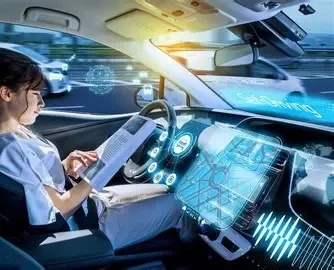
    Chinese automakers are also advancing high‑level autonomous driving in line with government policy. BYD, Xpeng, Li Auto, Changan Deepal, and Arcfox have obtained L3 test permits and are conducting pilot operations on...
    L3 Autonomous Driving
    Chinese automakers are also advancing high‑level autonomous driving in line with government policy. BYD, Xpeng, Li Auto, Changan Deepal, and Arcfox have obtained L3 test permits and are conducting pilot operations on designated roads, gathering real‑world data to refine vehicle AI, sensor integration, and cloud connectivity. MIIT has granted market access for the first batch of L3 vehicles, enabling controlled deployment of conditionally autonomous passenger cars. These developments position 2026 as a key year for L3 commercialisation in China, illustrating significant progress toward the government’s smart mobility and intelligent vehicle objectives.
    More
    0
    0
    0
    0
    0
    0
    Comments (0)
    Post is under moderation
    Stream item published successfully. Item will now be visible on your stream.
  • Alexander joined this group
    Post is under moderation
    Stream item published successfully. Item will now be visible on your stream.
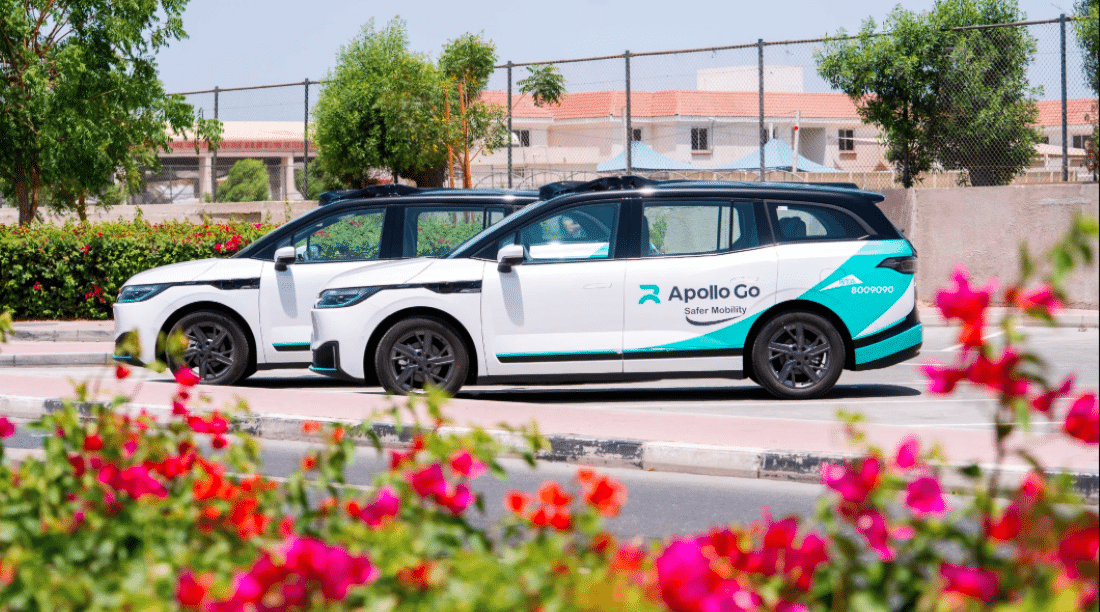
  • Baidu's Apollo Go Surpasses 17 Million Rides Globally, Targets Profitability This Year
    Baidu's autonomous ride-hailing service, Apollo Go, has cemented its position as a global leader, reporting over 17 million total rides completed and...
    Baidu's Apollo Go Surpasses 17 Million Rides Globally, Targets Profitability This Year
    Baidu's autonomous ride-hailing service, Apollo Go, has cemented its position as a global leader, reporting over 17 million total rides completed and commanding more than 250,000 fully driverless orders per week.
    According to announcements made at the recent Baidu World Conference, the company is targeting profitability for its Apollo Go service by the end of 2025, driven by significant cost reductions and expanding operational efficiency.
    Global Leadership in Orders: Apollo Go claims the world's leading position in autonomous ride-hailing. The service has seen explosive growth, completing over 3 million orders in the three months leading up to October 31, a nearly 50% quarter-over-quarter increase.
    Safety Superiority: Baidu founder Robin Li highlighted the system's superior safety record, stating that the fully driverless vehicles average 10.14 million kilometers of operation before a single airbag deployment, a metric the company claims surpasses both human driver performance and its competitor, Waymo.
    Operational Expansion: Apollo Go currently operates in 22 cities globally, including major Chinese hubs like Beijing, Shanghai, and Shenzhen, as well as international locations such as Dubai and Abu Dhabi, where it is beginning to offer tourist shuttle services.
    Cost Reduction and Profitability: A critical factor in the path to profitability is the dramatically reduced cost of the autonomous hardware. The company's sixth-generation driverless vehicles cost only 204,600 yuan (approximately $28,600 USD) per unit, down from millions previously. With operations in key markets like Wuhan nearing the break-even point, Apollo Go is projected to achieve overall profitability in 2025.
    Vision for the Future: Robin Li projected that by 2030, the operational cost of robotaxis in the United States could fall to approximately $0.25 USD per mile, predicting a 5- to 7-fold surge in ride-hailing demand as driverless vehicles transform into new "mobile living spaces."
    More
    0
    0
    0
    0
    0
    0
    Comments (0)
    Post is under moderation
    Stream item published successfully. Item will now be visible on your stream.
  • Alex Garin uploaded a new video
    Pony.ai and WeRide IPO in Hong Kong, Shares Drop Over 10%

    Pony.ai and WeRide IPO in Hong Kong, Shares Drop Over 10%

    November 6, 2025 – Chinese L4 autonomous driving leaders Pony.ai (2418.HK) and WeRide (2417.HK) listed on the Hong Kong Stock Exchange today. Both saw shares fall over 10% shortly after...

    Pony.ai and WeRide IPO in Hong Kong, Shares Drop Over 10%

    November 6, 2025 – Chinese L4 autonomous driving leaders Pony.ai (2418.HK) and WeRide (2417.HK) listed on the Hong Kong Stock Exchange today. Both saw shares fall over 10% shortly after debut.

    IPO Details

    • Pony.ai: Raised HK$1.86B (~US$239M) at HK$100/share; opened at HK$98.50, hit HK$88.

    • WeRide: Raised HK$1.03B (~US$132M) at HK$99.80/share; opened at HK$98, fell to HK$87.50.

    By midday: Pony.ai ~HK$89 (-11%), WeRide ~HK$88 (-12%).

    Market Reaction

    • Offerings moderately oversubscribed.

    • Decline amid Hang Seng drop (1.8%), U.S. election uncertainty, and valuation concerns.

    • Post-IPO valuations: Pony.ai HK$41.5B (US$5.3B), WeRide HK$23.3B (US$3B).

    Company Highlights

    Company

    Founded

    Key Backers

    Operations

    Pony.ai

    2016

    Toyota, GAC

    200+ robotaxis, 15M+ km

    WeRide

    2017

    NVIDIA, Bosch

    Services in 30+ cities

    Both operate robotaxis in Beijing, Guangzhou, and Shenzhen; full L4 rollout awaits broader approval.

    Outlook

    CEOs remain bullish on commercialization. Hong Kong solidifies role as tech IPO hub despite cautious global sentiment on autonomous driving.

    More
    0
    0
    0
    0
    0
    0
    Comments (0)
    Post is under moderation
    Stream item published successfully. Item will now be visible on your stream.
  • Alex Roy uploaded a new video
    Xpeng's 2025 AI Day

    Xpeng's 2025 AI Day: Ushering in the Era of Physical AI and Embodied Intelligence

       On November 5, 2025, Xpeng Inc., the innovative Chinese smart electric vehicle (EV) maker, lit up its Guangzhou headquarters with the theme "Emergence." The...

    Xpeng's 2025 AI Day: Ushering in the Era of Physical AI and Embodied Intelligence

       On November 5, 2025, Xpeng Inc., the innovative Chinese smart electric vehicle (EV) maker, lit up its Guangzhou headquarters with the theme "Emergence." The 2025 Xpeng AI Day was more than a tech showcase; it was a bold declaration of the company's evolution from an EV pioneer to a global leader in embodied intelligence. Chairman and CEO He Xiaopeng took the stage to unveil groundbreaking advancements in AI, robotics, autonomous driving, and even aerial mobility. Drawing inspiration from visionaries like Tesla, Xpeng positioned itself as a multifaceted "AI-defined" powerhouse, blending artificial intelligence with physical products to redefine human-machine interaction. With live streams on platforms like YouTube, X, and TikTok, the event captivated a global audience, signaling China's accelerating dominance in the AI race.

    At the heart of the proceedings was the introduction of Xpeng VLA 2.0, a second-generation Vision-Language-Action (VLA) model hailed as the "operating system for the physical AI world." This massive, vision-centered AI framework represents a paradigm shift in physical modeling, enabling seamless integration of perception, language understanding, and real-world actions. Unlike traditional AI models confined to digital realms, VLA 2.0 empowers devices to navigate complex physical environments with human-like intuition. He Xiaopeng emphasized "Physical AI"—the fusion of AI into tangible products like vehicles and robots—as the event's core narrative, promising to merge virtual intelligence with the physical world for unprecedented efficiency and adaptability.

    Powering this leap is Xpeng's in-house Turing-series AI chips, which deliver staggering computational might. The Ultra-level driver assistance system boasts 2,250 TOPS (tera operations per second) of compute power— an order of magnitude beyond typical automotive AI setups—allowing real-time processing for complex scenarios. This reengineered stack ensures VLA 2.0 runs efficiently on production vehicles, enhancing everything from highway navigation to urban maneuvering. For EV owners, this translates to safer, smarter rides, with Xpeng's full-stack advanced driver-assistance system (ADAS) evolving into a true "neural network" for mobility. The company's Kunpeng Super Electric System, first teased last year, received further refinements, integrating these AI capabilities with high-efficiency powertrains for extended ranges and rapid charging.

    No AI Day would be complete without a nod to autonomy's holy grail: robotaxis. Building on the 2024 unveiling of the Canghai Platform—a Level 4 autonomous driving neural system—Xpeng previewed its robotaxi ambitions just days before the event. Powered by VLA 2.0 and Turing chips, these self-driving fleets promise to transform urban transport. He Xiaopeng showcased demos of fluid obstacle avoidance and passenger interactions, hinting at commercial rollouts as early as 2026. While specifics on fleet size or partnerships remain under wraps, the emphasis was clear: Xpeng aims to deploy robotaxis in controlled environments, scaling to broader applications as AI matures. This aligns with Xpeng's roadmap to leverage its Zhaoqing and Guangzhou manufacturing plants for high-volume production, potentially undercutting rivals like Waymo or Cruise with cost-effective, AI-native designs.

    The event's star, however, was the next-generation Iron humanoid robot, a mesmerizing blend of biomechanics and intelligence that stole the show. Unveiled with a fluid catwalk strut, the upgraded Iron boasts a hyper-realistic design: a bionic spine, artificial muscles, flexible skin, and 82 degrees of freedom for eerily human-like movements. Standing at 5 feet 8 inches and weighing 154 pounds, it features over 60 joints and 200 degrees of freedom in its hands alone, enabling dexterous tasks from assembly to caregiving. Equipped with three Turing chips for 2,250 TOPS of onboard processing, Iron runs on VLA 2.0 to interpret environments, process natural language, and execute actions autonomously. Xpeng envisions initial deployments in industrial and commercial settings—think warehouses or eldercare facilities—before consumer homes, with mass production slated for late 2026. This acceleration from prior timelines underscores the company's five-year R&D sprint, positioning Iron as a contender against Tesla's Optimus or Boston Dynamics' Atlas.

    Venturing skyward, Xpeng spotlighted its ARIDGE brand of "flying cars," modular eVTOL (electric vertical takeoff and landing) vehicles that embody Physical AI in aerial form. These autonomous air taxis, also fueled by VLA 2.0, promise urban air mobility with seamless ground-to-air transitions. While prototypes have been in testing, the AI Day hinted at regulatory milestones and partnerships to enable short-hop flights in congested cities. He Xiaopeng's vision? A unified ecosystem where EVs, robotaxis, humanoids, and flying cars communicate via shared AI intelligence, creating a "mobility mesh" for the future.

    Complementing the high-tech reveals, Xpeng teased the X9 extended-range MPV, a seven-seater hybrid beast with a staggering 1,602 km CLTC range (452 km pure electric). Built on the Kunpeng system with AI compute rivaling nine Nvidia Orin-X chips, the X9 targets families and fleets, blending luxury with practicality. Retail traders on platforms like StockTwits buzzed about it as "better than Tesla," fueling a 94% stock surge year-to-date.

    Strategically, He Xiaopeng announced Xpeng's rebranding as a "Global Embodied Intelligence Company," shifting focus from EVs alone to a broader AI empire. This pivot addresses intensifying competition in China's premium EV market, where safety concerns and price wars have dented rivals like Li Auto and Xiaomi. By owning its AI stack—from chips to models—Xpeng reduces dependency on suppliers like Nvidia, echoing Tesla's vertical integration playbook. The event's global replay in English at 4:30 PM Beijing Time ensured accessibility, with He declaring, "Technology changes the world," underscoring Xpeng's mission to foster trusted, user-loved innovations.

    As the curtains closed on AI Day 2025, Xpeng left attendees pondering a future where AI doesn't just assist but embodies our world. With robotaxis zipping through streets, Irons collaborating in factories, and flying cars easing commutes, the "Emergence" theme rang true. Challenges remain—regulatory hurdles, ethical AI deployment, and scaling production—but Xpeng's ambitious roadmap positions it as a frontrunner. In a landscape dominated by giants, this event wasn't just a reveal; it was a revolution in motion, propelling us toward an intelligently embodied tomorrow.

    More
    0
    0
    0
    0
    0
    0
    Comments (0)
    Post is under moderation
    Stream item published successfully. Item will now be visible on your stream.
  • Alex Roy created this group

    FSD Vanguard

    A hub for enthusiasts, engineers, and early adopters pushing the frontier of Full Self-Driving (FSD) tech. Share real-world data, software updates, safety insights, and edge-case scenarios from Tesla FSD, Waymo, Cruise, Zoox, and beyond. No hype—just verified miles, disengagement stats, and...
    A hub for enthusiasts, engineers, and early adopters pushing the frontier of Full Self-Driving (FSD) tech. Share real-world data, software updates, safety insights, and edge-case scenarios from Tesla FSD, Waymo, Cruise, Zoox, and beyond. No hype—just verified miles, disengagement stats, and honest discussions on the path to Level 5 autonomy.
    More
    0
    0
    0
    0
    0
    0
    Comments (0)
    Post is under moderation
    Stream item published successfully. Item will now be visible on your stream.
There are no activities here yet
Unable to load tooltip content.