General groups
  • 4 Groups
  • 0 Album
Random Members
Random Albums
No albums here yet

Recent Updates

Pinned Items
Recent Activities
  • iREX 2025 Kicks Off in Tokyo!


        Robots Revolutionize Sustainability: iREX 2025 Kicks Off in Tokyo with Groundbreaking Innovations
       Tokyo, December 3, 2025 – The 26th International Robot Exhibition (iREX) opened its doors yesterday at Tokyo Big Sight, drawing robotics...


        Robots Revolutionize Sustainability: iREX 2025 Kicks Off in Tokyo with Groundbreaking Innovations
       Tokyo, December 3, 2025 – The 26th International Robot Exhibition (iREX) opened its doors yesterday at Tokyo Big Sight, drawing robotics pioneers, industry leaders, and over 100,000 anticipated visitors from around the globe. Under the banner of "Sustainable Societies Through Robotics," this biennial powerhouse event – the world's largest robotics trade show since 1974 – is showcasing how human-robot collaboration can tackle pressing challenges like climate change, labor shortages, and aging populations. With more than 300 exhibitors spanning industrial automation, AI-driven service bots, and cutting-edge components, iREX 2025 promises to redefine the future of intelligent machines.The exhibition, running through December 6, features expanded zones dedicated to smart factories, logistics, healthcare, and community robotics. Attendees are buzzing about live demos of humanoid robots performing household chores, mountain-climbing prototypes, and AI systems that enable zero-downtime manufacturing. "Robotics isn't just about efficiency anymore; it's about building resilient, eco-friendly societies," said Dr. Scott Huang, COO of Techman Robot, during a keynote address. The event also includes business matching sessions, startup pitch contests, and technical forums, fostering global partnerships in an era where embodied AI – robots that "think" and "feel" like humans – is accelerating toward everyday adoption.
         Chinese Innovators Steal the Spotlight with Tactile Sensing Breakthroughs
    China's robotics sector is making waves, underscoring the nation's rapid ascent in embodied intelligence. PaXini Tech, a tactile sensing specialist, debuted its third-generation PX-6AX-GEN3 sensor at the show, allowing robots to "feel" textures with human-like precision for tasks like delicate manipulation in healthcare and logistics. Their OmniSharing DB platform generates nearly 200 million data entries annually, training bots for autonomous learning in real-world environments. "We're bridging the gap between digital AI and physical interaction," a PaXini spokesperson told reporters, as crowds gathered around demos of dexterous grippers sorting fragile goods without waste.Mech-Mind Robotics, another Chinese standout, expanded its booth to 360 square meters for the fourth year running, live-demoing 3D vision systems that integrate with foundation models for sustainable automation. From precision sorting in recycling plants to adaptive assembly lines, their tech emphasizes resource efficiency. Social media is abuzz with posts highlighting "China's tactile sensing and humanoids" as a game-changer, with one observer noting, "Robots here aren't just tools – they're evolving partners in a greener world."
             Japanese and Global Heavyweights Push Boundaries in AI and Simulation
      Japan, as the event's host, dominates with precision engineering. Techman Robot unveiled a high-speed AI flying-trigger inspection system powered by NVIDIA Omniverse simulation, enabling real-time defect detection at blistering speeds while minimizing energy use – a boon for eco-conscious factories. "This is a leap in collaborative robotics," Huang added, as the system synced with cobots for seamless, low-emission production lines.Debut exhibitors like Finland's Visual Components (Booth W3-41) are introducing offline programming tools that cut deployment time by simulating entire robotic ecosystems, reducing trial-and-error waste. Meanwhile, Orbbec and Advantech's joint NVIDIA-accelerated Physical AI platform wowed with next-gen vision for service robots in eldercare, projecting robots that navigate homes intuitively to support Japan's aging demographic.International flavors abound: Huayan Robotics (formerly Han's Robot) is demoing advanced cobots at Booth W3-12 for flexible manufacturing, while Elephant Robotics at W3-49 highlights educational kits blending AI and bionic arms. Korean firms focus on mobility bases for agile logistics bots, and U.S./EU players emphasize cloud-based simulation software. A viral X post summed it up: "From China's humanoids to Japan's mother machines, iREX is where AI meets physical productivity."
        A Call to Action for a Robotic Tomorrow
    As Day 2 unfolds, iREX 2025 isn't just an exhibition – it's a blueprint for sustainability. With robots tackling everything from disaster response to zero-waste supply chains, the event underscores a pivotal shift: machines as allies in human progress. Organizers expect record attendance, with pre-registered visitors from over 50 countries. For those unable to attend, virtual tours and session recordings will be available post-event via the official iREX site.In a world racing toward net-zero goals, iREX reminds us that the robots of tomorrow aren't coming to replace us – they're here to help us thrive. Stay tuned for more updates as the exhibition unfolds.
    More
    0
    0
    0
    0
    0
    0
    Comments (0)
    Post is under moderation
    Stream item published successfully. Item will now be visible on your stream.
  • ⚡️ A power bank for electric cars was invented in France
    The Far-a-day battery trailer weighs about 500 kg and contains a 60 kWh battery—enough to add up to 300 km of range to an electric car, depending on the capacity of the standard battery.
    It...
    ⚡️ A power bank for electric cars was invented in France
    The Far-a-day battery trailer weighs about 500 kg and contains a 60 kWh battery—enough to add up to 300 km of range to an electric car, depending on the capacity of the standard battery.
    It's not surprising that the idea was born in France, the birthplace of small city cars—these are the very cars that might struggle with their built-in battery over long distances.
    There are no plans to sell this trailer yet, but it will be available for rent—similar to how we rent power banks and then return them to a station.
    A test corridor is planned to open in 2026 on the Paris-Bordeaux route, and by 2027, the network should include about 30 stations. Some drawbacks include the need for a towing permit and the need for a towbar.
    What do you think of this electric vehicle accessory?
    More
    0
    0
    0
    0
    0
    0
    Comments (0)
    Post is under moderation
    Stream item published successfully. Item will now be visible on your stream.
  • Stellantis-backed Leapmotor has officially entered the South American market, launching operations in Brazil and Chile this month. The company also showcased its latest models at the São Paulo Auto Show.
    Leapmotor announced its intention...
    Stellantis-backed Leapmotor has officially entered the South American market, launching operations in Brazil and Chile this month. The company also showcased its latest models at the São Paulo Auto Show.
    Leapmotor announced its intention to offer a full range of electrical products, including BEVs and EREVs, across South America, starting with Brazil. This expansion will leverage Stellantis’s established dealership network and after-sales service system, aiming to provide South American customers with innovative technology and deeply integrated localised electric mobility solutions.
    Currently, Leapmotor has introduced the pure electric and extended-range versions of its SUV C10, alongside the mid-size pure electric SUV B10, in both Brazil and Chile. At the São Paulo Auto Show, the company also unveiled the six-seater electric SUV C16. By 2025, Leapmotor plans to establish 36 sales and service outlets across 27 cities in Brazil and five outlets in Chile. This expansion, supported by Stellantis’s existing channel resources, is designed to ensure a comprehensive customer experience.
    More
    0
    0
    0
    0
    0
    0
    Comments (0)
    Post is under moderation
    Stream item published successfully. Item will now be visible on your stream.
  • Electromobili uploaded a new video in Electric cars news.
    Porsche Unveils 2026 Cayenne Electric with 1,040 HP

     Electrifying Power: Porsche Unveils 2026 Cayenne Electric with 1,040 HP and Wild Tech

        Stuttgart, Germany—Porsche has officially debuted the all-new, fully redesigned 2026 Cayenne Electric, a vehicle the company describes as far more than...

     Electrifying Power: Porsche Unveils 2026 Cayenne Electric with 1,040 HP and Wild Tech

        Stuttgart, Germany—Porsche has officially debuted the all-new, fully redesigned 2026 Cayenne Electric, a vehicle the company describes as far more than just an electrified version of its popular SUV. With a new platform, a radical design, and a host of futuristic features, the Cayenne Electric is positioned to redefine the high-performance electric SUV segment.

    The new model is a completely new build, with Porsche stating that the only carryover parts from the existing gasoline-powered Cayenne are the door mirror skin and the steering wheel [04:15]. For the time being, both the electric and gas-powered Cayenne models will be sold simultaneously [04:43].

    Performance: The Most Powerful Porsche Road Car

    The top-tier trim, the Cayenne Electric Turbo, boasts phenomenal performance figures that make it the most powerful road car Porsche has ever produced:

    • Standard Power: Approximately 845 horsepower [05:30].
    • "Push to Pass" Boost: A 10-second steering wheel button boost adds an extra 175 horsepower [05:49].
    • Launch Mode Power: The maximum output in Launch Mode delivers an astonishing 1,040 horsepower and around 1,000 lb-ft of torque [06:07].
    • 0-60 mph: The Turbo can accelerate from 0 to 60 mph in a blistering 2.4 seconds [06:12].

    The base Cayenne Electric starts around $109,000, while the Turbo model starts around $163,000 [05:20]. While official EPA range figures are pending, Porsche's development driving has achieved a range of more than 350 miles [07:10].

    Crazy Quirks and Next-Gen Technology

    The new Cayenne Electric introduces several groundbreaking features centered around charging, aerodynamics, and interior design:

    1. Inductive Charging

    The car's standout feature is its inductive charging capability, allowing it to charge wirelessly from a large charging pad mounted on the garage floor [01:16].

    • Process: The car’s camera system guides the driver to line up two dots on the screen for correct positioning [02:01].
    • Speed: Charging a fully depleted battery is estimated to take about 8 to 9 hours, ideal for overnight charging [02:53].
    • Safety: The system is designed to stop charging immediately if an object, such as a pet or child, is detected on the charging pad, and it will notify the driver via a car notification [03:28].

    2. Active Aerodynamics

    The SUV features several moving aerodynamic elements to enhance range and performance:

    • Active Rear Wing: The rear wing tilts up at speed for high-speed stability and can turn completely vertical to act as an air brake during hard stopping [08:43].
    • Rear Tail Fin: A small panel containing the words "Porsche Active Aero" and wind tunnel coordinates pops out from the rear bodywork once the car exceeds $40\text{ mph}$ [10:47]. Porsche engineers claim this tail fin alone provides an extra 15 miles of range by optimizing airflow [11:50].
    • Active Grille Blades: The large lower grille opening contains blades that change their angle to either improve aerodynamics or open fully for maximum battery cooling during high-performance driving [09:53].

    3. Dual Charging Ports and Speed

    The vehicle is equipped with charge ports on both the driver and passenger sides to accommodate different charging standards [14:40]. When connected to a fast enough charger, the Cayenne Electric can go from a $10\%$ to an $80\%$ charge in approximately 15 minutes [15:33].

    Interior and Design Highlights

    The cabin is dominated by a completely digital and configurable interface:

    • Curved Center Screen: The most notable interior feature is a curved center screen. It can be displayed in a default split-screen mode or slid down to utilize the full curved display for a 3D-effect map and scrollable lists [16:36].
    • Multiple Screens: The interior also includes a massive, curved digital gauge cluster and a huge screen on the passenger side of the dashboard for co-pilot adjustments [17:32].
    • "Mood Modes": Drivers can select from six different "mood modes" which adjust all car screens, the ambient lighting, and the climate control for an immersive interior experience [19:29].
    • Panoramic Roof: The absolutely massive panoramic sunroof can change its transparency, allowing the driver to instantly make it fully transparent, fully opaque, or something in the middle [21:54].

    Deliveries for the new 2026 Porsche Cayenne Electric are expected to begin in late summer of next year [06:41].

    More
    0
    0
    0
    0
    0
    0
    Comments (0)
    Post is under moderation
    Stream item published successfully. Item will now be visible on your stream.
  • Leading Global Electric Vehicle Manufacturers by Market Share in 2025
    According to the latest data from SNE Research, the infographic highlights the top players in the global electric vehicle (EV) market in 2025 (year-to-date figures)....
    Leading Global Electric Vehicle Manufacturers by Market Share in 2025
    According to the latest data from SNE Research, the infographic highlights the top players in the global electric vehicle (EV) market in 2025 (year-to-date figures). Several manufacturers are showing double-digit growth compared to the same period in 2024, with new-generation Chinese brands — particularly Geely and Chery — growing especially fast amid overall market expansion.BYD remains the undisputed leader, with 2.6 million vehicles delivered and a 19.9% share of the global market.
    Geely takes second place, delivering 1.3 million vehicles — a remarkable 68% increase year-over-year. The maker of affordable EVs now operates in 90 markets worldwide and entered Australia, Greece, and Vietnam this year.
    Tesla has fallen to third place, with deliveries down 11% year-over-year to 985,000 vehicles. In August 2025, Tesla’s market share in the United States dropped to 38% — the lowest level in eight years (compared to roughly 80% in 2020).
    Overall, five Chinese automakers now account for 43% of the global EV market in 2025.
    More
    0
    0
    0
    0
    0
    0
    Comments (0)
    Post is under moderation
    Stream item published successfully. Item will now be visible on your stream.
  • AgiBot walked to Shanghai!

     Chinese Humanoid Robot AgiBot Completes Historic 100 km Walk from Suzhou to Shanghai

    Shanghai, November 21, 2025AgiBot, a leading Chinese robotics company, announced that its full-size humanoid robot “Yuanbao” successfully completed a...

     Chinese Humanoid Robot AgiBot Completes Historic 100 km Walk from Suzhou to Shanghai

    Shanghai, November 21, 2025AgiBot, a leading Chinese robotics company, announced that its full-size humanoid robot “Yuanbao” successfully completed a non-stop 100-kilometer walking journey from Suzhou to Shanghai, arriving at the company’s headquarters in Pudong yesterday evening.

       The 32-hour trek, which began at 9:00 a.m. on November 19, saw the 1.75 m tall, 75 kg robot maintain an average speed of approximately 3.1 km/h while navigating sidewalks, pedestrian paths, and urban streets entirely on battery power. Yuanbao carried a 25 kg backpack throughout the trip and used only onboard vision and proprioception for navigation—no remote control or external GPS assistance was employed.

       AgiBot stated the test was designed to demonstrate long-duration dynamic balance, energy efficiency, and real-world adaptability of its proprietary large language model-driven locomotion system. The robot consumed roughly 1.8 kWh per 10 km, achieving what the company claims is a new endurance benchmark for production-ready humanoid platforms.

       Upon reaching Shanghai, Yuanbao was greeted by company engineers and local media. CEO Peng Zhihui declared: “This walk proves that humanoid robots are ready to leave the lab and operate for days in human environments.”

       AgiBot plans to showcase Yuanbao at the World Robot Conference in Beijing next month and says commercial versions capable of similar multi-day missions will enter pilot deployments in 2026.

    More
    0
    0
    0
    0
    0
    0
    Comments (0)
    Post is under moderation
    Stream item published successfully. Item will now be visible on your stream.
  • Why Humanoids Are the Future of Manufacturing: Insights from Boston Dynamics

    Why Humanoids Are the Future of Manufacturing: Insights from Boston Dynamics

       In the evolving landscape of industrial automation, where factories grapple with unprecedented variability in production lines—from customizing thousands of car...

    Why Humanoids Are the Future of Manufacturing: Insights from Boston Dynamics

       In the evolving landscape of industrial automation, where factories grapple with unprecedented variability in production lines—from customizing thousands of car parts daily to adapting to endless trim options and colors—traditional robots often fall short. Hard-coded machines excel at repetitive, predictable tasks but falter in dynamic environments requiring dexterity, adaptability, and quick reconfiguration. Enter humanoid robots, not as sci-fi novelties but as pragmatic solutions poised to shatter these limitations. A recent webinar hosted by Boston Dynamics, featuring Product Lead Aya Durbin and Director of Robot Behavior Alberto Rodriguez, makes a compelling case for why their Atlas humanoid robot could redefine manufacturing, unlocking efficiency and scalability that humans alone can't sustain.

       At the heart of the argument is a simple truth: manufacturing's "variability ceiling" demands generality over specialization. Consider an automotive assembly line, where workers must deftly pick bolts from a cluttered bowl, wield a driver tool, and secure components while navigating tight spaces and maintaining balance. These aren't isolated actions but a symphony of perception, planning, and execution that varies with every shift. Traditional industrial arms, tethered to fixed fixtures, require costly retooling for even minor changes, rendering them uneconomical for high-mix, low-volume production. Humanoids like Atlas flip this script. Their human-like form—bipedal legs, dexterous hands, and a full range of motion—allows them to operate in human-designed spaces without alterations. "The real value is addressing directly that variability, that generality, that can unlock the ceiling of current automation techniques," Rodriguez asserts, emphasizing that the pursuit of a humanoid shape isn't about anthropomorphism but about leveraging existing infrastructure for maximum retaskability.

        Skeptics often question the choice of legs over wheels, citing stability concerns or added complexity. Durbin counters this head-on: while wheeled robots like Boston Dynamics' own Stretch shine in warehouses, legs offer unparalleled versatility for the factory floor and beyond. They enable slimmer profiles for navigating narrow aisles, rapid pivots around obstacles, and access to elevated or low-clearance areas that wheels can't reach without bulky add-ons. Crucially, dynamic balance is no longer a hurdle; advancements in actuators and control systems have made it a solved problem. The cost parity is striking too—humanoids don't inherently demand more actuators than wheeled counterparts, and their ROI stems from performing diverse tasks across environments, from structured plants to unstructured retail or homes.

        Achieving this vision hinges on reliability, a trifecta of hardware robustness, behavioral consistency, and intuitive software. Drawing lessons from the widespread deployment of Spot (their quadruped robot) and Stretch, Boston Dynamics is methodically advancing Atlas through three phases: initial hardware validation, customer-driven software refinement, and mass scaling to thousands of units. Early focus remains on manufacturing's low-hanging fruit—gross pick-and-place operations in safe, controlled settings—before tackling finer assembly. Yet the ambition is bolder: "manipulation completeness," where robots handle any human-equivalent task, from tool-wielding to object reorientation.

        Powering this is a sophisticated AI "brain," blending old-school robotics with cutting-edge machine learning. Gone are purely layered algorithms that cascade from perception to motion; instead, a hybrid model starts with pre-training. Neural networks ingest vast datasets from teleoperation—where human demonstrators don VR gear to "embody" Atlas, capturing 5-10 hours of nuanced behaviors per task—supplemented by simulations and observational learning from human hands. This yields an initial "behavior guess," refined on the job through demonstrations and real-time corrections. The result? Robots that don't just mimic but adapt, approaching the 99.7% uptime of top human workers. As Durbin puts it, "We want a robot that’s capable of actually performing the task... reliably, and most importantly, perform the task the exact way that the customer expects."

       Looking ahead, Boston Dynamics envisions thousands of Atlas units humming in factories within 5-10 years, starting with partnerships like Hyundai to co-develop applications. Sales aren't imminent—reliability must precede revenue—but the trajectory is clear. Humanoids won't replace workers wholesale; they'll augment them, handling the dull, dirty, or dangerous while humans oversee and innovate. In an era of labor shortages and supply chain flux, this isn't just futuristic—it's essential. By embracing generality, Boston Dynamics isn't building robots to be human; they're engineering the flexibility to outpace us where it matters most. The manufacturing revolution has legs, and it's walking toward us.

    More
    0
    0
    0
    0
    0
    0
    Comments (0)
    Post is under moderation
    Stream item published successfully. Item will now be visible on your stream.
  • On November 18, the Ford Bronco AWD SUV developed by the JMC-Ford joint venture was officially opened for pre-sale in China, with a price range of 229,800 to 282,800 yuan (32,300 to 39,800 USD), and available in two BEV and three EREV trims. The...
    On November 18, the Ford Bronco AWD SUV developed by the JMC-Ford joint venture was officially opened for pre-sale in China, with a price range of 229,800 to 282,800 yuan (32,300 to 39,800 USD), and available in two BEV and three EREV trims. The EREV has a comprehensive range of 1,200 km.
    The Ford Bronco adopts a boxy shape, a BRONCO logo that can light up, hidden door handles, and a rear external spare tire. Some trims are equipped with a roof lidar for a total of 32 sensors for the onboard advanced driving assistance system (ADAS) that can realize highway and city NOA. The ADAS is supported by dual Nvidia Orin-X chips.
    The new car also features a pop-up roof-top tent and camping features.
    More
    0
    0
    0
    0
    0
    0
    Comments (0)
    Post is under moderation
    Stream item published successfully. Item will now be visible on your stream.
  • Inside the XPENG IRON robot.

    The launch of XPENG's IRON robot turned legendary: when audience members cried "there's a human inside," the CEO sliced it open onstage, exposing its metal skeleton, actuators, and wiring. Beyond the viral spectacle, IRON packs 82 degrees of...

    The launch of XPENG's IRON robot turned legendary: when audience members cried "there's a human inside," the CEO sliced it open onstage, exposing its metal skeleton, actuators, and wiring. Beyond the viral spectacle, IRON packs 82 degrees of freedom, 2,250 TOPS of computing muscle, and a solid-state battery for lifelike motion in human environments.In this video, we break down IRON's bionic design for seamless human-like movement, why its 22-DOF arm is a game-changing breakthrough, what "physical AI" really means for perception and control, and XPENG's rollout plans for reception, retail, security, and tour-guide roles. We'll also cover the mass-production timeline (prep in April 2026, full ramp-up by year-end), the open SDK approach, and Elon Musk's bold vision for a humanoid race. If you're tracking Optimus, Figure, or the robotics revolution, this is essential.

    More
    0
    0
    0
    0
    0
    0
    Comments (0)
    Post is under moderation
    Stream item published successfully. Item will now be visible on your stream.
  • China unleashes a "robot army"

    China Unleashes 'Robot Wolves': A New Era of Warfare Dawns with AI-Powered Military Drones

    Beijing, November 14, 2025 – In a chilling display of technological dominance, China's People's Liberation Army (PLA) has unveiled its latest innovation:...

    China Unleashes 'Robot Wolves': A New Era of Warfare Dawns with AI-Powered Military Drones

    Beijing, November 14, 2025 – In a chilling display of technological dominance, China's People's Liberation Army (PLA) has unveiled its latest innovation: an "army" of quadrupedal "robot wolves" designed for front-line combat. Footage broadcast on state television shows these wolf-like machines storming a simulated beach invasion, clearing obstacles, firing precision shots, and coordinating with drone swarms—all amid escalating tensions over Taiwan. 

    The demonstration, described by analysts as "Black Mirror come to life," signals Beijing's aggressive push toward unmanned warfare, where robots could soon outnumber human soldiers on the battlefield. 

    More
    0
    0
    0
    0
    0
    0
    Comments (0)
    Post is under moderation
    Stream item published successfully. Item will now be visible on your stream.
  • Global NEV Sales for January-October 2025
    In the first 10 months of 2025, global sales of new electric vehicles and plug-in hybrids increased by 23% year-on-year.
    In October, 1.9 million NEVs were sold worldwide—8% more than in the same month in...
    Global NEV Sales for January-October 2025
    In the first 10 months of 2025, global sales of new electric vehicles and plug-in hybrids increased by 23% year-on-year.
    In October, 1.9 million NEVs were sold worldwide—8% more than in the same month in 2024.
    China remains the largest market, accounting for approximately 1.3 million sales last month.
    Sales in Europe increased by 36% compared to October 2024, reaching 372,786 units, while in North America they fell by 41%, to 100,370 units. The elimination of the $7,500 tax credit for EV buyers in the US apparently played a role here.
    Total sales in other countries increased by 37%, to 141,368 units.
    From January to October, the Chinese market grew by 22%, the European market by 32%, and the North American market by 4%. In other regions, sales of new electric vehicles and plug-in hybrids increased by 48% year-on-year over the ten months.
    More
    0
    0
    0
    0
    0
    0
    Comments (0)
    Post is under moderation
    Stream item published successfully. Item will now be visible on your stream.
  • Baidu's Apollo Go Surpasses 17 Million Rides Globally, Targets Profitability This Year
    Baidu's autonomous ride-hailing service, Apollo Go, has cemented its position as a global leader, reporting over 17 million total rides completed and...
    Baidu's Apollo Go Surpasses 17 Million Rides Globally, Targets Profitability This Year
    Baidu's autonomous ride-hailing service, Apollo Go, has cemented its position as a global leader, reporting over 17 million total rides completed and commanding more than 250,000 fully driverless orders per week.
    According to announcements made at the recent Baidu World Conference, the company is targeting profitability for its Apollo Go service by the end of 2025, driven by significant cost reductions and expanding operational efficiency.
    Global Leadership in Orders: Apollo Go claims the world's leading position in autonomous ride-hailing. The service has seen explosive growth, completing over 3 million orders in the three months leading up to October 31, a nearly 50% quarter-over-quarter increase.
    Safety Superiority: Baidu founder Robin Li highlighted the system's superior safety record, stating that the fully driverless vehicles average 10.14 million kilometers of operation before a single airbag deployment, a metric the company claims surpasses both human driver performance and its competitor, Waymo.
    Operational Expansion: Apollo Go currently operates in 22 cities globally, including major Chinese hubs like Beijing, Shanghai, and Shenzhen, as well as international locations such as Dubai and Abu Dhabi, where it is beginning to offer tourist shuttle services.
    Cost Reduction and Profitability: A critical factor in the path to profitability is the dramatically reduced cost of the autonomous hardware. The company's sixth-generation driverless vehicles cost only 204,600 yuan (approximately $28,600 USD) per unit, down from millions previously. With operations in key markets like Wuhan nearing the break-even point, Apollo Go is projected to achieve overall profitability in 2025.
    Vision for the Future: Robin Li projected that by 2030, the operational cost of robotaxis in the United States could fall to approximately $0.25 USD per mile, predicting a 5- to 7-fold surge in ride-hailing demand as driverless vehicles transform into new "mobile living spaces."
    More
    0
    0
    0
    0
    0
    0
    Comments (0)
    Post is under moderation
    Stream item published successfully. Item will now be visible on your stream.
  • Tesla Unveils Optimus Assembly Line

    Tesla Unveils Optimus Assembly Line in Latest Shareholder Reveal

    Fremont, CA – November 13, 2025 – In a move that's sparking fresh excitement among investors and tech enthusiasts, Tesla has pulled back the curtain on its Optimus humanoid robot...

    Tesla Unveils Optimus Assembly Line in Latest Shareholder Reveal

    Fremont, CA – November 13, 2025 – In a move that's sparking fresh excitement among investors and tech enthusiasts, Tesla has pulled back the curtain on its Optimus humanoid robot production process. During the company's 2025 annual shareholder meeting held last week, a new video showcased the current research and development (R&D) assembly line at the Fremont Factory, offering a rare glimpse into how these ambitious bipedal bots come to life.

    The footage, shared by Tesla's AI lead Milan Kovac during the event, depicts a compact yet efficient setup where human engineers meticulously integrate components like actuators, sensors, and neural processing units into the sleek Optimus frames. Clad in white protective suits, the team works in a sterile environment reminiscent of Tesla's automotive cleanrooms, with robotic arms assisting in precise tasks such as wiring harness installations and joint calibrations. The process highlights the robot's modular design—featuring snap-on body panels for easy maintenance and reduced pinch points for safety—echoing innovations first teased in the 2023 Gen 2 reveal.

    "This is our pilot production line in action," Kovac explained in the video narration, emphasizing that the current setup is geared toward prototyping the upcoming Gen 3 model, set for a Q1 2026 unveiling. "We're iterating fast, but the real magic will happen in our scaled Gen 3 line next year, designed from the ground up for high-volume output."

    CEO Elon Musk, ever the showman, doubled down on Optimus's economic potential during the Q&A session. He revealed a bold target: driving the cost of goods sold (COGS) down to $20,000 per unit at scale—current-year dollars—making the robots affordable for factories, warehouses, and even homes. "Optimus isn't just a helper; it's a multiplier," Musk said. "One million units deployed could add trillions to the global economy by tackling the boring, repetitive stuff humans hate."

    The reveal comes at a pivotal moment for Tesla's robotics ambitions. Earlier this year, the company deployed its first "legion" of 5,000 Optimus units internally, where bots have been spotted sorting inventory and performing basic assembly tasks alongside human workers. Recent demos, including one from April showing Optimus navigating uneven terrain with human-like gait—trained entirely in simulation via reinforcement learning—have quelled skeptics who dismissed earlier prototypes as gimmicky.

    Yet, the assembly video underscores the challenges ahead. While Tesla's automotive expertise shines through in the line's car-like efficiency, humanoid complexity demands a "completely different" approach to mass production, as Kovac noted. Current output is limited to prototypes, with full automation still years away. Critics point to incidents like a 2021 factory mishap involving a robotic arm injuring an engineer, but Tesla stresses Optimus's design prioritizes safety through advanced AI safeguards and reduced cabling.

    On X (formerly Twitter), the reaction has been electric. Users like @chandan_ganwani shared the clip, quipping, "Here is what Tesla’s Optimus assembly line looks like. It is so similar to manufacturing cars. Really?" Others, such as @lethal_ai, mused on self-replicating potential: "Optimus robots can now build themselves—marking a groundbreaking leap in robotics and AI." Enthusiasts envision "dark factories" where bots assemble more bots, amplifying human ingenuity without replacing it.

    As Tesla eyes 2026 for scaled production, Optimus represents more than machinery—it's a bet on AI-driven abundance. With Cybercab robotaxis on the horizon and energy storage booming, the humanoid could cement Tesla's pivot from cars to a full-spectrum AI powerhouse. For now, this peek into the assembly line serves as a tantalizing teaser: the robots are rising, one bolt at a time.

    More
    0
    0
    0
    0
    0
    0
    Comments (0)
    Post is under moderation
    Stream item published successfully. Item will now be visible on your stream.
  • Post is under moderation
    Stream item published successfully. Item will now be visible on your stream.
  • XPeng announced the humanoid robot Iron.

    XPeng Unveils a Humanoid Robot with Interesting Form

        XPeng has expanded beyond auto manufacturing and announced the Iron humanoid robot. The company announced that it will begin mass production of domestic humanoids for the first time.

     ...

    XPeng Unveils a Humanoid Robot with Interesting Form

        XPeng has expanded beyond auto manufacturing and announced the Iron humanoid robot. The company announced that it will begin mass production of domestic humanoids for the first time.

       Unexpectedly, the mechanical humanoid appeared in the form of a woman. Her movements are so organic and fluid that those present even wondered if a real person was hiding within.

       Iron took seven years and $7 billion to develop.
    The robot is equipped with XPeng's own Turing chips, which perform 2,250 trillion operations per second! By comparison, a car requires much less computing power.

       The kit includes a solid-state battery, the first in the industry. The robot's arms have 22 degrees of freedom, capable of complex manipulations. Add to this a flexible spine (the robot can bend like a human), synthetic muscles, and soft skin—and it becomes clear that this is more than just hardware, but a high-tech achievement.

    Starting in 2026, Iron will appear in XPeng stores, both in commercials and in-store. This is where the robot is truly useful: attracting attention, interacting with customers, and demonstrating products.

    Household appliances are being adopted as car manufacturers, and automakers, in turn, are starting to produce robots (remember Tesla's Optimus, too). Time will tell how all this will play out.

    More
    0
    0
    0
    0
    0
    0
    Comments (0)
    Post is under moderation
    Stream item published successfully. Item will now be visible on your stream.
  • Alex Roy created a new group

    Humanoids of the Future | Humanoid Robots

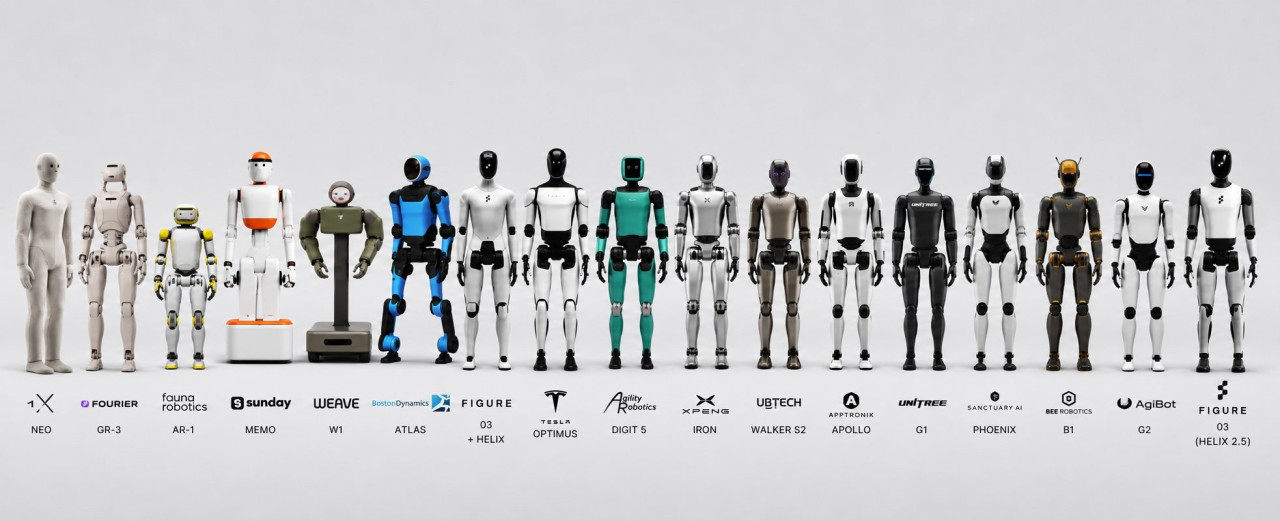
       Welcome to the community of enthusiasts, engineers, and futurists dedicated to humanoid robots! Here we discuss the latest news on developments from Tesla Optimus, Boston Dynamics, Figure AI, Agility Robotics, and other industry leaders. We share demo videos, AI analysis (from GPT to...

       Welcome to the community of enthusiasts, engineers, and futurists dedicated to humanoid robots! Here we discuss the latest news on developments from Tesla Optimus, Boston Dynamics, Figure AI, Agility Robotics, and other industry leaders. We share demo videos, AI analysis (from GPT to specialized models), ethical questions, memes, and ideas about how robots will transform work, home, and society.Posts about breakthroughs in mechanics, sensors, and autonomy  
         Discussions on AI integration (Vision, NLP, RL)  
         Idea contests: "What humanoid do you need at home?"  
         No spam, only quality content

    Join if you believe the future belongs to human-like machines! 
    #Humanoids #HumanoidRobots #RobotsOfTheFuture #motorwatt

    More
    0
    0
    0
    0
    0
    0
    Comments (0)
    Post is under moderation
    Stream item published successfully. Item will now be visible on your stream.
  • Electromobili uploaded a new video in FSD Vanguard
    Pony.ai and WeRide IPO in Hong Kong, Shares Drop Over 10%

    Pony.ai and WeRide IPO in Hong Kong, Shares Drop Over 10%

    November 6, 2025 – Chinese L4 autonomous driving leaders Pony.ai (2418.HK) and WeRide (2417.HK) listed on the Hong Kong Stock Exchange today. Both saw shares fall over 10% shortly after...

    Pony.ai and WeRide IPO in Hong Kong, Shares Drop Over 10%

    November 6, 2025 – Chinese L4 autonomous driving leaders Pony.ai (2418.HK) and WeRide (2417.HK) listed on the Hong Kong Stock Exchange today. Both saw shares fall over 10% shortly after debut.

    IPO Details

    • Pony.ai: Raised HK$1.86B (~US$239M) at HK$100/share; opened at HK$98.50, hit HK$88.

    • WeRide: Raised HK$1.03B (~US$132M) at HK$99.80/share; opened at HK$98, fell to HK$87.50.

    By midday: Pony.ai ~HK$89 (-11%), WeRide ~HK$88 (-12%).

    Market Reaction

    • Offerings moderately oversubscribed.

    • Decline amid Hang Seng drop (1.8%), U.S. election uncertainty, and valuation concerns.

    • Post-IPO valuations: Pony.ai HK$41.5B (US$5.3B), WeRide HK$23.3B (US$3B).

    Company Highlights

    Company

    Founded

    Key Backers

    Operations

    Pony.ai

    2016

    Toyota, GAC

    200+ robotaxis, 15M+ km

    WeRide

    2017

    NVIDIA, Bosch

    Services in 30+ cities

    Both operate robotaxis in Beijing, Guangzhou, and Shenzhen; full L4 rollout awaits broader approval.

    Outlook

    CEOs remain bullish on commercialization. Hong Kong solidifies role as tech IPO hub despite cautious global sentiment on autonomous driving.

    More
    0
    0
    0
    0
    0
    0
    Comments (0)
    Post is under moderation
    Stream item published successfully. Item will now be visible on your stream.
  • Alex Roy uploaded a new video in FSD Vanguard
    Xpeng's 2025 AI Day

    Xpeng's 2025 AI Day: Ushering in the Era of Physical AI and Embodied Intelligence

       On November 5, 2025, Xpeng Inc., the innovative Chinese smart electric vehicle (EV) maker, lit up its Guangzhou headquarters with the theme "Emergence." The...

    Xpeng's 2025 AI Day: Ushering in the Era of Physical AI and Embodied Intelligence

       On November 5, 2025, Xpeng Inc., the innovative Chinese smart electric vehicle (EV) maker, lit up its Guangzhou headquarters with the theme "Emergence." The 2025 Xpeng AI Day was more than a tech showcase; it was a bold declaration of the company's evolution from an EV pioneer to a global leader in embodied intelligence. Chairman and CEO He Xiaopeng took the stage to unveil groundbreaking advancements in AI, robotics, autonomous driving, and even aerial mobility. Drawing inspiration from visionaries like Tesla, Xpeng positioned itself as a multifaceted "AI-defined" powerhouse, blending artificial intelligence with physical products to redefine human-machine interaction. With live streams on platforms like YouTube, X, and TikTok, the event captivated a global audience, signaling China's accelerating dominance in the AI race.

    At the heart of the proceedings was the introduction of Xpeng VLA 2.0, a second-generation Vision-Language-Action (VLA) model hailed as the "operating system for the physical AI world." This massive, vision-centered AI framework represents a paradigm shift in physical modeling, enabling seamless integration of perception, language understanding, and real-world actions. Unlike traditional AI models confined to digital realms, VLA 2.0 empowers devices to navigate complex physical environments with human-like intuition. He Xiaopeng emphasized "Physical AI"—the fusion of AI into tangible products like vehicles and robots—as the event's core narrative, promising to merge virtual intelligence with the physical world for unprecedented efficiency and adaptability.

    Powering this leap is Xpeng's in-house Turing-series AI chips, which deliver staggering computational might. The Ultra-level driver assistance system boasts 2,250 TOPS (tera operations per second) of compute power— an order of magnitude beyond typical automotive AI setups—allowing real-time processing for complex scenarios. This reengineered stack ensures VLA 2.0 runs efficiently on production vehicles, enhancing everything from highway navigation to urban maneuvering. For EV owners, this translates to safer, smarter rides, with Xpeng's full-stack advanced driver-assistance system (ADAS) evolving into a true "neural network" for mobility. The company's Kunpeng Super Electric System, first teased last year, received further refinements, integrating these AI capabilities with high-efficiency powertrains for extended ranges and rapid charging.

    No AI Day would be complete without a nod to autonomy's holy grail: robotaxis. Building on the 2024 unveiling of the Canghai Platform—a Level 4 autonomous driving neural system—Xpeng previewed its robotaxi ambitions just days before the event. Powered by VLA 2.0 and Turing chips, these self-driving fleets promise to transform urban transport. He Xiaopeng showcased demos of fluid obstacle avoidance and passenger interactions, hinting at commercial rollouts as early as 2026. While specifics on fleet size or partnerships remain under wraps, the emphasis was clear: Xpeng aims to deploy robotaxis in controlled environments, scaling to broader applications as AI matures. This aligns with Xpeng's roadmap to leverage its Zhaoqing and Guangzhou manufacturing plants for high-volume production, potentially undercutting rivals like Waymo or Cruise with cost-effective, AI-native designs.

    The event's star, however, was the next-generation Iron humanoid robot, a mesmerizing blend of biomechanics and intelligence that stole the show. Unveiled with a fluid catwalk strut, the upgraded Iron boasts a hyper-realistic design: a bionic spine, artificial muscles, flexible skin, and 82 degrees of freedom for eerily human-like movements. Standing at 5 feet 8 inches and weighing 154 pounds, it features over 60 joints and 200 degrees of freedom in its hands alone, enabling dexterous tasks from assembly to caregiving. Equipped with three Turing chips for 2,250 TOPS of onboard processing, Iron runs on VLA 2.0 to interpret environments, process natural language, and execute actions autonomously. Xpeng envisions initial deployments in industrial and commercial settings—think warehouses or eldercare facilities—before consumer homes, with mass production slated for late 2026. This acceleration from prior timelines underscores the company's five-year R&D sprint, positioning Iron as a contender against Tesla's Optimus or Boston Dynamics' Atlas.

    Venturing skyward, Xpeng spotlighted its ARIDGE brand of "flying cars," modular eVTOL (electric vertical takeoff and landing) vehicles that embody Physical AI in aerial form. These autonomous air taxis, also fueled by VLA 2.0, promise urban air mobility with seamless ground-to-air transitions. While prototypes have been in testing, the AI Day hinted at regulatory milestones and partnerships to enable short-hop flights in congested cities. He Xiaopeng's vision? A unified ecosystem where EVs, robotaxis, humanoids, and flying cars communicate via shared AI intelligence, creating a "mobility mesh" for the future.

    Complementing the high-tech reveals, Xpeng teased the X9 extended-range MPV, a seven-seater hybrid beast with a staggering 1,602 km CLTC range (452 km pure electric). Built on the Kunpeng system with AI compute rivaling nine Nvidia Orin-X chips, the X9 targets families and fleets, blending luxury with practicality. Retail traders on platforms like StockTwits buzzed about it as "better than Tesla," fueling a 94% stock surge year-to-date.

    Strategically, He Xiaopeng announced Xpeng's rebranding as a "Global Embodied Intelligence Company," shifting focus from EVs alone to a broader AI empire. This pivot addresses intensifying competition in China's premium EV market, where safety concerns and price wars have dented rivals like Li Auto and Xiaomi. By owning its AI stack—from chips to models—Xpeng reduces dependency on suppliers like Nvidia, echoing Tesla's vertical integration playbook. The event's global replay in English at 4:30 PM Beijing Time ensured accessibility, with He declaring, "Technology changes the world," underscoring Xpeng's mission to foster trusted, user-loved innovations.

    As the curtains closed on AI Day 2025, Xpeng left attendees pondering a future where AI doesn't just assist but embodies our world. With robotaxis zipping through streets, Irons collaborating in factories, and flying cars easing commutes, the "Emergence" theme rang true. Challenges remain—regulatory hurdles, ethical AI deployment, and scaling production—but Xpeng's ambitious roadmap positions it as a frontrunner. In a landscape dominated by giants, this event wasn't just a reveal; it was a revolution in motion, propelling us toward an intelligently embodied tomorrow.

    More
    0
    0
    0
    0
    0
    0
    Comments (0)
    Post is under moderation
    Stream item published successfully. Item will now be visible on your stream.
  • Alex Roy created a new group

    FSD Vanguard

    A hub for enthusiasts, engineers, and early adopters pushing the frontier of Full Self-Driving (FSD) tech. Share real-world data, software updates, safety insights, and edge-case scenarios from Tesla FSD, Waymo, Cruise, Zoox, and beyond. No hype—just verified miles, disengagement stats, and...
    A hub for enthusiasts, engineers, and early adopters pushing the frontier of Full Self-Driving (FSD) tech. Share real-world data, software updates, safety insights, and edge-case scenarios from Tesla FSD, Waymo, Cruise, Zoox, and beyond. No hype—just verified miles, disengagement stats, and honest discussions on the path to Level 5 autonomy.
    More
    0
    0
    0
    0
    0
    0
    Comments (0)
    Post is under moderation
    Stream item published successfully. Item will now be visible on your stream.
There are no activities here yet
Unable to load tooltip content.