

Details
   Welcome to the community of enthusiasts, engineers, and futurists dedicated to humanoid robots! Here we discuss the l...

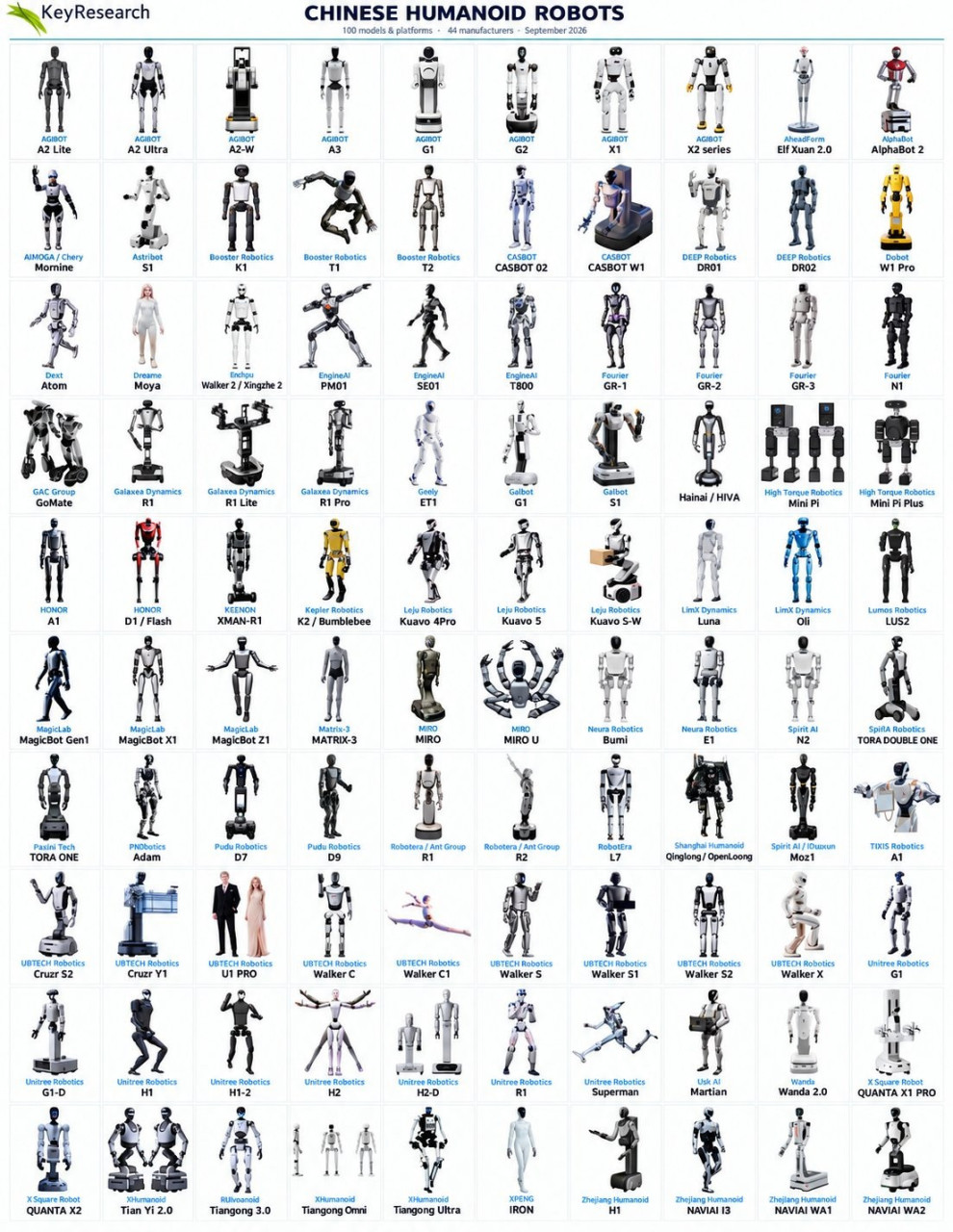
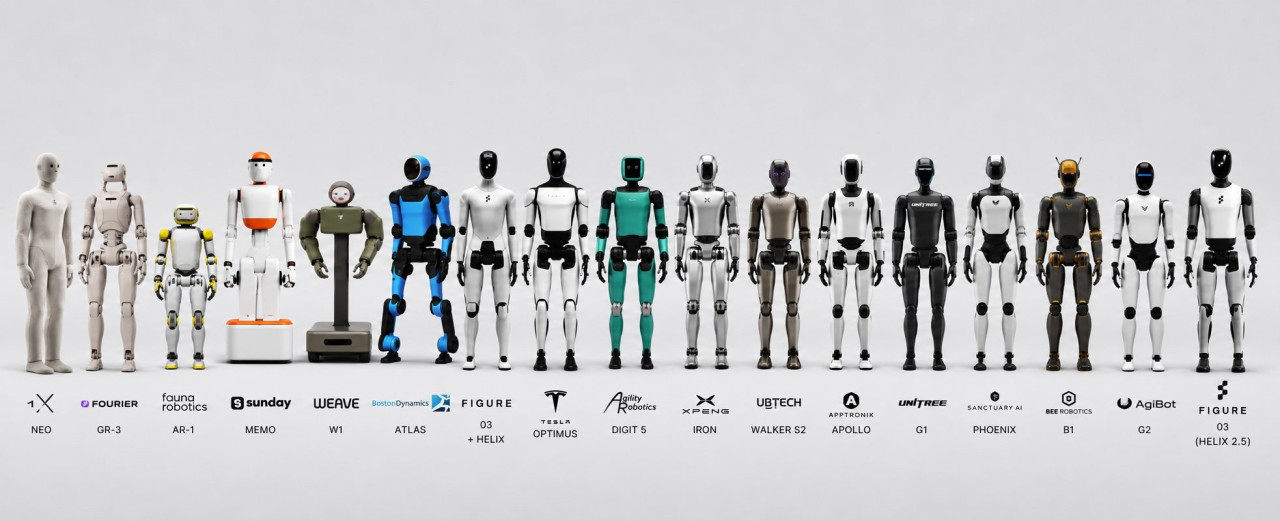
   Welcome to the community of enthusiasts, engineers, and futurists dedicated to humanoid robots! Here we discuss the latest news on developments from Tesla Optimus, Boston Dynamics, Figure AI, Agility Robotics, and other industry leaders. We share demo videos, AI analysis (from GPT to specialized models), ethical questions, memes, and ideas about how robots will transform work, home, and society.Posts about breakthroughs in mechanics, sensors, and autonomy  
     Discussions on AI integration (Vision, NLP, RL)  
     Idea contests: "What humanoid do you need at home?"  
     No spam, only quality content

Join if you believe the future belongs to human-like machines! 
#Humanoids #HumanoidRobots #RobotsOfTheFuture #motorwatt

More
Recent Photos
Link copied to your clipboard
Filter Timeline:
Pinned Items
Recent Activities
  •   Avtoxvalov reacted to this post about 18 hours ago
    Alex Garin uploaded a new video
    Unitree B2-W. Review and price.
    Unitree B2-W is the wheeled variant of the B2 industrial-grade quadruped robot from Unitree Robotics. It combines powerful leg actuation with detachable or hybrid wheels for superior efficiency on flat surfaces (higher speeds and longer range)...
    Unitree B2-W is the wheeled variant of the B2 industrial-grade quadruped robot from Unitree Robotics. It combines powerful leg actuation with detachable or hybrid wheels for superior efficiency on flat surfaces (higher speeds and longer range) while retaining strong all-terrain capabilities for stairs, slopes, and obstacles. It is designed for industrial inspection, security, logistics, exploration, and heavy-payload tasks.
    Key Technical Specifications
    • Dimensions: Standing ≈ 1098 mm × 550 mm × 758 mm; Prone/Lying ≈ 950 mm × 550 mm × 450 mm.
    • Weight: ≈ 75–85 kg (including battery, depending on configuration).
    • Degrees of Freedom (DOF): 12 (leg joints) + wheeled foot modules.
    • Max Speed: Up to 15 km/h (≈ 4.2 m/s) on wheels/flat terrain (higher speeds possible in special configurations; safety-limited in practice). Legged mode retains high dynamic performance similar to B2.
    • Wheel Specs: Diameter 225 mm; Max wheel torque 40 N·m; Max wheel speed 50 rad/s.
    • Payload Capacity: Standing load ≥ 120 kg; Continuous walking/moving load > 40 kg.
    • Terrain Capabilities: Max obstacle crossing and stair climbing (20–25 cm steps, up to 40 cm forward in some modes); Slope angle > 45°; Excellent adaptability on grass, gravel, slippery, or uneven surfaces.
    • Battery: > 2 kWh (typically 45 Ah / 2250 Wh), 58 V; Quick-swap capable.
    • Endurance: Unloaded ≈ 25–30 km; With 40 kg load ≈ 25 km (significantly improved efficiency on flat/hybrid terrain compared to pure legged B2).
    • Operating Temperature: -20°C to 55°C.
    • Ingress Protection: IP67 (dust and water resistant).
    • Computing: Standard Intel Core i5 (platform) + Intel Core i7 (user development). Optional upgrades (additional i7 or NVIDIA Orin NX modules).
    • Sensing: Typically includes 3D LiDAR, depth cameras, and optical cameras (varies by config, e.g., 32-channel LiDAR option).
    • Interfaces: Multiple 1000M Ethernet, USB 3.0, power outputs (12V, 5V, 24V, BAT).
    • Other Features: Hybrid wheel-leg mobility, strong joint torque (≈ 360 N·m), continuous OTA updates, full SDK support, and high terrain adaptability.
    Note: The B2-W excels in efficiency and speed on roads/flat areas while maintaining the B2’s rough-terrain prowess. Wheels improve endurance and reduce energy consumption on suitable surfaces.
    Price
    • Official Unitree pricing is typically listed around $100,000 USD (contact sales for negotiated/actual pricing and customization).
    • Authorized resellers often offer it from approximately $93,300 USD and up, depending on configuration (LiDAR options, computing, accessories, etc.).
      Prices vary with options such as extra batteries, advanced sensors, or software. Contact Unitree or distributors for current quotes.
    Availability for Purchase
    • Available directly from the official Unitree shop and authorized resellers worldwide.
    • Standard configurations are often ready to ship or have lead times of 30–60 days (or more for heavy customization).
    • Primarily targeted at businesses, research institutions, and industrial users. Global shipping supported (buyer responsible for duties, taxes, and customs).
      This is a civilian robot—comply with local laws and use responsibly.
    For the latest specifications, exact pricing, configuration options, or demos, visit the official Unitree website (unitree.com or shop.unitree.com) or contact their sales team directly. Specs and features can vary slightly by configuration and firmware updates.
    More
    Comments (0)
    Post is under moderation
    Stream item published successfully. Item will now be visible on your stream.
  •   Avtoxvalov reacted to this post about 18 hours ago
    Alex Garin uploaded a new video
    Unitree G1 Humanoid Robot. Review and price.


    Unitree G1 is a compact, affordable humanoid robot from Unitree Robotics, designed for research, education, development, and emerging applications in embodied AI. It features high agility, flexible movement, and options for dexterous...


    Unitree G1 is a compact, affordable humanoid robot from Unitree Robotics, designed for research, education, development, and emerging applications in embodied AI. It features high agility, flexible movement, and options for dexterous manipulation, making it suitable for imitation learning, reinforcement learning, and general humanoid robotics development.


    Key Technical Specifications

    • Dimensions: Standing ≈ 1320 × 450 × 200 mm; Folded ≈ 690 × 450 × 300 mm.

    • Weight: ≈ 35 kg (with battery); EDU version slightly higher.

    • Degrees of Freedom (DOF): 23 (standard); up to 23–43 (EDU version with optional dexterous hands and extra waist/wrist joints).

      • Single leg: 6 DOF

      • Waist: 1 DOF (optional +2)

      • Single arm: 5 DOF

      • Hands: Optional force-controlled three-fingered dexterous hands (7 DOF per hand + optional wrist).


    • Joint Motors: Low-inertia high-speed internal rotor PMSM with industrial-grade crossed roller bearings and dual encoders.

    • Max Knee Joint Torque: 90 N·m (standard); up to 120 N·m (EDU).

    • Arm Payload: ≈ 2 kg (standard); ≈ 3 kg (EDU).

    • Speed: Walking speed up to ≈ 2 m/s (7.2 km/h).

    • Battery: 13-string lithium, 9000 mAh (quick-release); ≈ 2 hours runtime depending on usage.

    • Computing: 8-core high-performance CPU (standard); EDU supports additional high-compute modules (e.g., NVIDIA Jetson Orin).

    • Sensing: Depth camera + 3D LiDAR, 4-mic array, 5W speaker; WiFi 6 + Bluetooth 5.2.

    • Other Features: Large joint movement range (e.g., waist Z ±155°), local air cooling, full joint hollow electrical routing, continuous OTA updates. Standard version has limited secondary development; EDU version supports full SDK and customization.


    Note: There is a distinction between the base/standard G1 (more limited features) and the G1 EDU (advanced computing, dexterous hands, and development support).


    Price

    • Official Unitree Shop: Base G1 from $13,500 USD (tax and shipping excluded). EDU version pricing requires contacting sales (typically higher, often in the $18,000–$25,000+ range depending on options like hands, extra compute, and accessories).

    • Resellers may list it from ≈ $16,000–$24,000 USD depending on configuration and included items.


    Prices vary with configuration (dexterous hands, batteries, computing upgrades). Contact Unitree or authorized distributors for exact quotes.


    Availability for Purchase

    • Available directly from the official Unitree shop (shop.unitree.com) and authorized resellers.

    • Standard configurations are generally in stock or have short lead times; customized/EDU versions may require 30–60+ days.

    • Global shipping available (shipping costs typically $300–$1,200; buyer responsible for duties, taxes, and customs).

    • Targeted at researchers, developers, educators, and businesses. The base model has restrictions on secondary development. This is a civilian robot—comply with local laws and use responsibly.


    For the latest specifications, pricing, configuration options, or demos, visit the official Unitree website (unitree.com/g1 or shop.unitree.com) or contact their sales team directly. Specs and features can vary by configuration and software updates.


    More
    Comments (0)
    Post is under moderation
    Stream item published successfully. Item will now be visible on your stream.
  • Superstory joined this group
    Post is under moderation
    Stream item published successfully. Item will now be visible on your stream.
  • Alex Garin uploaded a new video
    VivaTech 2026 Paris: Europe’s Tech Powerhouse Celebrates Its 10th Anniversary

    VivaTech 2026 Paris: Europe’s Tech Powerhouse Celebrates Its 10th Anniversary with AI, Robotics, and Global Ambition

    VivaTech 2026, held from June 17–20 at Paris Expo Porte de Versailles, marked a milestone as the 10th edition of Europe’s...

    VivaTech 2026 Paris: Europe’s Tech Powerhouse Celebrates Its 10th Anniversary with AI, Robotics, and Global Ambition

    VivaTech 2026, held from June 17–20 at Paris Expo Porte de Versailles, marked a milestone as the 10th edition of Europe’s largest startup and technology event. Billed as the place “where business meets innovation,” this year’s gathering drew an impressive 180,000 attendees, 14,000 startups, 4,000 partners, and 3,600 investors, solidifying its status as a must-attend global rendezvous. 

    AI, Humanoids, and Practical Innovation Take Center Stage

    The dominant theme was clear from the moment visitors entered: AI in action. Humanoid robots from companies like Unitree performed dynamic demos—boxing, balancing, and navigating crowds—while robotic dogs patrolled the halls. Smart home solutions, such as Samsung’s AI-powered refrigerators that track inventory and generate shopping lists, showcased how the technology is moving from hype to everyday utility. 
     
    Discussions emphasized practical enterprise AI, industrial applications, productivity tools, and ethical considerations. Keynotes and panels explored agentic AI, sovereignty, cybersecurity threats amplified by AI, and Europe’s push for technological independence. 

    Standout Speakers and Moments

    The speaker lineup was stellar for the anniversary edition:

     Jeff Bezos (Amazon, Blue Origin, Prometheus) shared visions on innovation and the future of humanity.
    Narendra Modi (as AI Country Partner) highlighted India’s massive incentives for innovation and inclusive AI growth.
    Yann LeCun, Joe Tsai (Alibaba), Shantanu Narayen (Adobe), and European leaders like ministers from France and Germany added depth to conversations on geopolitics, open models, and digital sovereignty. 

    Highlights from the days included:

     Day 1–2: Strong focus on AI adoption, with OpenAI noting faster agent growth in Europe, and debates on alternatives to U.S.-centric tech. 
     Day 3: Sessions on space exploration (e.g., The Exploration Company’s European ambitions), cybersecurity (“business is war”), media in the AI era, and the enduring story of Tetris. 
     
    Themes spanned Artificial Intelligence, Productivity, Sovereignty & Ethics, Energy/Greentech/Mobility, Cybersecurity & Defense, and Health & Longevity. 
     

    Atmosphere, Scale, and the Festival Day

    The energy at Hall 7 and beyond was electric, with bustling exhibition zones, startup pitches, investor lounges, and international pavilions (Germany as Country of the Year stood out). The event culminated in a public VivaTech Festival, extending the innovation vibe to iconic spots like the Champs-Élysées. 

    Attendees and exhibitors praised the event’s ability to connect startups with powerful brands, investors, and decision-makers. Quotes from participants highlighted unmatched lead generation, visibility, and networking opportunities in one vibrant European hub. 

    A Resounding Success

    VivaTech 2026 wasn’t just another tech conference—it was a confident statement of Europe’s (and Paris’s) role in the global innovation ecosystem. While U.S. and Chinese giants loomed large, the event amplified European voices on sovereignty, ethics, and collaborative deeptech.For startups seeking funding and scale, enterprises hunting solutions, or anyone wanting a pulse on where technology is headed, VivaTech remains unparalleled in Europe. The 10th edition delivered scale, substance, and spectacle—setting a high bar for future years.  
    A landmark event that perfectly blended celebration with forward-looking ambition.Whether you’re building the future or investing in it, mark your calendar for VivaTech 2027. Paris has cemented itself as the continent’s tech capital. 

    More
    0
    0
    0
    0
    0
    0
    Comments (0)
    Post is under moderation
    Stream item published successfully. Item will now be visible on your stream.
  • Alex Garin uploaded a new video
    Unitree B2. Review and price.

        Unitree B2 is an advanced industrial-grade quadruped (four-legged) robot from Unitree Robotics, designed for demanding applications like inspection, emergency response, security patrols, exploration, and research. It excels in rough terrain,...

        Unitree B2 is an advanced industrial-grade quadruped (four-legged) robot from Unitree Robotics, designed for demanding applications like inspection, emergency response, security patrols, exploration, and research. It excels in rough terrain, stair climbing, obstacle navigation, and payload carrying, with strong endurance and high mobility. 

    Key Technical Specifications

    Dimensions: Standing ≈ 1098 mm × 450 mm × 645 mm; Prone/Lying ≈ 880 mm × 460 mm × 330 mm. 

    Weight: ≈ 60 kg (including battery). 

    Degrees of Freedom (DOF): 12.
    Max Running Speed: > 6 m/s (note: safety-limited in practice; special configurations). 

    Max Joint Torque: ≈ 360 N·m.
    Max Jump Distance: > 1.6 m.
    Ditch Jumping Width: 0.5–1.2 m.
    Payload Capacity: Standing load ≥ 120 kg; Continuous walking load > 40 kg. 

    Terrain Capabilities: Max obstacle crossing ≈ 40 cm; Continuous stair climbing (20–25 cm steps, up to 40 cm forward); Slope angle > 45°.
    Battery: 45 Ah (2250 Wh), 58 V; Quick-swap capable. Optional autonomous charging.
    Endurance: Unloaded walking > 5 hours (> 20 km); 20 kg load > 4 hours (> 15 km); Overall 4–6 hours depending on use. 

    Operating Temperature: -20°C to 55°C.
    Ingress Protection: IP67 (dust and water resistant).
    Computing (Standard): Intel Core i5 (platform) + Intel Core i7 (user development). Optional: Additional Intel i7 or NVIDIA Orin NX (up to 3 units).
    Sensing: Typically includes 3D LiDAR (×1), depth cameras (×2), and optical cameras (×2); configurations vary. 

    Interfaces: Multiple 1000M Ethernet, USB 3.0, power outputs (12V, 5V, 24V, BAT).
    Other Features: Excellent terrain adaptability; optional wheeled foot modules (B2-W variant) for hybrid mobility; continuous OTA updates; SDK for development.

    Note: The B2-W is a wheeled variant with added wheels for higher speeds on flat surfaces and slightly different specs (e.g., ~75 kg weight). 

    Price

    Official Unitree Shop: Listed at $100,000 USD (contact sales for the actual/negotiated price; customizable). 

    Resellers: Often lower, e.g., starting around $78,700–$85,900 USD depending on configuration (base model, LiDAR options, etc.). Prices may include shipping in some cases but exclude duties/taxes. 

    Prices vary with options (e.g., extra batteries, advanced computing, sensors, software licenses) and volume. Contact Unitree or authorized distributors for quotes.

    Availability for Purchase

    Available for purchase directly from the official Unitree shop (shop.unitree.com) or authorized resellers (e.g., RoboWorks, RoboStore, Robots International). 

    Lead times: Often "ready to ship" for standard configs or 60 days (or more) depending on customization and stock.
    Primarily targeted at businesses, research, and industrial users. It is a civilian robot—comply with local laws, and avoid dangerous modifications. 

    Global shipping is available (duties/customs typically buyer responsibility).

    For the latest details, exact pricing, demos, or configuration options, visit the official site (unitree.com or shop.unitree.com) or contact Unitree sales directly. Specs can vary slightly by configuration and firmware updates.

    More
    0
    0
    0
    0
    0
    0
    Comments (0)
    Post is under moderation
    Stream item published successfully. Item will now be visible on your stream.
  • Alex Garin uploaded a new video
    Unitree Go2. Review and price.

    The Unitree Go2 is a cutting‑edge consumer‑grade quadruped robot designed for research, education, entertainment, and practical applications. Combining advanced robotics, AI, and mobility, it represents the next generation of accessible robotic...

    The Unitree Go2 is a cutting‑edge consumer‑grade quadruped robot designed for research, education, entertainment, and practical applications. Combining advanced robotics, AI, and mobility, it represents the next generation of accessible robotic platforms. Go2 builds on the success of its predecessors (Go1 and earlier models), offering improved performance, enhanced autonomy, and a more user‑friendly interface. It’s compact, agile, and packed with sensors and computing power, making it suitable for both hobbyists and professionals.

    Key features and capabilities:

    Agile mobility. The robot can walk, trot, run, climb stairs, recover from falls, and navigate complex terrain with remarkable stability.

    On‑board AI. Equipped with a powerful computing platform that supports real‑time perception, path planning, and decision‑making.

    Rich sensor suite. Includes depth cameras, LiDAR (on some configurations), IMU, and other sensors for 3D environment mapping and obstacle avoidance. User‑friendly control. Can be controlled via a dedicated remote controller, smartphone app, or through a developer API for custom programming. Developer‑friendly. Offers a comprehensive SDK (Software Development Kit) for Python and ROS (Robot Operating System), enabling users to create custom behaviours and applications.

    Modular design. Allows for the attachment of payloads or third‑party hardware (e.g., grippers, cameras, sensors) on the robot’s back.

    Intuitive interaction. Features voice commands, gesture recognition, and follow‑me modes, making it more than just a remote‑controlled machine.

     Specifications of the Unitree Go2

     General

    Type: Quadruped robot

    Target use: Research, education, development, entertainment

    Form factor: Dog‑like quadruped

    Weight: Approx. 15 kg

    Dimensions (approx.): 680×340×410 mm (L × W × H) in a standing position Payload capacity: Up to 5 kg (depending on configuration and terrain)

    Mobility and Actuation

    Number of legs: 4, each with 3 degrees of freedom (DoF)

    Total DoF: 12

    Max speed: Up to 3,5 m/s (approx. 12,6 km/h)

     Climbing ability: Can climb stairs and navigate uneven terrain

     Fall recovery: Can autonomously get back up after a fall

    Actuators: High‑torque brushless motors with harmonic drives

    Electronics and Computing

    Main processor: High‑performance embedded computer (custom SoC or multi‑core ARM)

    AI acceleration: Dedicated NPU (Neural Processing Unit) or GPU for on‑board deep learning inference

     Communication: Wi‑Fi, Bluetooth, and optional 4G/LTE module

    Operating systems support: Proprietary RTOS + ROS (Robot Operating System) compatibility

    Sensors

    Vision system: Depth camera (stereo or ToF) for 3D perception

    Optional LiDAR module for high‑precision mapping

     Inertial sensors: 9‑axis IMU (accelerometer, gyroscope, magnetometer)

    Motor encoders: High‑resolution encoders for precise joint control

    Other: Temperature and current sensors for motor health monitoring

    Power

    Battery type: High‑capacity lithium‑ion or lithium‑polymer battery pack

    Battery capacity: Approx. 250–300 Wh

    Operating time: Up to 2 hours under typical walking conditions; shorter at high speeds or with payload

    Charging: DC input, fast charging capable

     Software and Control

    Control methods:

    Dedicated handheld remote controller

    Smartphone app (iOS and Android)

    SDK for custom programming (Python, C++, ROS)

     Pre‑programmed behaviours: Walk, trot, run, dance, follow‑me, voice commands, autonomous exploration

    SDK features:

    Low‑level motor control

     High‑level motion planning

     Sensor data access

    Simulation support (e.g., in Gazebo or Webots)

    Connectivity and Expansion

    Expansion ports: USB, Ethernet, GPIO, CAN bus for attaching custom hardware Wireless: Wi‑Fi 5 (802.11ac), Bluetooth 5.0

    Optional modules: 4G module, additional cameras, lidar, robotic arm, etc.

     Environmental

    Operating temperature: −10 ∘ C to +45 ∘ C (may vary with battery type) Protection rating: IP54 (dust and splash resistant)

    Summary

    The Unitree Go2 is more than a toy — it’s a powerful, open‑platform robot that bridges the gap between research labs and consumer technology. Its blend of speed, agility, on‑board intelligence, and developer accessibility makes it ideal for:

    Robotics research and algorithm development

     STEM education and university projects

    Autonomous navigation and AI training

    Entertainment and public demonstrations Prototyping of inspection, delivery, or service robotics solutions  

    Price $2,800.00 USD 

    Order now and ship within 1 months

    Shipping costs between $399 and $1000

    Customer is responsible for all applicable customs duties, taxes, and import clearance in accordance with local regulations.

    Would you like me to elaborate on any specific aspect of the Go2?

    More
    0
    0
    0
    0
    0
    0
    Comments (0)
    Post is under moderation
    Stream item published successfully. Item will now be visible on your stream.
  • Alex Garin uploaded a new video
    Unitree Go1. Review and price.
    Unitree Go1 is an advanced bipedal robot designed for a variety of applications, from logistics and warehousing to entertainment and research projects. Its compact size and high maneuverability make Go1 ideal for working in tight spaces and...
    Unitree Go1 is an advanced bipedal robot designed for a variety of applications, from logistics and warehousing to entertainment and research projects. Its compact size and high maneuverability make Go1 ideal for working in tight spaces and suitable for both indoor and outdoor use.
    Key Features:
    Biped design: Provides high mobility and the ability to move across a variety of surfaces.
    Intuitive Operation: Simple and convenient operation via a mobile app or remote control.
    Flexible Use: Suitable for cargo transportation, site inspection, and educational and scientific purposes.
    Specifications:
    Maximum load: up to 50 kg (depending on configuration).
    Height: 175 cm.
    Weight: 120 kg.
    Maximum speed: 5 km/h.
    Operating range: up to 100 meters from the base station (including battery charge).
    Battery: Lithium-ion, up to 8 hours of operation (depending on load and operating conditions).
    Sensors: Includes an obstacle recognition system, tilt and pressure sensors, and cameras for visual positioning.
    Connectivity: Wi-Fi, Bluetooth, USB.
    Software: Support for various operating systems and interfaces for easy programming and configuration.
    Unitree Go1 is an innovative solution for automating various processes, combining advanced technology with ease of use.
    Price $2,700.00 USD
    Shipping costs $1000 per unit
    Duty not included, US needs to charge 25 percent duty
    More
    0
    0
    0
    0
    0
    0
    Comments (0)
    Post is under moderation
    Stream item published successfully. Item will now be visible on your stream.
  • BYD has officially confirmed it is developing humanoid robots. Executive Vice President Li Ke announced the company is already working on them. She highlighted that automotive AI and robotics share the same technological foundations....
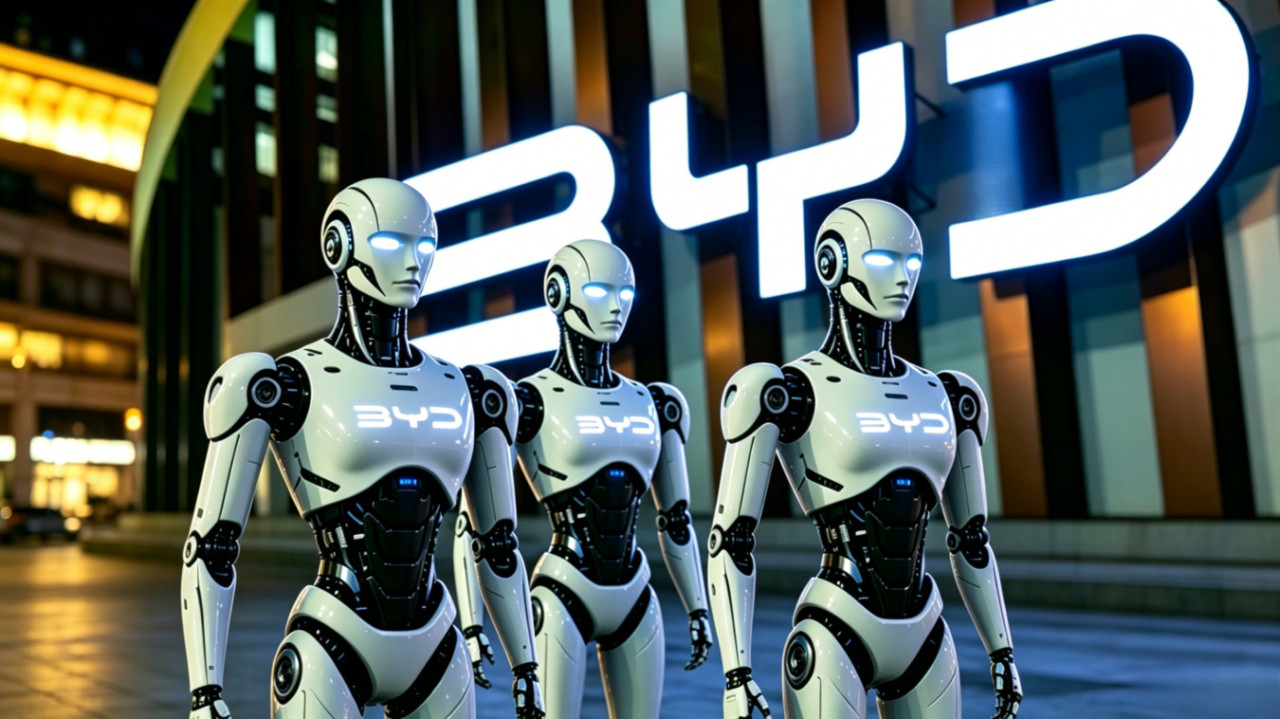
    BYD has officially confirmed it is developing humanoid robots. Executive Vice President Li Ke announced the company is already working on them. She highlighted that automotive AI and robotics share the same technological foundations. Perception, decision-making, motion control, software, and hardware all overlap between cars and robots. BYD believes manufacturing scale, supply chains, and safety expertise will be key competitive advantages.
    The company could even sell future humanoid robots through its massive existing dealer network. This would turn car showrooms into robot outlets one day. BYD is also considering an open-platform approach. It plans to develop its own robots while partnering with external robotics firms. This mirrors its successful strategy in the EV world. Several Chinese automakers are accelerating in this space. Chery already started online sales of a humanoid robot earlier this year. Xpeng is linking its AI and autonomous driving tech to future robotics too. The convergence of automotive and embodied AI is happening fast.
    BYD remains China’s EV sales leader with strong monthly volumes. This move shows how EV giants are expanding beyond vehicles. Humanoid robots could soon become household products. The future of intelligent machines is getting exciting. What do you think — will we see BYD robots in dealerships soon? Drop your thoughts below!
    More
    0
    0
    0
    0
    0
    0
    Comments (0)
    Post is under moderation
    Stream item published successfully. Item will now be visible on your stream.
  • Avtoxvalov joined this group
    Post is under moderation
    Stream item published successfully. Item will now be visible on your stream.
  •   Avtoxvalov commented on this post about 3 months ago
    Alex Garin uploaded a new video
    What about military robots today?

       Humanoid military robots, once confined to science fiction like Terminator or Star Wars battle droids, are rapidly transitioning into real-world defense programs as of 2026.

       The most prominent development comes from U.S.-based startup  Foun...

       Humanoid military robots, once confined to science fiction like Terminator or Star Wars battle droids, are rapidly transitioning into real-world defense programs as of 2026.

       The most prominent development comes from U.S.-based startup  Foundation Future Industries.  Their Phantom (also called Phantom MK1) is a 5'9" (about 175 cm), 180-pound (82 kg) humanoid designed explicitly with military applications in mind. It can carry up to 44 pounds (20 kg) of payload—including lethal weaponry—and is built for high-risk scenarios such as reconnaissance, entering buildings first in urban combat, carrying ammunition to soldiers, bomb disposal support, or "first body in" dangerous situations.             Foundation has secured millions in U.S. military contracts for research, logistics, and manufacturing tasks. While current deals do not yet include arming the robots, the company is in active discussions to expand into combat roles. CEO Sankaet Pathak predicts Phantom units could assist U.S. forces in non-combat battlefield capacities as early as 2026–2027. The company has even sent unarmed Phantom robots to Ukraine for military reconnaissance support in the ongoing conflict with Russia.

         Foundation's production ambitions are aggressive: roughly 40 units in 2025, scaling to ~10,000 in 2026, and targeting 50,000 by the end of 2027. At an estimated unit price around $150,000, this positions Phantom as one of the more affordable combat-capable humanoids, potentially enabling mass deployment.

        Other major humanoid developers like Figure AI (Figure 02/03), Boston Dynamics (Atlas), and Tesla (Optimus) have focused primarily on industrial and commercial uses—such as factory work at BMW or Hyundai—but military interest remains high. The U.S. Department of Defense continues exploring human-machine teaming concepts, though no large-scale humanoid combat programs have been publicly confirmed beyond startups like Foundation.                Internationally, China leads in aggressive military robotics integration.  While true armed humanoid soldiers remain limited, Beijing has showcased weaponized quadruped "robot dogs" (e.g., from Unitree derivatives), drone-deployed systems, and humanoid platforms in parades and demonstrations. State media has featured humanoids performing martial arts with weapons, and analysts warn of rapid dual-use (civil-military) development that could scale quickly.

          Advantages and Concerns

       Humanoid designs offer unique benefits in military contexts: they can use human tools and environments without modification, navigate stairs/rough terrain like people, and potentially integrate seamlessly with human troops. Supporters argue they could reduce soldier casualties by handling the most dangerous tasks first.

        However, ethical questions loom large: accountability for lethal decisions, escalation risks in autonomous warfare, and the psychological impact of humanoid machines resembling humans in combat. Most programs emphasize human-in-the-loop control for lethal force, similar to current drone operations.   

     By March 2026, humanoid military robots remain in early deployment phases—mostly support and testing—but the trajectory is clear. Within 5–10 years, armed humanoid units could become normalized in select militaries, fundamentally reshaping ground warfare. The race is on, driven by both technological breakthroughs and geopolitical pressures.

    More
    Comments (1)
    Post is under moderation
    Stream item published successfully. Item will now be visible on your stream.
  • Alex Garin uploaded a new video
    China has captured the humanoid robot market.

    Chinese manufacturers dominate the production of humanoid robots. In 2025, Unitree Robotics shipped over 5,500 robots, significantly outpacing American companies Tesla, Figure AI, and Agility Robotics, which each produced around 150 units.

    Curren...

    Chinese manufacturers dominate the production of humanoid robots. In 2025, Unitree Robotics shipped over 5,500 robots, significantly outpacing American companies Tesla, Figure AI, and Agility Robotics, which each produced around 150 units.

    Currently, Unitree controls 26-32% of the market. Second place goes to China's AgiBot, with 5,000 robots and revenue of $142 million. 

    China produces over 80% of all humanoid robots worldwide. In 2025, the total market size was approximately 16,000 units. Robots are used in logistics, manufacturing, and the automotive industry.

    However, the balance of power could change—Tesla plans to launch mass production of its Optimus robots in 2026. Counterpoint Research predicts the market will grow to 100,000 systems by 2027.

    More
    0
    0
    0
    0
    0
    0
    Comments (0)
    Post is under moderation
    Stream item published successfully. Item will now be visible on your stream.
  •   Alex Garin commented on this post about 6 months ago
    Alex Garin uploaded a new video
    iREX 2025 Kicks Off in Tokyo!


        Robots Revolutionize Sustainability: iREX 2025 Kicks Off in Tokyo with Groundbreaking Innovations
       Tokyo, December 3, 2025 – The 26th International Robot Exhibition (iREX) opened its doors yesterday at Tokyo Big Sight, drawing robotics...


        Robots Revolutionize Sustainability: iREX 2025 Kicks Off in Tokyo with Groundbreaking Innovations
       Tokyo, December 3, 2025 – The 26th International Robot Exhibition (iREX) opened its doors yesterday at Tokyo Big Sight, drawing robotics pioneers, industry leaders, and over 100,000 anticipated visitors from around the globe. Under the banner of "Sustainable Societies Through Robotics," this biennial powerhouse event – the world's largest robotics trade show since 1974 – is showcasing how human-robot collaboration can tackle pressing challenges like climate change, labor shortages, and aging populations. With more than 300 exhibitors spanning industrial automation, AI-driven service bots, and cutting-edge components, iREX 2025 promises to redefine the future of intelligent machines.The exhibition, running through December 6, features expanded zones dedicated to smart factories, logistics, healthcare, and community robotics. Attendees are buzzing about live demos of humanoid robots performing household chores, mountain-climbing prototypes, and AI systems that enable zero-downtime manufacturing. "Robotics isn't just about efficiency anymore; it's about building resilient, eco-friendly societies," said Dr. Scott Huang, COO of Techman Robot, during a keynote address. The event also includes business matching sessions, startup pitch contests, and technical forums, fostering global partnerships in an era where embodied AI – robots that "think" and "feel" like humans – is accelerating toward everyday adoption.
         Chinese Innovators Steal the Spotlight with Tactile Sensing Breakthroughs
    China's robotics sector is making waves, underscoring the nation's rapid ascent in embodied intelligence. PaXini Tech, a tactile sensing specialist, debuted its third-generation PX-6AX-GEN3 sensor at the show, allowing robots to "feel" textures with human-like precision for tasks like delicate manipulation in healthcare and logistics. Their OmniSharing DB platform generates nearly 200 million data entries annually, training bots for autonomous learning in real-world environments. "We're bridging the gap between digital AI and physical interaction," a PaXini spokesperson told reporters, as crowds gathered around demos of dexterous grippers sorting fragile goods without waste.Mech-Mind Robotics, another Chinese standout, expanded its booth to 360 square meters for the fourth year running, live-demoing 3D vision systems that integrate with foundation models for sustainable automation. From precision sorting in recycling plants to adaptive assembly lines, their tech emphasizes resource efficiency. Social media is abuzz with posts highlighting "China's tactile sensing and humanoids" as a game-changer, with one observer noting, "Robots here aren't just tools – they're evolving partners in a greener world."
             Japanese and Global Heavyweights Push Boundaries in AI and Simulation
      Japan, as the event's host, dominates with precision engineering. Techman Robot unveiled a high-speed AI flying-trigger inspection system powered by NVIDIA Omniverse simulation, enabling real-time defect detection at blistering speeds while minimizing energy use – a boon for eco-conscious factories. "This is a leap in collaborative robotics," Huang added, as the system synced with cobots for seamless, low-emission production lines.Debut exhibitors like Finland's Visual Components (Booth W3-41) are introducing offline programming tools that cut deployment time by simulating entire robotic ecosystems, reducing trial-and-error waste. Meanwhile, Orbbec and Advantech's joint NVIDIA-accelerated Physical AI platform wowed with next-gen vision for service robots in eldercare, projecting robots that navigate homes intuitively to support Japan's aging demographic.International flavors abound: Huayan Robotics (formerly Han's Robot) is demoing advanced cobots at Booth W3-12 for flexible manufacturing, while Elephant Robotics at W3-49 highlights educational kits blending AI and bionic arms. Korean firms focus on mobility bases for agile logistics bots, and U.S./EU players emphasize cloud-based simulation software. A viral X post summed it up: "From China's humanoids to Japan's mother machines, iREX is where AI meets physical productivity."
        A Call to Action for a Robotic Tomorrow
    As Day 2 unfolds, iREX 2025 isn't just an exhibition – it's a blueprint for sustainability. With robots tackling everything from disaster response to zero-waste supply chains, the event underscores a pivotal shift: machines as allies in human progress. Organizers expect record attendance, with pre-registered visitors from over 50 countries. For those unable to attend, virtual tours and session recordings will be available post-event via the official iREX site.In a world racing toward net-zero goals, iREX reminds us that the robots of tomorrow aren't coming to replace us – they're here to help us thrive. Stay tuned for more updates as the exhibition unfolds.
    More
    0
    0
    0
    0
    0
    0
    Comments (2)
    Post is under moderation
    Stream item published successfully. Item will now be visible on your stream.
  • Alex Garin uploaded a new video
    AgiBot walked to Shanghai!

     Chinese Humanoid Robot AgiBot Completes Historic 100 km Walk from Suzhou to Shanghai

    Shanghai, November 21, 2025AgiBot, a leading Chinese robotics company, announced that its full-size humanoid robot “Yuanbao” successfully completed a...

     Chinese Humanoid Robot AgiBot Completes Historic 100 km Walk from Suzhou to Shanghai

    Shanghai, November 21, 2025AgiBot, a leading Chinese robotics company, announced that its full-size humanoid robot “Yuanbao” successfully completed a non-stop 100-kilometer walking journey from Suzhou to Shanghai, arriving at the company’s headquarters in Pudong yesterday evening.

       The 32-hour trek, which began at 9:00 a.m. on November 19, saw the 1.75 m tall, 75 kg robot maintain an average speed of approximately 3.1 km/h while navigating sidewalks, pedestrian paths, and urban streets entirely on battery power. Yuanbao carried a 25 kg backpack throughout the trip and used only onboard vision and proprioception for navigation—no remote control or external GPS assistance was employed.

       AgiBot stated the test was designed to demonstrate long-duration dynamic balance, energy efficiency, and real-world adaptability of its proprietary large language model-driven locomotion system. The robot consumed roughly 1.8 kWh per 10 km, achieving what the company claims is a new endurance benchmark for production-ready humanoid platforms.

       Upon reaching Shanghai, Yuanbao was greeted by company engineers and local media. CEO Peng Zhihui declared: “This walk proves that humanoid robots are ready to leave the lab and operate for days in human environments.”

       AgiBot plans to showcase Yuanbao at the World Robot Conference in Beijing next month and says commercial versions capable of similar multi-day missions will enter pilot deployments in 2026.

    More
    0
    0
    0
    0
    0
    0
    Comments (0)
    Post is under moderation
    Stream item published successfully. Item will now be visible on your stream.
  • Alex Garin uploaded a new video
    Why Humanoids Are the Future of Manufacturing: Insights from Boston Dynamics

    Why Humanoids Are the Future of Manufacturing: Insights from Boston Dynamics

       In the evolving landscape of industrial automation, where factories grapple with unprecedented variability in production lines—from customizing thousands of car...

    Why Humanoids Are the Future of Manufacturing: Insights from Boston Dynamics

       In the evolving landscape of industrial automation, where factories grapple with unprecedented variability in production lines—from customizing thousands of car parts daily to adapting to endless trim options and colors—traditional robots often fall short. Hard-coded machines excel at repetitive, predictable tasks but falter in dynamic environments requiring dexterity, adaptability, and quick reconfiguration. Enter humanoid robots, not as sci-fi novelties but as pragmatic solutions poised to shatter these limitations. A recent webinar hosted by Boston Dynamics, featuring Product Lead Aya Durbin and Director of Robot Behavior Alberto Rodriguez, makes a compelling case for why their Atlas humanoid robot could redefine manufacturing, unlocking efficiency and scalability that humans alone can't sustain.

       At the heart of the argument is a simple truth: manufacturing's "variability ceiling" demands generality over specialization. Consider an automotive assembly line, where workers must deftly pick bolts from a cluttered bowl, wield a driver tool, and secure components while navigating tight spaces and maintaining balance. These aren't isolated actions but a symphony of perception, planning, and execution that varies with every shift. Traditional industrial arms, tethered to fixed fixtures, require costly retooling for even minor changes, rendering them uneconomical for high-mix, low-volume production. Humanoids like Atlas flip this script. Their human-like form—bipedal legs, dexterous hands, and a full range of motion—allows them to operate in human-designed spaces without alterations. "The real value is addressing directly that variability, that generality, that can unlock the ceiling of current automation techniques," Rodriguez asserts, emphasizing that the pursuit of a humanoid shape isn't about anthropomorphism but about leveraging existing infrastructure for maximum retaskability.

        Skeptics often question the choice of legs over wheels, citing stability concerns or added complexity. Durbin counters this head-on: while wheeled robots like Boston Dynamics' own Stretch shine in warehouses, legs offer unparalleled versatility for the factory floor and beyond. They enable slimmer profiles for navigating narrow aisles, rapid pivots around obstacles, and access to elevated or low-clearance areas that wheels can't reach without bulky add-ons. Crucially, dynamic balance is no longer a hurdle; advancements in actuators and control systems have made it a solved problem. The cost parity is striking too—humanoids don't inherently demand more actuators than wheeled counterparts, and their ROI stems from performing diverse tasks across environments, from structured plants to unstructured retail or homes.

        Achieving this vision hinges on reliability, a trifecta of hardware robustness, behavioral consistency, and intuitive software. Drawing lessons from the widespread deployment of Spot (their quadruped robot) and Stretch, Boston Dynamics is methodically advancing Atlas through three phases: initial hardware validation, customer-driven software refinement, and mass scaling to thousands of units. Early focus remains on manufacturing's low-hanging fruit—gross pick-and-place operations in safe, controlled settings—before tackling finer assembly. Yet the ambition is bolder: "manipulation completeness," where robots handle any human-equivalent task, from tool-wielding to object reorientation.

        Powering this is a sophisticated AI "brain," blending old-school robotics with cutting-edge machine learning. Gone are purely layered algorithms that cascade from perception to motion; instead, a hybrid model starts with pre-training. Neural networks ingest vast datasets from teleoperation—where human demonstrators don VR gear to "embody" Atlas, capturing 5-10 hours of nuanced behaviors per task—supplemented by simulations and observational learning from human hands. This yields an initial "behavior guess," refined on the job through demonstrations and real-time corrections. The result? Robots that don't just mimic but adapt, approaching the 99.7% uptime of top human workers. As Durbin puts it, "We want a robot that’s capable of actually performing the task... reliably, and most importantly, perform the task the exact way that the customer expects."

       Looking ahead, Boston Dynamics envisions thousands of Atlas units humming in factories within 5-10 years, starting with partnerships like Hyundai to co-develop applications. Sales aren't imminent—reliability must precede revenue—but the trajectory is clear. Humanoids won't replace workers wholesale; they'll augment them, handling the dull, dirty, or dangerous while humans oversee and innovate. In an era of labor shortages and supply chain flux, this isn't just futuristic—it's essential. By embracing generality, Boston Dynamics isn't building robots to be human; they're engineering the flexibility to outpace us where it matters most. The manufacturing revolution has legs, and it's walking toward us.

    More
    0
    0
    0
    0
    0
    0
    Comments (0)
    Post is under moderation
    Stream item published successfully. Item will now be visible on your stream.
  • Alex Garin uploaded a new video
    Inside the XPENG IRON robot.

    The launch of XPENG's IRON robot turned legendary: when audience members cried "there's a human inside," the CEO sliced it open onstage, exposing its metal skeleton, actuators, and wiring. Beyond the viral spectacle, IRON packs 82 degrees of...

    The launch of XPENG's IRON robot turned legendary: when audience members cried "there's a human inside," the CEO sliced it open onstage, exposing its metal skeleton, actuators, and wiring. Beyond the viral spectacle, IRON packs 82 degrees of freedom, 2,250 TOPS of computing muscle, and a solid-state battery for lifelike motion in human environments.In this video, we break down IRON's bionic design for seamless human-like movement, why its 22-DOF arm is a game-changing breakthrough, what "physical AI" really means for perception and control, and XPENG's rollout plans for reception, retail, security, and tour-guide roles. We'll also cover the mass-production timeline (prep in April 2026, full ramp-up by year-end), the open SDK approach, and Elon Musk's bold vision for a humanoid race. If you're tracking Optimus, Figure, or the robotics revolution, this is essential.

    More
    0
    0
    0
    0
    0
    0
    Comments (0)
    Post is under moderation
    Stream item published successfully. Item will now be visible on your stream.
  • Alex Garin uploaded a new video
    China unleashes a "robot army"

    China Unleashes 'Robot Wolves': A New Era of Warfare Dawns with AI-Powered Military Drones

    Beijing, November 14, 2025 – In a chilling display of technological dominance, China's People's Liberation Army (PLA) has unveiled its latest innovation:...

    China Unleashes 'Robot Wolves': A New Era of Warfare Dawns with AI-Powered Military Drones

    Beijing, November 14, 2025 – In a chilling display of technological dominance, China's People's Liberation Army (PLA) has unveiled its latest innovation: an "army" of quadrupedal "robot wolves" designed for front-line combat. Footage broadcast on state television shows these wolf-like machines storming a simulated beach invasion, clearing obstacles, firing precision shots, and coordinating with drone swarms—all amid escalating tensions over Taiwan. 

    The demonstration, described by analysts as "Black Mirror come to life," signals Beijing's aggressive push toward unmanned warfare, where robots could soon outnumber human soldiers on the battlefield. 

    More
    0
    0
    0
    0
    0
    0
    Comments (0)
    Post is under moderation
    Stream item published successfully. Item will now be visible on your stream.
  • Alex Garin uploaded a new video
    Tesla Unveils Optimus Assembly Line

    Tesla Unveils Optimus Assembly Line in Latest Shareholder Reveal

    Fremont, CA – November 13, 2025 – In a move that's sparking fresh excitement among investors and tech enthusiasts, Tesla has pulled back the curtain on its Optimus humanoid robot...

    Tesla Unveils Optimus Assembly Line in Latest Shareholder Reveal

    Fremont, CA – November 13, 2025 – In a move that's sparking fresh excitement among investors and tech enthusiasts, Tesla has pulled back the curtain on its Optimus humanoid robot production process. During the company's 2025 annual shareholder meeting held last week, a new video showcased the current research and development (R&D) assembly line at the Fremont Factory, offering a rare glimpse into how these ambitious bipedal bots come to life.

    The footage, shared by Tesla's AI lead Milan Kovac during the event, depicts a compact yet efficient setup where human engineers meticulously integrate components like actuators, sensors, and neural processing units into the sleek Optimus frames. Clad in white protective suits, the team works in a sterile environment reminiscent of Tesla's automotive cleanrooms, with robotic arms assisting in precise tasks such as wiring harness installations and joint calibrations. The process highlights the robot's modular design—featuring snap-on body panels for easy maintenance and reduced pinch points for safety—echoing innovations first teased in the 2023 Gen 2 reveal.

    "This is our pilot production line in action," Kovac explained in the video narration, emphasizing that the current setup is geared toward prototyping the upcoming Gen 3 model, set for a Q1 2026 unveiling. "We're iterating fast, but the real magic will happen in our scaled Gen 3 line next year, designed from the ground up for high-volume output."

    CEO Elon Musk, ever the showman, doubled down on Optimus's economic potential during the Q&A session. He revealed a bold target: driving the cost of goods sold (COGS) down to $20,000 per unit at scale—current-year dollars—making the robots affordable for factories, warehouses, and even homes. "Optimus isn't just a helper; it's a multiplier," Musk said. "One million units deployed could add trillions to the global economy by tackling the boring, repetitive stuff humans hate."

    The reveal comes at a pivotal moment for Tesla's robotics ambitions. Earlier this year, the company deployed its first "legion" of 5,000 Optimus units internally, where bots have been spotted sorting inventory and performing basic assembly tasks alongside human workers. Recent demos, including one from April showing Optimus navigating uneven terrain with human-like gait—trained entirely in simulation via reinforcement learning—have quelled skeptics who dismissed earlier prototypes as gimmicky.

    Yet, the assembly video underscores the challenges ahead. While Tesla's automotive expertise shines through in the line's car-like efficiency, humanoid complexity demands a "completely different" approach to mass production, as Kovac noted. Current output is limited to prototypes, with full automation still years away. Critics point to incidents like a 2021 factory mishap involving a robotic arm injuring an engineer, but Tesla stresses Optimus's design prioritizes safety through advanced AI safeguards and reduced cabling.

    On X (formerly Twitter), the reaction has been electric. Users like @chandan_ganwani shared the clip, quipping, "Here is what Tesla’s Optimus assembly line looks like. It is so similar to manufacturing cars. Really?" Others, such as @lethal_ai, mused on self-replicating potential: "Optimus robots can now build themselves—marking a groundbreaking leap in robotics and AI." Enthusiasts envision "dark factories" where bots assemble more bots, amplifying human ingenuity without replacing it.

    As Tesla eyes 2026 for scaled production, Optimus represents more than machinery—it's a bet on AI-driven abundance. With Cybercab robotaxis on the horizon and energy storage booming, the humanoid could cement Tesla's pivot from cars to a full-spectrum AI powerhouse. For now, this peek into the assembly line serves as a tantalizing teaser: the robots are rising, one bolt at a time.

    More
    0
    0
    0
    0
    0
    0
    Comments (0)
    Post is under moderation
    Stream item published successfully. Item will now be visible on your stream.
  • Alex Garin joined this group
    Post is under moderation
    Stream item published successfully. Item will now be visible on your stream.
  • Alex Roy uploaded a new video
    XPeng announced the humanoid robot Iron.

    XPeng Unveils a Humanoid Robot with Interesting Form

        XPeng has expanded beyond auto manufacturing and announced the Iron humanoid robot. The company announced that it will begin mass production of domestic humanoids for the first time.

     ...

    XPeng Unveils a Humanoid Robot with Interesting Form

        XPeng has expanded beyond auto manufacturing and announced the Iron humanoid robot. The company announced that it will begin mass production of domestic humanoids for the first time.

       Unexpectedly, the mechanical humanoid appeared in the form of a woman. Her movements are so organic and fluid that those present even wondered if a real person was hiding within.

       Iron took seven years and $7 billion to develop.
    The robot is equipped with XPeng's own Turing chips, which perform 2,250 trillion operations per second! By comparison, a car requires much less computing power.

       The kit includes a solid-state battery, the first in the industry. The robot's arms have 22 degrees of freedom, capable of complex manipulations. Add to this a flexible spine (the robot can bend like a human), synthetic muscles, and soft skin—and it becomes clear that this is more than just hardware, but a high-tech achievement.

    Starting in 2026, Iron will appear in XPeng stores, both in commercials and in-store. This is where the robot is truly useful: attracting attention, interacting with customers, and demonstrating products.

    Household appliances are being adopted as car manufacturers, and automakers, in turn, are starting to produce robots (remember Tesla's Optimus, too). Time will tell how all this will play out.

    More
    0
    0
    0
    0
    0
    0
    Comments (0)
    Post is under moderation
    Stream item published successfully. Item will now be visible on your stream.
  • Alex Roy created this group

    Humanoids of the Future | Humanoid Robots

       Welcome to the community of enthusiasts, engineers, and futurists dedicated to humanoid robots! Here we discuss the latest news on developments from Tesla Optimus, Boston Dynamics, Figure AI, Agility Robotics, and other industry leaders. We share demo videos, AI analysis (from GPT to...

       Welcome to the community of enthusiasts, engineers, and futurists dedicated to humanoid robots! Here we discuss the latest news on developments from Tesla Optimus, Boston Dynamics, Figure AI, Agility Robotics, and other industry leaders. We share demo videos, AI analysis (from GPT to specialized models), ethical questions, memes, and ideas about how robots will transform work, home, and society.Posts about breakthroughs in mechanics, sensors, and autonomy  
         Discussions on AI integration (Vision, NLP, RL)  
         Idea contests: "What humanoid do you need at home?"  
         No spam, only quality content

    Join if you believe the future belongs to human-like machines! 
    #Humanoids #HumanoidRobots #RobotsOfTheFuture #motorwatt

    More
    0
    0
    0
    0
    0
    0
    Comments (0)
    Post is under moderation
    Stream item published successfully. Item will now be visible on your stream.
There are no activities here yet
Unable to load tooltip content.
纸飞机下载纸飞机官网 纸飞机官网下载纸飞机下载safew官网 safew下载safew官网下载safew官网safew下载safew下载safew下载quickq官网quickq官网quickq下载纸飞机官网纸飞机下载