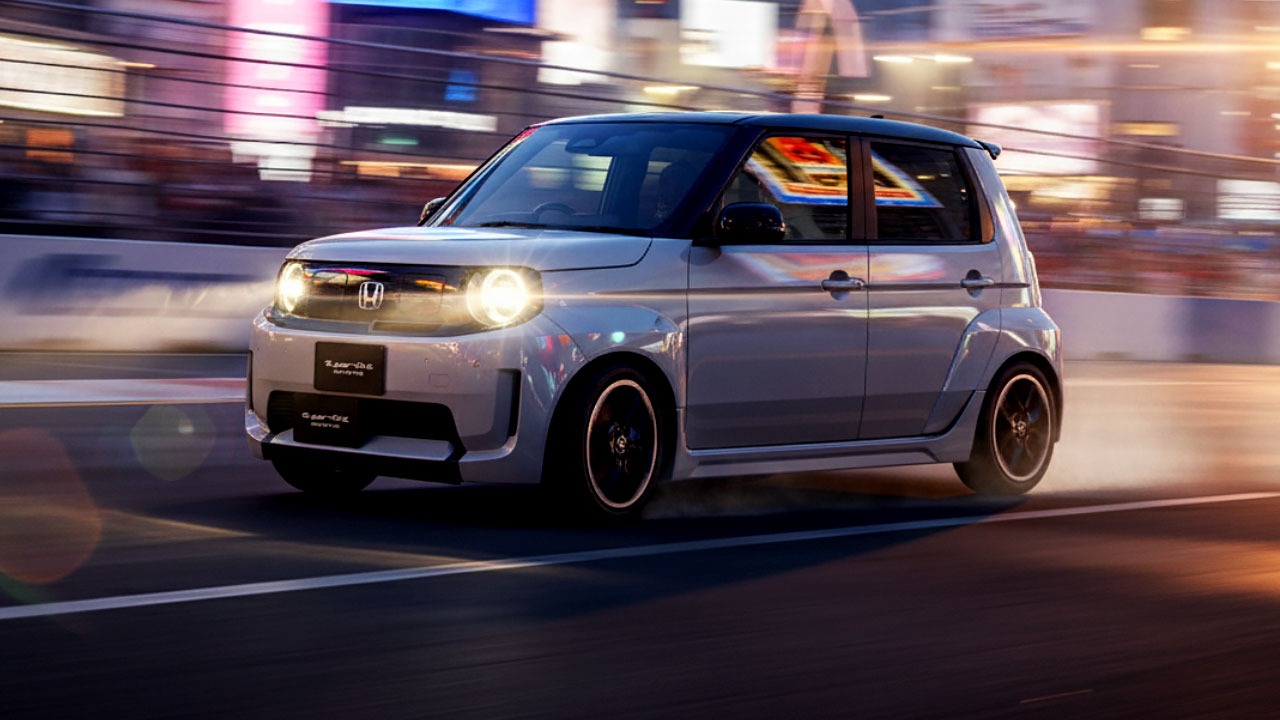

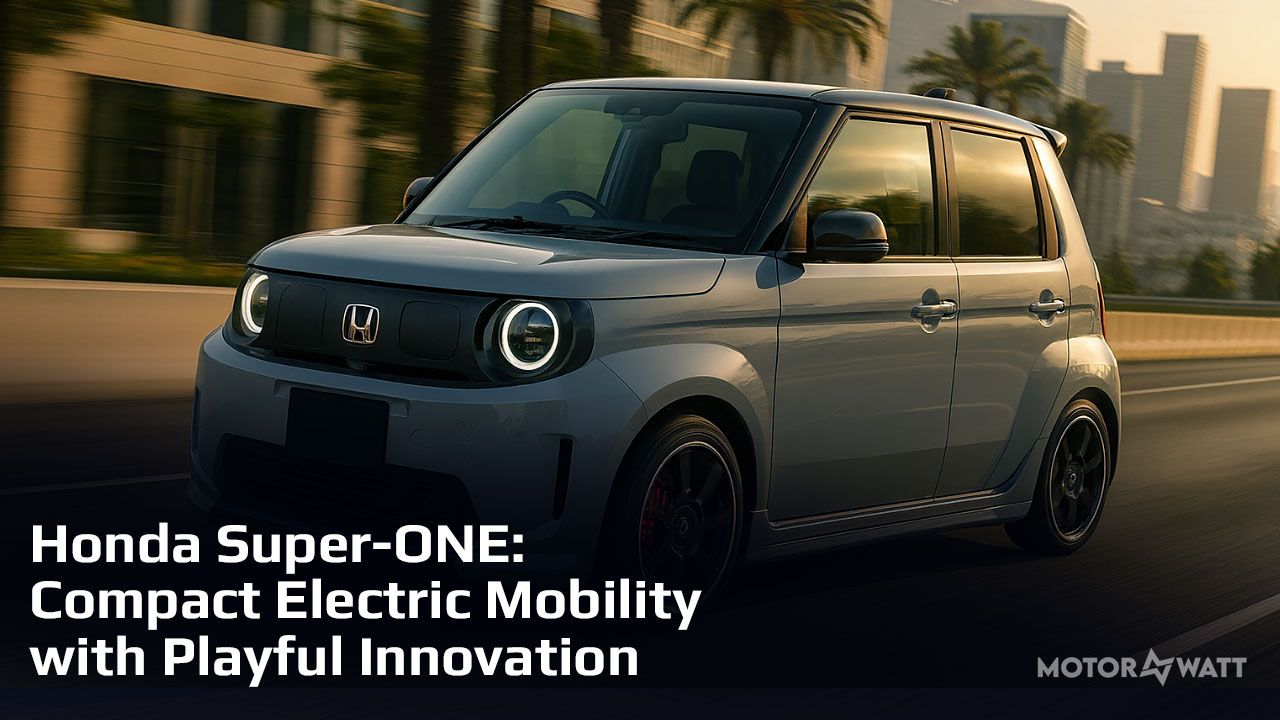
The Honda Super-ONE is Honda’s latest foray into compact electric mobility, debuting at the Japan Mobility Show 2025. Measuring roughly 3.4 meters (133 inches) long, it’s a pint-sized EV built on the N-Series platform, reminiscent of Japan’s kei-car culture. It delivers about 155 miles (250 km) of range from its 53-horsepower electric motor, aiming to make urban commuting efficient and entertaining. With a price tag expected below $20,000 (around €18,500), the Honda Super-ONE blends affordability with a dose of nostalgia, giving city drivers a taste of performance without emissions. Its "e: Dash BOOSTER" concept transforms the everyday drive into a sensory experience, where technology and emotion meet at every corner.
Design and Styling: Retro Flair Meets Modern Electric Form
Visually, the Honda Super-ONE is a tribute to the brand’s spirited past—think of it as a futuristic remix of the classic Honda City Turbo II. Its compact body is flanked by blister fenders that add width and presence, while functional air ducts enhance cooling efficiency. The boxy yet aerodynamic silhouette strikes a balance between cute and capable, evoking a rally-inspired kei racer ready for narrow Tokyo streets or crowded cityscapes.
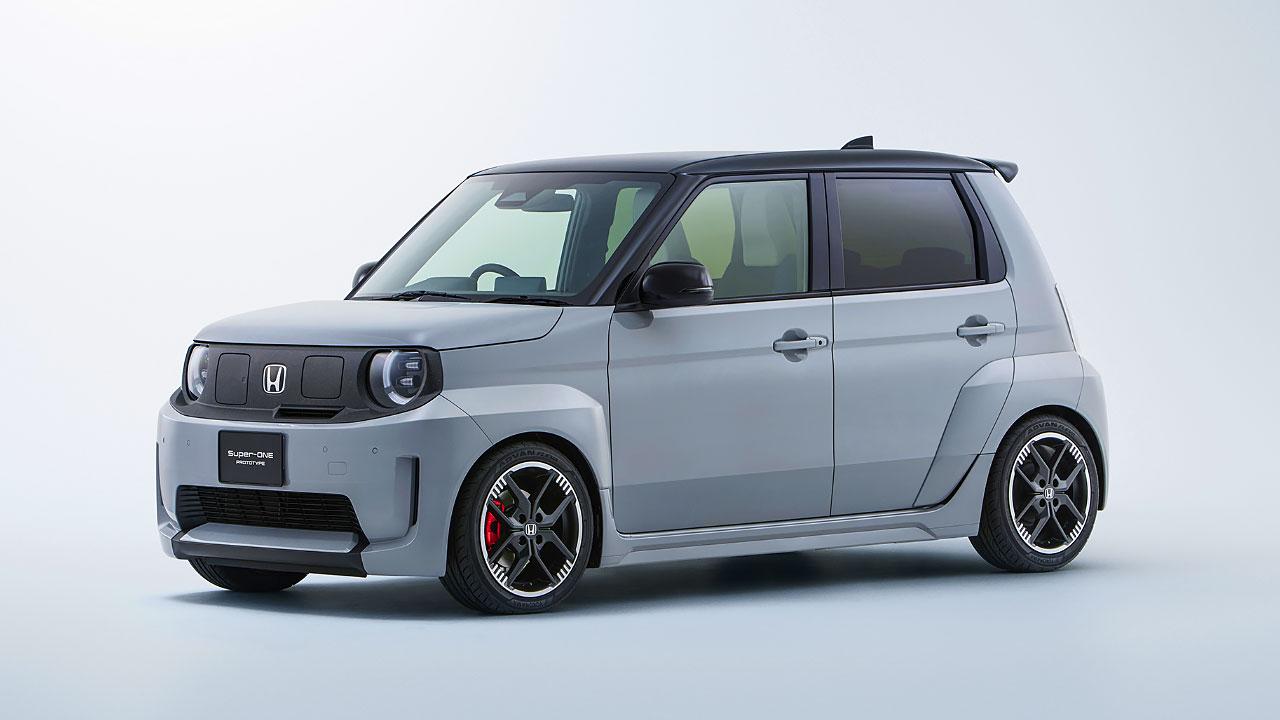
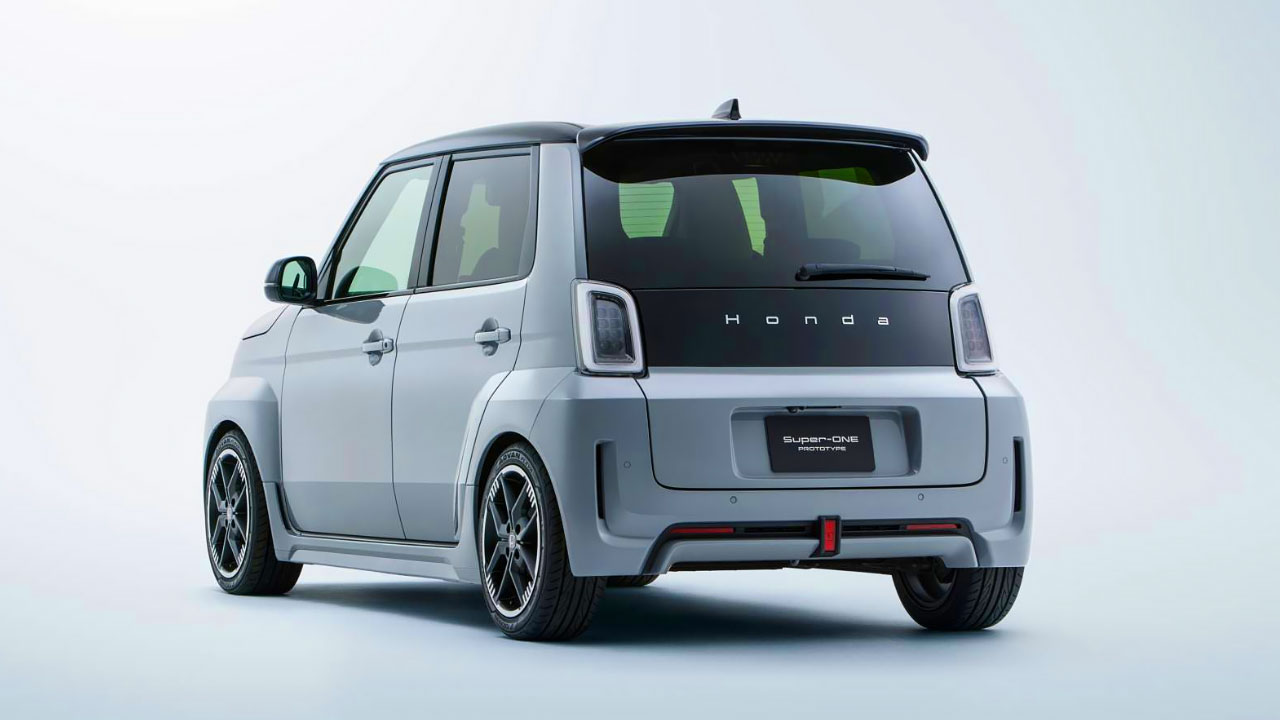
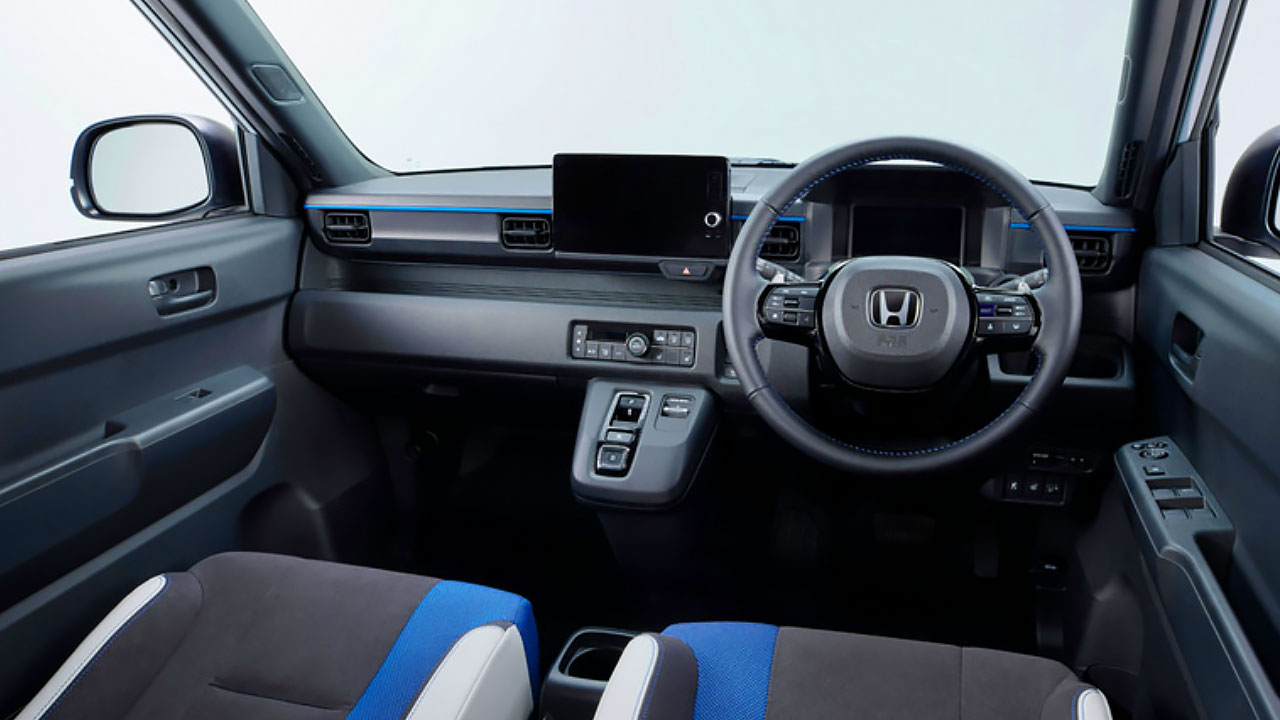
Red brake calipers, a subtle roof spoiler, and a chunky stance suggest performance hiding under playfulness. Inside, the tri-tone cabin of black, white, and gray seats embraces drivers with bolstered comfort and blue stitching, while analog-style gauges meet a modern touchscreen interface—an ideal mix for tech-savvy urbanites who still appreciate tactile charm.
Performance and Driving Thrills in the Honda Super-ONE
Honda’s engineering magic shines through the Super-ONE’s BOOST mode, which amps up the driving fun. While the standard motor provides a respectable 53 horsepower (about 40 kW), engaging BOOST unleashes all the system’s available torque for brisk urban sprints. The virtual seven-speed transmission, paired with Active Sound Control, mimics gear shifts with deep synthesized roars—turning every commute into an interactive arcade. You can actually feel the simulated engine feedback through the steering wheel and seats, a trick that connects EV tech with analog driving emotion. Aerodynamic tweaks and a low center of gravity make it agile through corners, while regenerative braking extends range subtly. Tested in Japan and the UK, it’s clear the Honda Super-ONE isn’t about speed records—it’s about grinning behind the wheel.
Inside the Honda Super-ONE: Compact, Comfortable, and Clever
Step inside, and the Honda Super-ONE feels like an electric capsule of fun and functionality. Despite its tight footprint, it offers surprising space for four adults. The flat floor and clever seat layout make it ideal for both city errands and weekend escapes. The dashboard hosts a crisp infotainment system with voice control and over-the-air updates, ensuring the car stays fresh with new features. A head-up display projects navigation and speed data directly onto the windshield, helping keep eyes on the road. Ambient lighting pulses to match driving modes—calm blue for eco, fiery red for BOOST. The sustainable materials used throughout the interior, including recycled fabrics and bio-based plastics, emphasize Honda’s commitment to greener production. Heated seats, wireless charging, and smart climate control add comfort that feels far from entry-level.
Technology and Connectivity Features
Honda equips the Super-ONE with a digital arsenal designed for connected lifestyles. Its infotainment system supports smartphone mirroring, wireless updates, and intuitive voice commands, while the instrument cluster offers dynamic animations that sync with acceleration. The car’s Active Sound Control is more than a gimmick—it personalizes each drive by generating realistic “engine notes,” adjustable via software. Safety hasn’t been overlooked, either: adaptive cruise control, lane-keeping assist, and parking sensors come standard. The vehicle-to-grid (V2G) charging capability hints at Honda’s future ecosystem, where cars interact with homes and the power grid. Charging from 20% to 80% takes around 35 minutes on a fast charger, while a full home charge on a 240V outlet completes overnight—perfect for daily commutes under 100 miles (160 km).
Launch Plans and Market Outlook
Production of the Honda Super-ONE begins in 2026, starting in Japan before heading to the UK and select Asian markets. In Japan, it’s expected to cost under ¥2.9 million (roughly $19,800 or €18,500), making it one of the most accessible electric vehicles in its class. The UK version—reportedly named the “Super-N”—will cater to European preferences with region-specific tweaks and charging compatibility. Honda is positioning this model as the successor to the discontinued Honda e, targeting young buyers who value individuality over conformity. While U.S. release remains uncertain due to kei-car regulations, enthusiasts are already buzzing about potential gray imports. In short, the Honda Super-ONE marks Honda’s renewed push into affordable electric mobility, where small truly means smart.
Why the Honda Super-ONE Captures the Fun Side of Electric Mobility
What separates the Honda Super-ONE from the typical small EV is attitude. Instead of chasing massive range or luxury interiors, Honda focuses on delivering emotional engagement in a downsized, efficient package. Its simulated gear shifts and BOOST mode recall the golden age of turbocharged hot hatches but with zero emissions. The design strikes nostalgia and modern minimalism in one clean sweep. Honda’s decision to emphasize tactile feedback, lively sound, and analog-style gauges gives drivers something most EVs forget—personality. It’s a love letter to driving, packaged for the electric era. Whether zipping through Shibuya or sliding into a London parking bay, the Super-ONE proves that small cars can carry big smiles.
Conclusion
Pros and Cons of the Honda Super-ONE
- Playful design with sporty aesthetics
- BOOST mode adds engaging driving dynamics
- Affordable price point under $20,000 (€18,500)
- Eco-friendly materials and efficient energy use
- Advanced connectivity and intuitive tech
- Limited range compared to larger EVs
- Unlikely U.S. availability due to kei-car restrictions
- Compact dimensions may not suit all drivers
Final thoughts
The Honda Super-ONE proves that electric mobility doesn’t have to feel sterile or serious. With its retro-futuristic design, interactive performance, and accessible price, it’s a compact EV that injects personality into every drive. For city dwellers seeking something fun, efficient, and distinctively Honda, the Super-ONE is exactly that—one of a kind.
Related Video