🚗💥 Tesla FSD Trial in Melbourne 🇦🇺 | First Look at Full Self-Driving in Australia! 🤖 🚨 BREAKING
What is Tesla’s Full Self-Driving (FSD)?
Tesla’s Full Self-Driving, or FSD, is the tech world’s closest thing to turning a car into a robot—except it still needs a babysitter. It’s an advanced driver-assistance system that builds on Tesla’s Autopilot and layers in features like auto lane changes, stoplight recognition, and city navigation. But here’s the catch: it’s not fully autonomous yet. It’s a Level 2+ system, meaning the car does a lot of the work, but the driver still has to be ready to grab the wheel. Tesla’s latest breakthrough? Bringing FSD to the chaotic, tram-laced, right-hand drive streets of Melbourne, Australia.
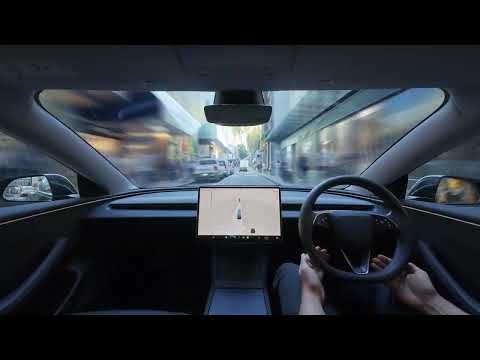
FSD’s Melbourne Debut: Hook Turns, Trams, and Tight StreetsMelbourne’s streets are no cakewalk, even for seasoned locals. Tesla decided to throw its FSD into the deep end—testing it on right-hand drive roads, roundabouts, and the infamous hook turn. A hook what? It's a bizarre Aussie maneuver where you turn right from the left lane to avoid blocking trams. Surprisingly, Tesla’s Model 3 executed it like a local. The trial footage, posted on X by Tesla’s AI team, showed FSD smoothly weaving around trams, cyclists, and clueless pedestrians—no awkward jolts or panic stops. For a system born in the orderly lanes of California, that’s a big leap.
How Tesla Vision Powers the SystemNo radar. No LiDAR. Just pure camera vision—Tesla Vision, that is. Tesla’s FSD runs entirely on a neural network trained with video from eight external cameras. It sees, it learns, and it reacts in real-time. This AI-based approach lets the car detect lanes, interpret traffic lights, and respond to spontaneous hazards like a jaywalking pedestrian or a wayward tram. In Melbourne, the system adapted to local road rules with impressive fluidity. But it’s not perfect. It still needs an alert driver behind the wheel. And while Tesla fans cheer each new release, critics keep pointing out that camera-only systems have limits.
Australia’s Regulatory EdgeWhat’s helped Tesla hit the streets in Melbourne? Simple: Australia isn’t standing in the way. According to Tesla’s Country Director for Australia and New Zealand, there are no regulatory “blockers” to deploying FSD (Supervised) in the country. That’s a rare situation—most regions either stall or overregulate autonomous tech. Australia’s laid-back approach gives Tesla a fast lane to testing. That said, the company still needs to gather localized data. Melbourne’s urban sprawl, tram systems, and RHD layout all demand customized calibration before a full rollout happens across the continent.
Global Expansion: After North America, It’s Australia’s TurnUntil now, FSD was a North America-centric feature. That changed when China got a taste—briefly—before regulators slammed the brakes. Now, Australia becomes the third major market and the first in a right-hand drive environment to try it out. Elon Musk says full, unsupervised autonomy is “just around the corner,” but that’s a promise we’ve heard since 2016. Still, the Melbourne rollout marks serious progress. It’s not just about cars driving themselves—it’s about getting them to do it legally, safely, and confidently anywhere in the world, not just on the 405 freeway in LA.
Criticism and Roadblocks: Not Everyone’s OnboardFor every fanboy posting perfect hook-turn videos, there’s someone tracking FSD’s bugs. Critics argue that relying on cameras alone creates blind spots—literally. In the U.S., multiple reports cite erratic lane changes, phantom braking, and 17 safety errors logged in just 58 miles. China fined Tesla for driving infractions like hopping bike lanes. Skeptics say Tesla needs to slow down, not speed up. The challenge is global adaptation: what works in Arizona traffic doesn’t always fly in downtown Melbourne or the roundabouts of London. Tesla’s got the ambition—but now it has to prove it can stick the landing, consistently.
ConclusionPros and Cons of Tesla’s Full Self-Driving (FSD)
- Successfully trialed in a complex right-hand drive city (Melbourne)
- Uses Tesla Vision AI for real-time environment detection
- No radar or LiDAR needed for urban navigation
- Regulatory environment in Australia allows quick deployment
- Potential to enhance safety and reduce driver fatigue
- Still requires driver supervision—Level 2+, not fully autonomous
- Camera-only system criticized for lack of redundancy
- Past safety incidents and regulatory pushback in other markets
- Unrealized timelines for fully autonomous versions
- Performance still inconsistent across diverse conditions