
Waymo quietly imported thousands of Zeekr robotaxis
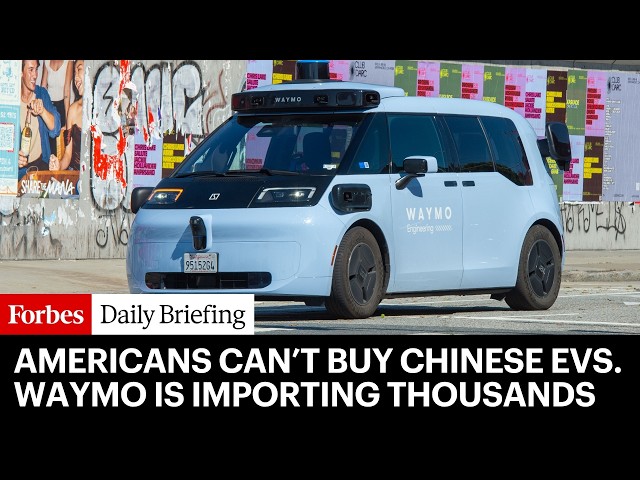
Americans still can't buy a Chinese-made EV — but Waymo has quietly brought in thousands of them. Import records show Alphabet's self-driving unit has funneled over 3,200 Zeekr-built robotaxis through the Port of Los Angeles since 2024, far more than industry watchers expected given steep U.S. tariffs on Chinese vehicles.
According to U.S. Customs Bills of Lading data compiled by trade research firm ImportGenius and reported by Forbes, Zeekr has shipped more than 3,200 units of its CM1e — known in China as the CM1e, and to Waymo riders as the Ojai — into the U.S. since 2024, with over 2,600 arriving in 2026 alone. Zeekr has no other U.S. customer, so the vehicles are widely assumed to all be headed to Waymo's fleet.
Getting around a 127.5% tariff wall
Chinese-built EVs currently face a combined 127.5% tariff in the U.S. — a 100% duty on Chinese EVs, a standard 2.5% import duty, and an additional 25% fee on "strategic" products including autos and auto parts. At the CM1e's roughly $39,000 Chinese sticker price, tariffs alone could push the landed cost close to $89,000 before any self-driving hardware is added. Most analysts had assumed the expense would cap Waymo's Zeekr fleet at under 1,000 vehicles.
Stripped down, then rebuilt in Arizona
To satisfy U.S. security rules targeting Chinese connected-vehicle technology, the Zeekrs arrive as bare "gliders" — stripped of sensors, telematics, and computing systems at Zeekr's Ningbo factory. Waymo then installs all of its proprietary autonomous driving hardware and software at its manufacturing facility in Mesa, Arizona. A Waymo spokesperson confirmed the setup, noting the self-driving technology itself is developed in the U.S.
Already on the road in three cities
Waymo has confirmed over 300 Ojai vans in service across early-access areas in San Francisco, Los Angeles, and Phoenix, up from the "more than 100" figure it gave when the model launched in late May. The Ojai rides on Waymo's sixth-generation hardware, which the company says costs roughly half as much as its previous system, and offers sliding doors and a flat floor for easier entry than the Jaguar I-Pace vehicles it's gradually supplementing.
The gap between what regular American buyers can access and what a well-funded robotaxi operator can import highlights an odd side effect of Chinese EV tariffs: the policy meant to protect U.S. automakers from cheap Chinese competition hasn't stopped that competition from reaching American streets — just American driveways.
Sources
Forbes — "Americans Can't Buy Chinese EVs. Waymo Is Importing Thousands," 2 August 2026, citing ImportGenius Bills of Lading data. forbes.com ↗
Yahoo Finance — "Chinese EVs blocked from US buyers are still pouring into Waymo's robotaxi fleet," August 2026.