
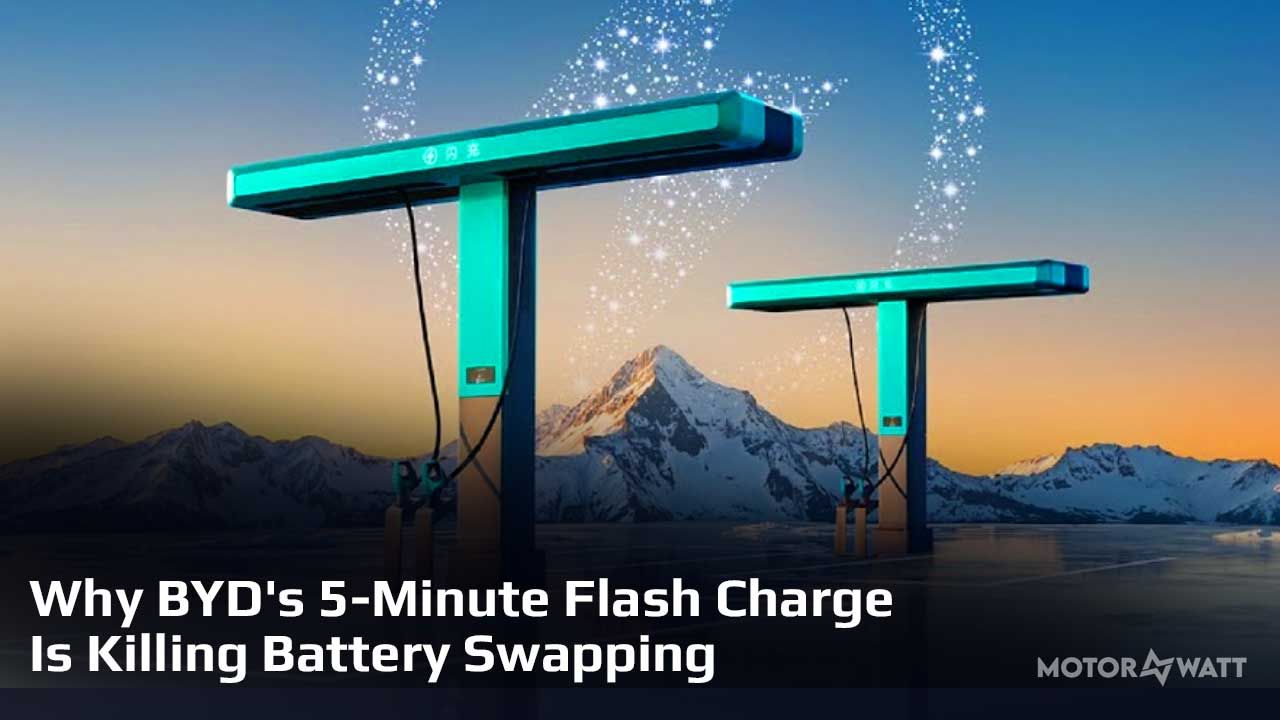
Why BYD's 5-Minute Flash Charge Is Killing Battery Swapping in China
With 1,500 kW dispensers, a next-gen Blade Battery, and 20,000 stations on the horizon, BYD is making Nio's swap model look like an expensive relic.
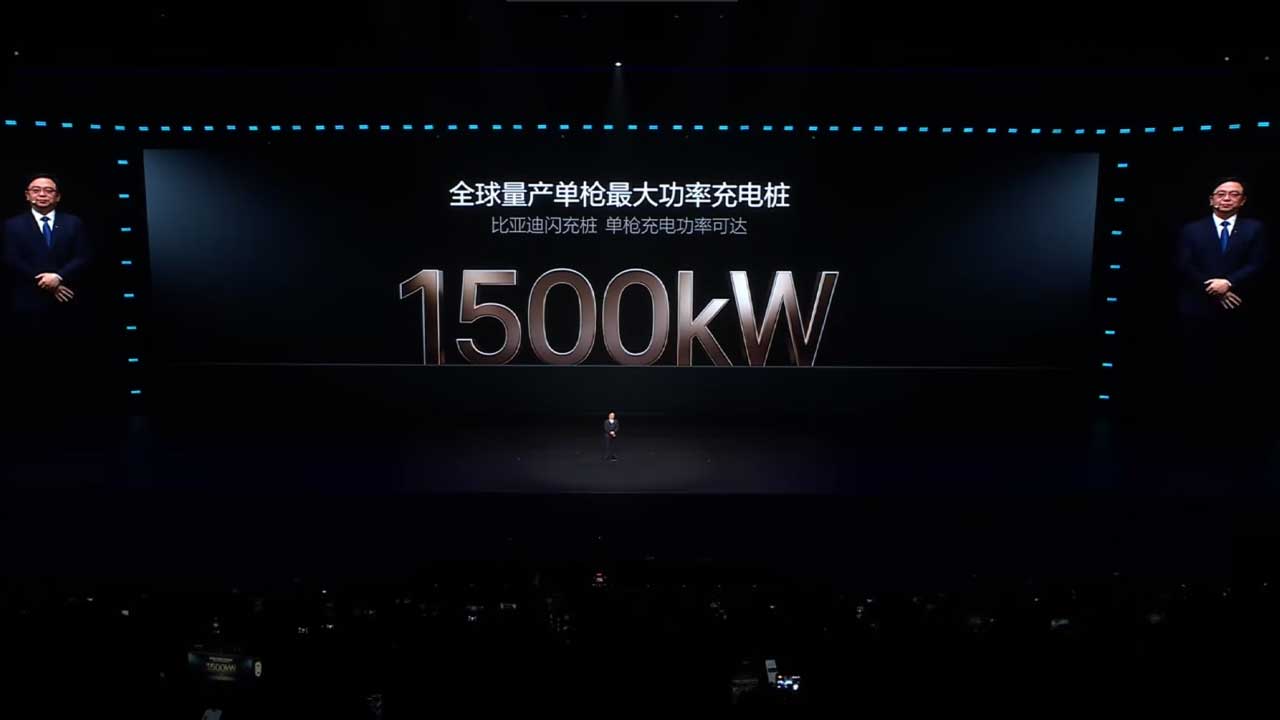
Quick Answer: BYD's second-generation Blade Battery paired with a 1,500 kW flash charger achieves a 10-70% charge in just 5 minutes - matching battery swap speed without the swap station overhead. With 20,000 stations planned across China by end-2026, plug-in flash charging is rapidly overtaking the swap model.
Key Findings at a Glance
- BYD's Megawatt Flash Charge 2.0 delivers 10-70% SOC in 5 minutes, closing the swap model's last meaningful speed advantage.
- BYD's "station-within-a-station" buffer tech cuts installation CapEx by 60% vs. traditional high-voltage chargers.
- Nio has sunk 18 billion yuan (~$2.49 billion / €2.28 billion / £1.96 billion) into swap infrastructure; each station needs ~60 daily swaps to break even, yet the network average is only 35.
- By end-2026, BYD targets 20,000 flash stations - more than all competing swap networks combined.
Table of Contents
What Is the 5-Minute Charging Revolution - and Why Does It Matter?
For years, EV sceptics had one killer argument: you can't charge a battery as fast as you fill a tank. The battery-swap industry - led in China by Nio, CATL, and Aulton - offered a shortcut: skip the charging entirely and physically swap a depleted battery for a fully charged one in roughly 3 minutes. It looked brilliant. It also cost a fortune.
Then BYD changed the math. On March 5, 2026, BYD unveiled its second-generation Blade Battery alongside the Megawatt Flash Charge 2.0 system - a combination that takes a depleted pack from 10% to 70% SOC in 5 minutes. That's not quite the swap's 3-minute turnaround, but it's close enough to render the swap's speed advantage statistically negligible for most drivers.
According to industry analysis, once a refuelling experience drops below 10 minutes, consumer anxiety about wait times drops sharply. BYD has effectively crossed that psychological threshold - without requiring owners to lease their battery, without requiring the EV to physically enter a robotic swap bay, and without requiring BYD to own every station outright.
Research from BloombergNEF indicates that fast-charging infrastructure density is now the single largest determinant of EV adoption in tier-1 and tier-2 Chinese cities. BYD's strategy is designed to win that density battle decisively.
How Does BYD's 1,500 kW Flash Charging Actually Work?
The headline figure - 1,500 kW peak output - would normally require a dedicated high-voltage substation. BYD's "station-within-a-station" architecture sidesteps that entirely.
The Buffer Battery Trick
Each BYD flash unit houses an internal LFP buffer reservoir of 200-300 kWh. This buffer charges slowly from the grid at a modest 100 kW draw, then discharges at up to 1,500 kW into your vehicle in short, high-power bursts.
Grid Impact Context: A traditional 1,500 kW charger would need a dedicated 1.5 MW grid connection. BYD's approach draws only 100 kW continuously, making co-location at petrol stations, shopping centres, and car parks much easier.
Station-Within-a-Station Deployment
BYD confirmed that 18,000 of its 20,000 planned stations are co-located at existing facilities managed by charging network partners TELD and Star Charge. BYD claims this model reduces installation CapEx by 60% compared to standalone high-voltage infrastructure.
BYD Flash Charge 2.0
- 100 kW steady grid draw
- 1,500 kW peak to vehicle
- 200-300 kWh onsite buffer
- Co-located at existing sites
- 60% lower CapEx vs. standalone
- 18,000 of 20,000 = partner model
Traditional High-Power Charger
- 1,500 kW grid connection required
- Dedicated substation needed
- High permitting and civil cost
- Long lead times (12-24 months)
- Grid destabilisation at scale
- Self-owned real estate typically needed
Peak output in kW, with BYD's flash charge setting the benchmark.
How Does the Station Count Stack Up in 2026?
Numbers tell the story best. As of March 2026, here is where China's rapid-replenishment networks stand - and where they're headed by year-end:
| Operator | Technology | Stations (Mar 2026) | End-2026 Target | Growth Required |
|---|---|---|---|---|
| BYD | ||||
| Nio | ||||
| CATL (Choco-SEB) | ||||
| Aulton New Energy | ||||
| CATL (Qiji Truck) | ||||
| All Swap Operators Combined |
The contrast is stark. BYD alone targets 20,000 flash stations by end-2026 - nearly double the combined target of all swap operators. BYD is currently deploying at a rate of approximately 1,600 new stations per month.
Current scale versus stated 2026 targets.
Why Is the Economics of Swap vs. Flash So Brutal?
Here's where Nio's model starts to look fragile. The swap station business requires a constant, high volume of daily transactions to justify its capital cost. A typical Nio swap station requires approximately 60 swaps/day to break even. The current network average? Just 35 swaps per day.
"Nio's swap infrastructure is essentially a premium real-estate play - expensive to build, expensive to operate, and predicated on a loyal, dense customer base that hasn't yet materialised at the necessary scale."
Nio's cumulative investment in its swap network has now surpassed 18 billion yuan - equivalent to $2.49 billion USD (£1.97 billion / €2.29 billion) at current exchange rates.
Break-Even Visualisation
BYD's flash unit, by contrast, can support roughly 40 vehicles per day based on a 100 kW grid draw and an average 60 kWh charge per vehicle. There's no spare battery inventory to depreciate, no robotic arm to maintain, and no proprietary vehicle-compatibility matrix to manage.
Can BYD Flash Charging Handle Northern China's Brutal Winters?
Cold-weather performance has historically been the swap model's most compelling trump card. In Northern China, temperatures regularly plunge to -30°C (-22°F). At those temperatures, conventional fast chargers struggle. Battery swap sidesteps this by replacing a cold battery with a pre-warmed one.
BYD's second-gen Blade Battery has a direct answer. Its new thermal management system achieves a 20%→97% charge in 12 minutes at -30°C.
Minutes to reach usable charge or full turnaround, across ambient temperature points.
The thermal management improvements in BYD's second-generation Blade Battery are genuinely impressive. Achieving sub-15-minute charge acceptance at -30°C removes what was arguably the technology's biggest remaining vulnerability in high-latitude markets.
Is 1,500 kW Flash Charging Actually Safe?
Pushing 1,500,000 watts into a battery pack in 5 minutes sounds alarming. BYD addressed this with the Blade Battery 2.0's most striking test result: a simultaneous Flash Charging + Nail Penetration Test with zero thermal runaway after 500 high-power charge cycles combined with structural penetration.
Safety benchmark: The nail penetration test simulates internal short-circuit conditions. Blade Battery's LFP chemistry has an inherently stable crystal structure that prevents the thermal runaway cascade seen in NMC or NCA cells.
The LFP chemistry advantage matters here. LFP cells have a fundamentally higher thermal stability threshold (~270°C / 518°F) before exothermic decomposition begins.
Who Is BYD Flash Charging Actually For? A Market Positioning Breakdown
Nio's swap network is a premium product for Nio owners only. BYD is going the opposite direction: democratising ultra-fast charging across its entire lineup.
According to BYD's post-launch briefing, the rollout timeline is:
Q1 2026 - Premium Launch
Second-gen Blade Battery debuts in Yangwang U7 and Denza Z9 GT.
Q2 2026 - Mass Market Midrange
Technology rolls out to the Song Plus and Qin L.
H2 2026 - True Mass Market
The Dolphin and Seagull receive flash-charge capability.
"When a Seagull - a car that costs less than £11,000 - can flash-charge in 5 minutes, the premium justification for a Nio swap subscription simply evaporates for most buyers."
Relative rollout priority across the 2026 launch phases.
What Do Industry Experts Say About BYD vs. Nio's Charging Race?
Battery swapping made perfect sense as a bridge technology before fast-charging matured. But BYD has just kicked away the bridge.
The 5-minute delta between BYD's flash charge and Nio's swap is psychologically irrelevant to 90% of drivers. What matters is whether there's a charger near you.
LFP chemistry and the buffer amplifier concept together solve two problems that have plagued ultra-fast charging: safety and grid strain.
BYD Flash Charging Rollout: The Implementation Roadmap to 2026
For fleet operators, property managers, and investors tracking the space, here is the confirmed implementation timeline based on BYD's March 2026 briefing and public disclosures:
March 2026 - Blade Battery 2.0 + Flash Charge 2.0 Launch
4,239 stations operational at launch. Yangwang U7 and Denza Z9GT become first compatible vehicles.
April-June 2026 - Mid-Market Expansion
Song Plus and Qin L launch with Blade 2.0 compatibility. Target: 10,000 stations by June.
July-September 2026 - Mass Market & Geographic Push
Dolphin and Seagull receive software/hardware updates enabling 1,500 kW flash charging.
October-December 2026 - 20,000-Station Milestone
Target: 20,000 active flash stations, delivering 90% urban China coverage within 5 km radius.
Projected station counts across the rollout timeline.
Frequently Asked Questions: BYD Flash Charging vs Battery Swap
- How fast is BYD's flash charging compared to Nio's battery swap?
BYD's Megawatt Flash Charge 2.0 achieves a 10% to 70% state of charge in approximately 5 minutes. Nio's Generation 4 battery swap stations complete a full battery exchange in roughly 3 minutes.
- Does BYD flash charging work in very cold weather like Northern China?
Yes. BYD's new thermal management system enables a 20% to 97% charge in just 12 minutes at -30°C (-22°F).
- Why is Nio's battery swap model struggling financially?
Nio has invested over 18 billion yuan in its swap infrastructure, while the average station is still below the break-even utilization level of about 60 swaps per day.
- Can non-BYD electric cars use BYD flash charging stations?
BYD's flash charging stations use standard high-power CCS or GB/T connectors, which means they can serve most compatible Chinese EVs, not just BYD vehicles.
- Is BYD flash charging at 1,500 kW safe for the battery?
BYD says the Blade Battery 2.0 passed a simultaneous flash charging and nail penetration test with zero thermal runaway after 500 high-power cycles.
- Will BYD's 20,000-station target actually be achieved by end-2026?
The target is aggressive but plausible given current deployment momentum and BYD's partner-led co-location model.
The Verdict: Is Battery Swapping Dead?
Not quite dead - but clearly on the defensive. Nio's swap model retains genuine advantages in a narrow set of use cases: luxury EV owners who value that extra 2-minute speed margin, truck and commercial fleets, and extreme northern markets.
But for the vast majority of China's 10-million-plus annual EV buyers, BYD flash charging at 1,500 kW across 20,000 stations is simply the better answer.
Li Yunfei of BYD described battery swapping and flash charging as "different paths to the same destination." The infrastructure data tells a more aggressive story: BYD is building an eight-lane highway while swap operators are still widening a country road.
Watch this space: CATL's Choco-SEB swap technology is designed to be vehicle-agnostic. If CATL achieves significant OEM adoption across Chinese brands, the swap model could see a resurgence in niche segments.
Stay Ahead of China's EV Infrastructure Race
Get real-time updates on BYD's flash charging rollout, Nio's swap network performance, and the 2026 infrastructure data that matters. Follow MotorWatt for data-driven EV analysis.
Related Video