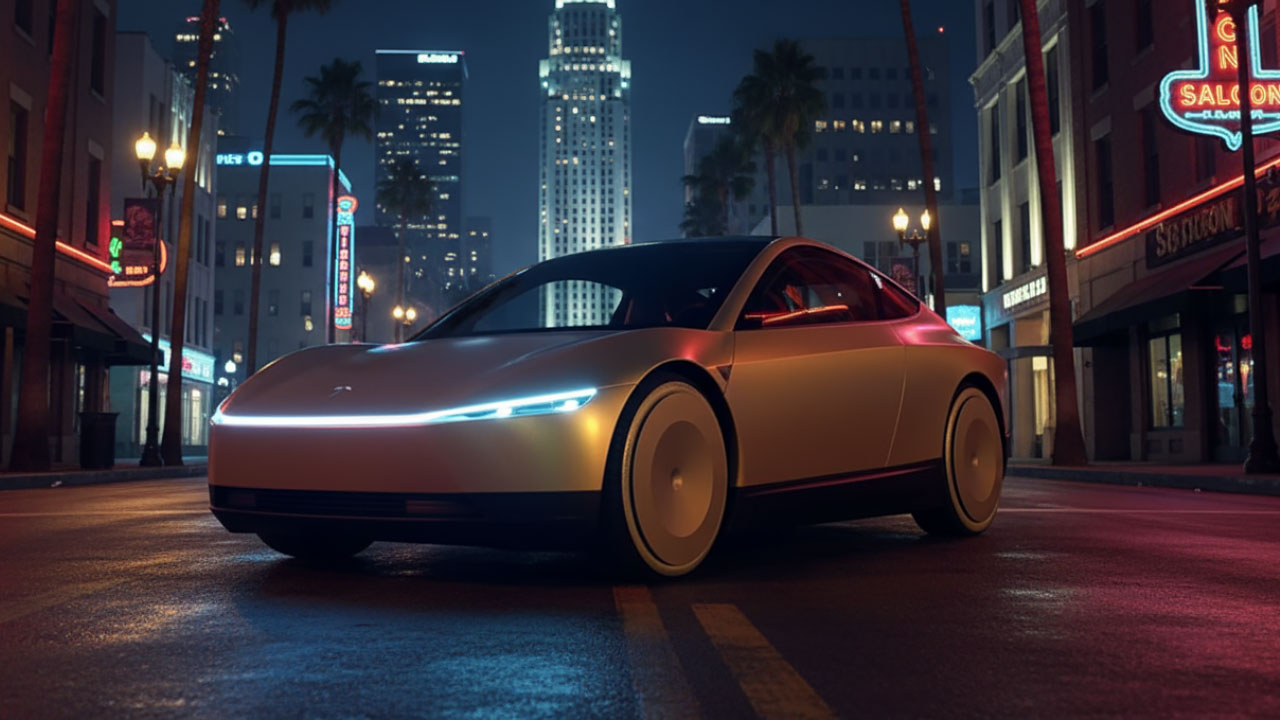

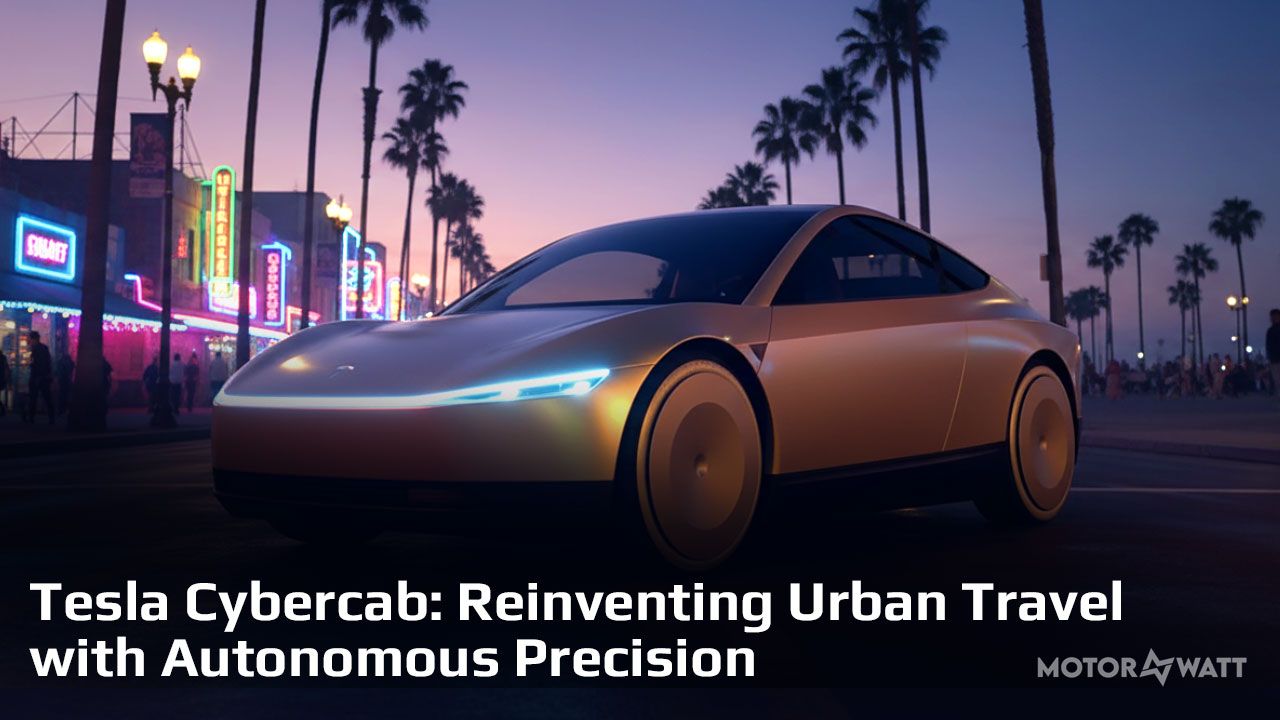
Tesla Cybercab transforms the concept of city driving into an on-demand, driverless experience. Built for efficiency, safety, and affordability, this compact robotaxi uses Tesla’s Full Self-Driving hardware to navigate urban streets without human input—offering rides that cost less than public transit and promise 30x safer travel.
Tesla Cybercab design and interior innovations
Purpose-built for simplicity and comfort
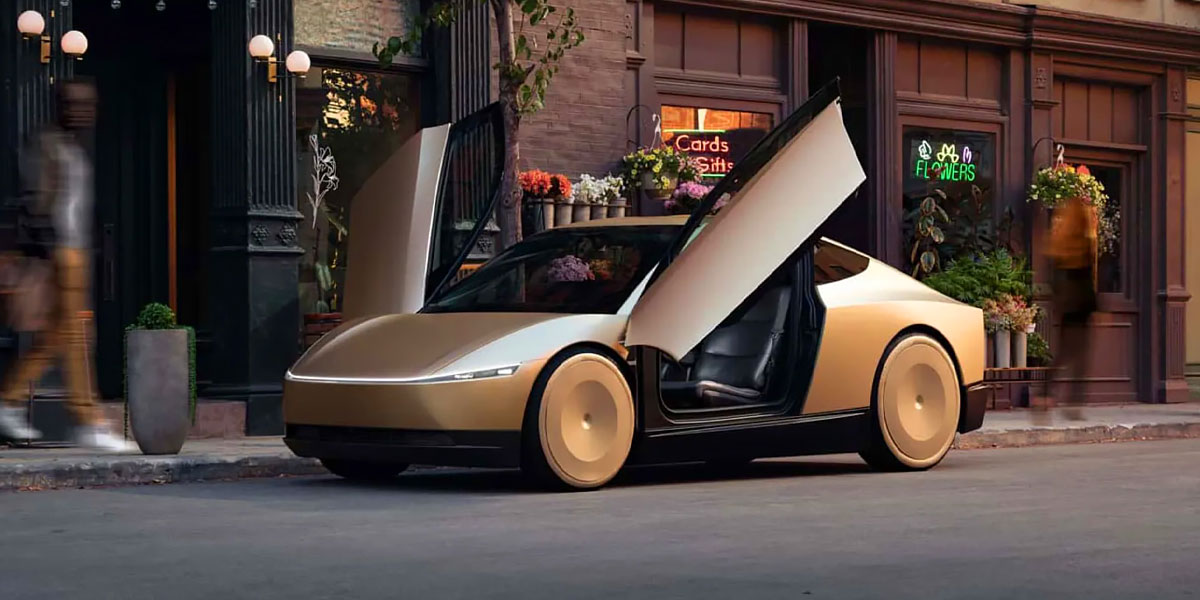
The Cybercab takes Tesla’s design philosophy to its minimalist extreme. Its coupe-like silhouette skips rear windows and traditional mirrors, trading them for integrated cameras and light bars that stretch front to back. Dual butterfly doors lift upward automatically, giving the car a futuristic stance while easing entry in tight spaces.
- Seating: 2 passengers (front row only)
- Doors: Dual butterfly (power-operated)
- Cargo: 20–30 cu ft powered hatch
- Weight: 2,500–3,000 lbs
Interior designed for urban relaxation
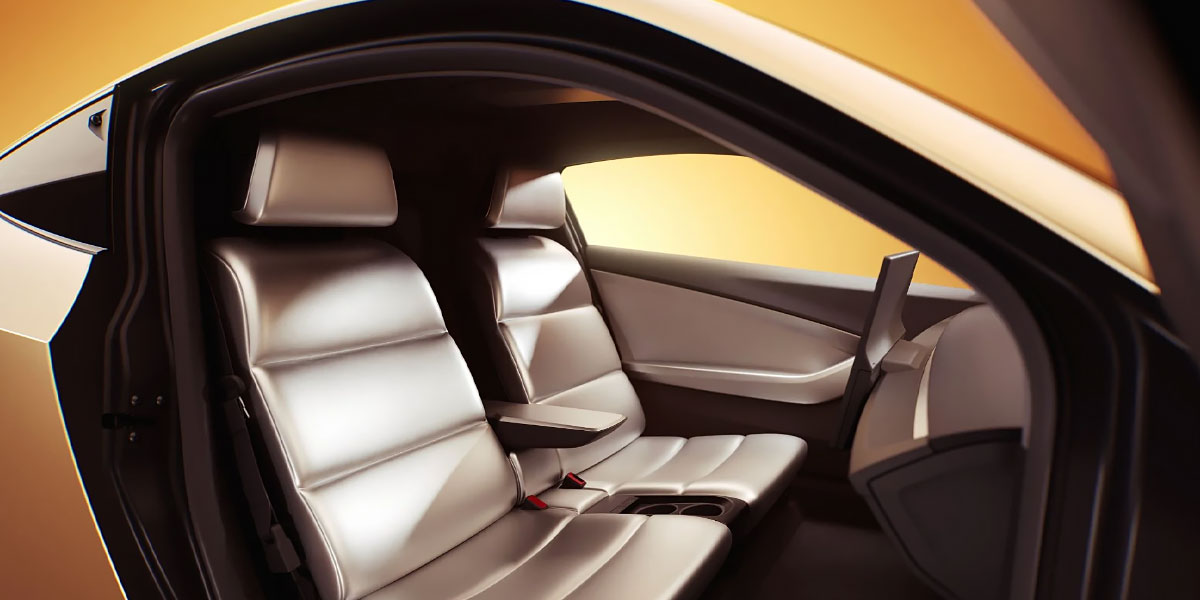
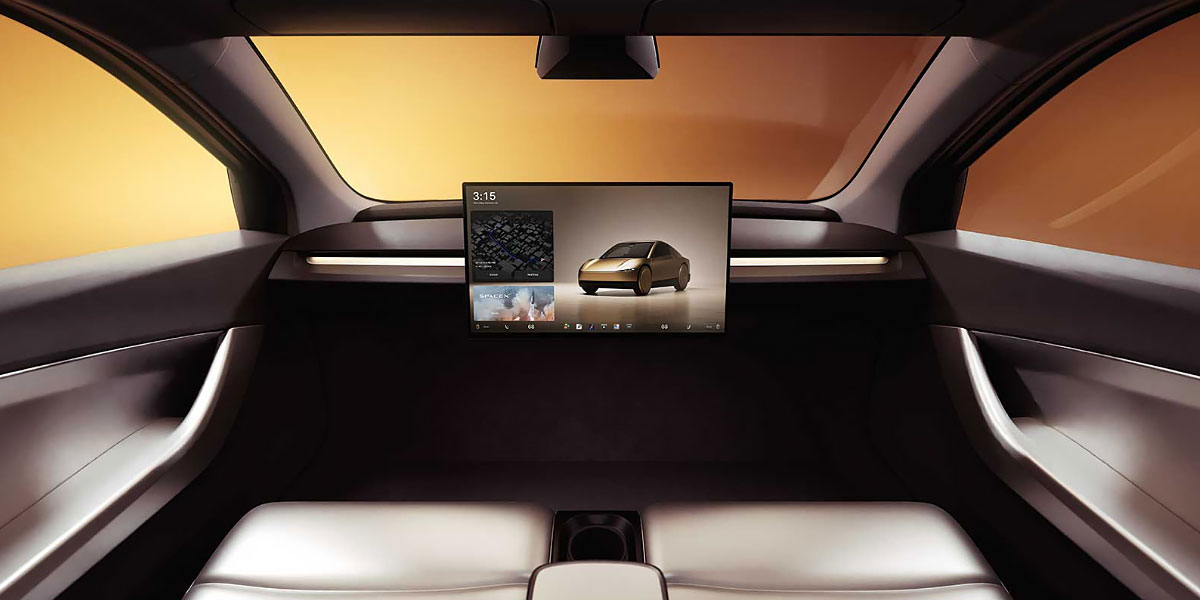
Inside, passengers find vegan leather seats, ambient lighting, and a massive 20.5-inch display at the center. There’s no steering wheel, no dashboard, and no distractions—just a clean space to work, rest, or watch a film. All controls and climate preferences sync automatically through the Tesla app.
Cybercab performance and efficiency for city life
Balanced power for short-haul precision
Instead of chasing top speed, the Cybercab focuses on efficiency. A single rear-mounted motor delivers around 200–250 horsepower, sending the cab from 0–60 mph (0–97 km/h) in under seven seconds. Its top speed of 100 mph (160 km/h) easily covers urban needs while maximizing range.
Range and charging simplicity
With a 50–60 kWh battery pack, shared with Tesla’s Optimus platform, the Cybercab reaches roughly 300 miles (480 km) per charge. Wireless inductive pads handle charging autonomously—simply park and charge—while robotic cleaning systems keep each cab spotless for the next passenger.
- Battery: ~60 kWh
- Range: 300 miles / 480 km
- Charging: Wireless inductive
- Acceleration: 0–60 mph in <7 seconds
Full Self-Driving and AI safety in Tesla Cybercab
Hardware built for autonomy
Each Cybercab runs Tesla’s Hardware 5 platform—AI5—combining cameras, radar, and ultrasonic sensors to create a 360° view. There’s no LiDAR in sight, but the neural network that powers FSD continuously learns from billions of miles driven by Tesla owners worldwide.
Software and data-driven confidence
Using vision-only AI, the Cybercab operates at Level 4 autonomy in designated areas. Its algorithms reroute for traffic, sync music or temperature settings to the user profile, and adjust behavior for local driving conditions. Tesla claims its FSD is already over ten times safer than human drivers and getting smarter every day.
- Autonomy Level: 4 (geofenced)
- Safety Rate: 30x safer than humans
- FSD platform: Hardware 5 (AI5)
Manufacturing and production efficiency
“Unboxed” process changing the assembly line
Giga Texas pioneers Tesla’s new “unboxed” production method, where modules are built in parallel and joined at the end—cutting build time drastically. With just 80 major components, Cybercab assembly could achieve a pace of one unit every five seconds, aiming for up to four million units annually once fully scaled.
Global manufacturing footprint
Initial production starts in Texas, but plans are already in motion to expand to Giga Shanghai and Giga Berlin once local regulations clear. Each site operates on renewable energy, reflecting Tesla’s larger goal of sustainable, high-volume EV manufacturing.
Affordability and fleet economics
Making autonomy accessible to everyone
Tesla’s $30,000 starting price sets a new low for an autonomous EV. For consumers, it’s an affordable step into self-driving tech; for fleet owners, it’s a revenue machine. A single Cybercab could earn its owner around $30,000 annually when connected to Tesla’s ride-hailing network.
- Base Price: $30,000 (€27,900)
- Operating Cost: $0.20–$0.40/mile
- Passenger Fare: $0.30–$1.00/mile
Comparing Tesla’s cost advantage
Uber and Lyft rides typically cost between $2 and $3 per mile. Tesla’s autonomous approach slashes that by up to 90%, thanks to no human driver, efficient energy use, and low maintenance. The result? A sustainable, scalable, and profitable mobility service.
Launch timeline and rollout strategy
From concept to city streets
The Cybercab debuted at Tesla’s “We, Robot” event in October 2024. By mid-2025, Model Y-based pilot robotaxis were already running in Austin, Texas, with $4.20 flat fares. Unsupervised FSD testing began later in 2025, setting the stage for the Cybercab’s full production debut in Q2 2026.
Global expansion plans
After Texas, Tesla eyes California and Nevada for early deployment, then Europe in 2027 once regulatory approvals land. A future “Robovan” platform will handle larger groups and commercial deliveries under the same autonomous network.
| Unveiling | October 2024 |
| Pilot Launch | June 2025 (Austin) |
| FSD Unsupervised | Late 2025 |
| Production Start | Q2 2026 (Giga Texas) |
| Consumer Deliveries | Late 2026 |
Impact, challenges, and future outlook
Regulatory hurdles and market readiness
Despite massive potential, Cybercab’s steerless design still faces scrutiny from U.S. regulators like NHTSA. Tesla’s path to approval involves phased rollouts, human-monitored fleets, and gradual expansion of unsupervised zones.
Why Cybercab could redefine urban transport
Competitors such as Waymo and Cruise remain confined to small test areas. Tesla’s advantage lies in its data moat—millions of connected vehicles feeding real-world driving information into its neural networks daily. This learning loop gives Cybercab a lead few can match.
Final thoughts on Tesla Cybercab
Pros
- Affordable entry to autonomous travel
- 30x safety improvement over human driving
- Low operating and maintenance costs
- Wireless charging and AI-driven maintenance
Cons
- Regulatory delays may slow rollout
- Public trust in autonomy still developing
- Limited to urban and geofenced regions initially
Why Tesla Cybercab matters
Tesla Cybercab marks a turning point in mobility—an electric robotaxi designed to cut costs, reduce accidents, and make driverless transport mainstream. With production at Giga Texas and autonomy advancing faster than anyone expected, the Cybercab could soon make hailing a car as easy as sending a text.
Related Video