

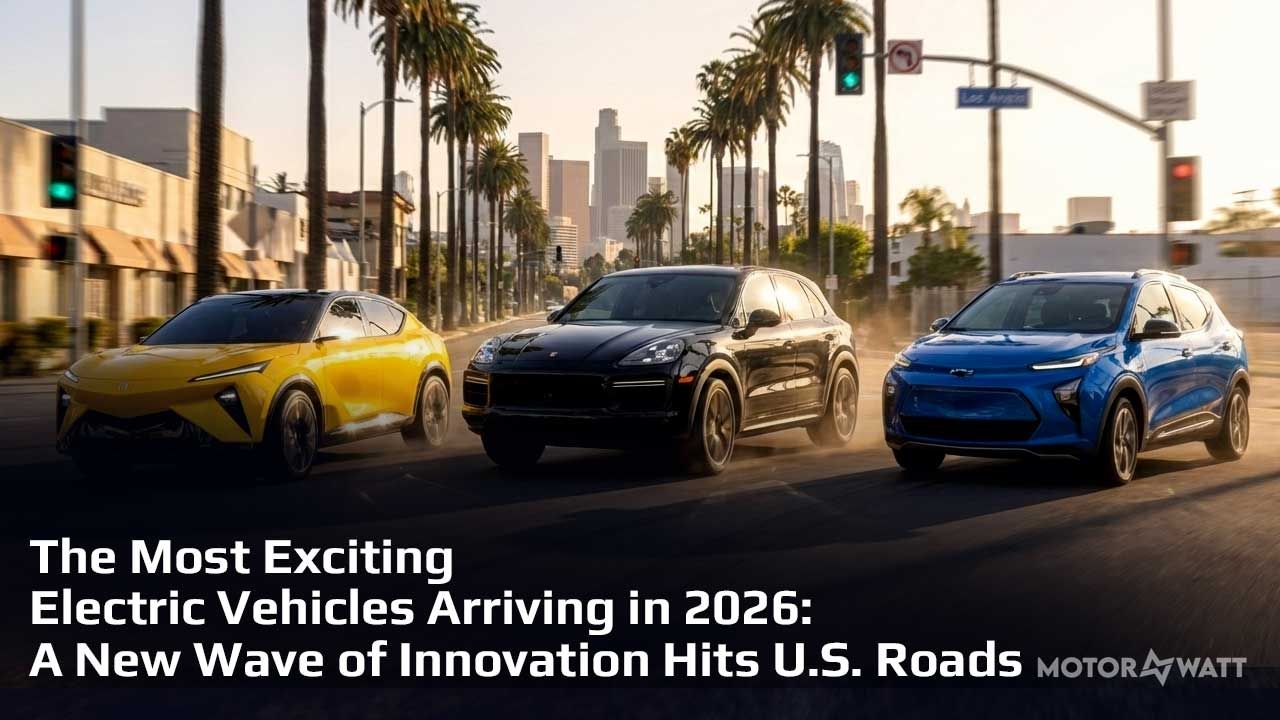
Electric Vehicles Arriving in 2026 signal a shift toward practical pricing, faster charging, and energy-smart design. Affordable commuters, sporty premium crossovers, and high-output luxury SUVs enter U.S. showrooms with longer range, NACS charging access, and bidirectional power that fits modern American lifestyles.
Market momentum behind Electric Vehicles Arriving in 2026
Steady adoption across U.S. regions
Early 2026 opens with cautious optimism among American drivers. Incentives vary by state, interest rates remain noticeable, yet curiosity keeps climbing. California, Texas, and Florida continue expanding fast-charging corridors, allowing electric ownership to feel less restrictive and more routine.
Sales forecasts and buyer confidence
Industry projections place EV market share near twelve percent of new U.S. vehicle sales during 2026. Analysts expect momentum to build toward twenty to twenty five percent by 2030 as battery pricing trends downward and under forty two thousand dollar options multiply.
- Projected U.S. EV market share 2026: ~12 percent
- Expected long-term adoption by 2030: 20 to 25 percent
Affordable electric vehicles 2026 gain renewed focus
Chevrolet returns with smarter hardware
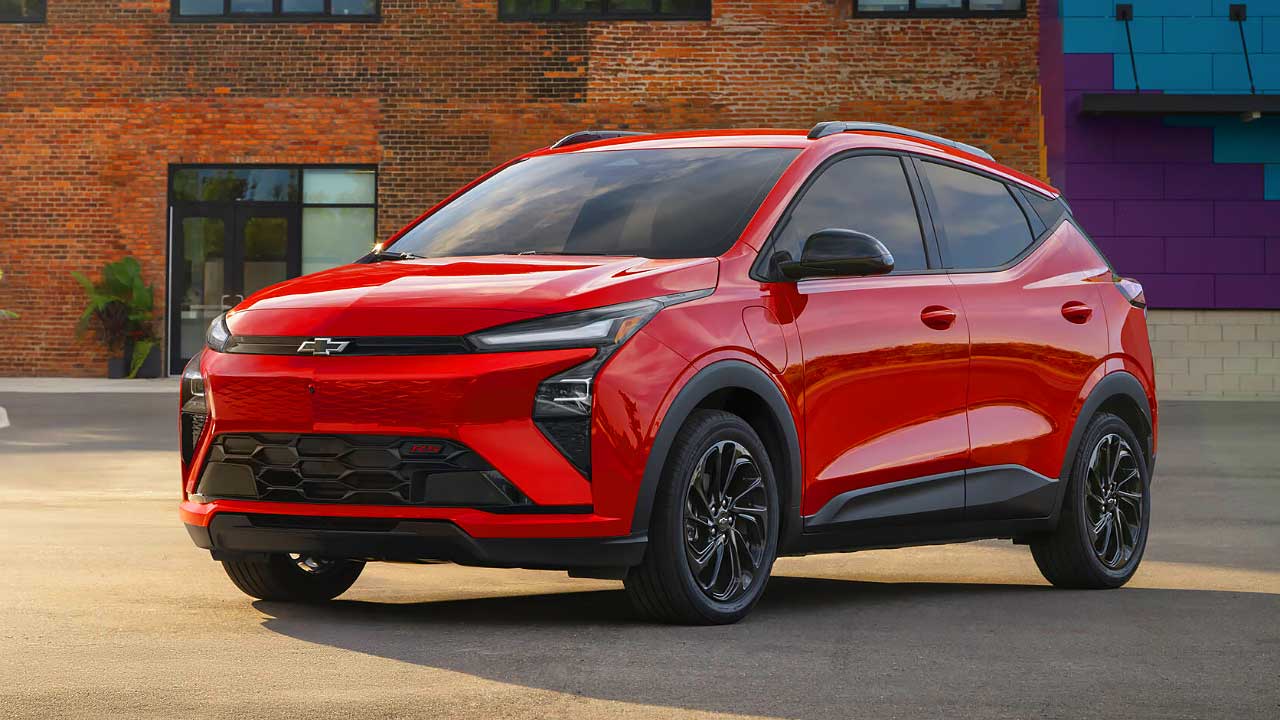
Chevrolet brings back the Bolt as a 2027 model year vehicle with sales starting early 2026. Pricing below thirty thousand dollars places Bolt among the least expensive new EVs sold in America, targeting first-time buyers and urban commuters.
Range, charging, and battery chemistry
An EPA-estimated range near two hundred fifty five miles equals roughly four hundred ten kilometers, enough for daily commuting plus weekend errands. Fast charging rises to about one hundred fifty kilowatts, trimming charging stops to under thirty minutes for major range recovery.
- Estimated range: 255 miles / 410 km
- DC fast charging: up to 150 kW
- Battery type: LFP for durability and cost control
Energy features aimed at everyday life
A factory NACS port allows direct access to Tesla Superchargers without adapters. Vehicle-to-home capability supports emergency power needs, turning Bolt into a rolling energy reserve during outages common in coastal or wildfire-prone regions.
Sport-driven design shapes new electric SUVs 2026
Acura revives a familiar badge
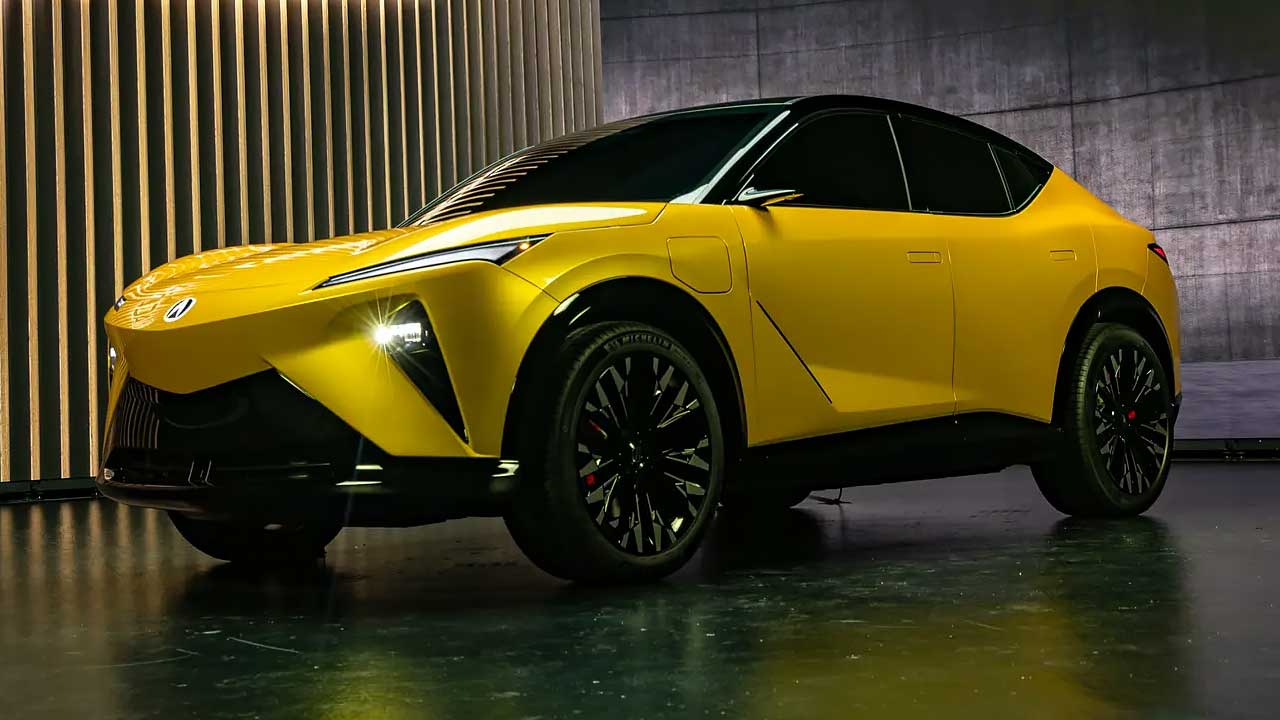
Acura taps nostalgia while moving forward through RSX, a compact electric crossover with coupe-like proportions. Production in Ohio underscores domestic manufacturing while signaling Acura’s deeper push into electrified performance.
Performance hardware and driving feel
Dual motors power all four wheels, delivering quick response during acceleration and confident traction during spirited driving. A sport-tuned suspension with double-wishbone geometry pairs with Brembo brakes, keeping handling sharp without sacrificing ride comfort.
- Drive layout: dual-motor all-wheel drive
- Suspension: sport-tuned double wishbone front
- Brakes: Brembo performance system
Technology and pricing outlook
Acura’s ASIMO operating system adapts driving preferences and cabin settings over time. Pricing between fifty thousand and sixty thousand dollars places RSX against Tesla Model Y and BMW iX3, offering style and tech appeal for younger premium buyers.
Luxury electric SUVs 2026 reach new extremes
Porsche raises performance expectations
Porsche introduces an electric Cayenne aimed at drivers wanting both refinement and extreme output. Deliveries begin mid-2026, following lessons learned from Macan EV development.

Power figures and acceleration
Base versions generate around four hundred thirty five horsepower, while Turbo trims exceed eleven hundred horsepower. Acceleration from zero to sixty miles per hour takes roughly two point four seconds, rivaling exotic sports cars.
- Base output: ~435 hp
- Turbo output: over 1,100 hp
- 0–60 mph: ~2.4 seconds / 0–97 kmh
Battery size, range, and charging speed
A battery between one hundred eight and one hundred thirteen kilowatt-hours supports estimated driving distances up to three hundred fifty miles or about five hundred sixty kilometers. Four hundred kilowatt DC charging restores ten to eighty percent capacity in about sixteen minutes.
- Battery capacity: 108–113 kWh
- Estimated range: 320–350 miles / 515–563 km
- DC fast charging: up to 400 kW
Fast charging electric cars redefine road trips
NACS becomes a national standard
Native NACS ports spread across upcoming EVs, opening thousands of high-speed charging stalls previously limited to Tesla owners. Broader compatibility reduces planning anxiety for cross-country travel.
High-power charging shortens stops
Charging rates between one hundred fifty and four hundred kilowatts allow meaningful range gains during short breaks. Fifteen to twenty minutes often equals two hundred miles or more of added driving distance.
- Typical highway recharge time: 15–25 minutes
- Added range per stop: 150–250 miles
Bidirectional charging EVs become household assets
Vehicle-to-home advantages
Bidirectional charging transforms EVs into mobile power units. During outages, stored energy runs refrigerators, lighting, and communication gear without gasoline generators.
Solar integration gains traction
Pairing EVs with rooftop solar panels and home batteries helps families manage energy costs. Excess solar energy feeds vehicles during daylight, reducing grid dependence during peak pricing hours.
Software-driven electric vehicles gain personality
Over-the-air updates extend lifespan
Manufacturers treat EVs as software platforms. Remote updates refine driving behavior, infotainment features, and energy efficiency long after purchase.
AI assistants personalize ownership
Voice control systems learn routes, climate preferences, and charging habits. Daily driving feels tailored rather than generic, a key factor in attracting tech-focused buyers.
Pricing overview for major 2026 arrivals
Estimated U.S. pricing
| Chevrolet Bolt | |
| Acura RSX EV | |
| Porsche Cayenne Electric |
Final thoughts on Electric Vehicles Arriving in 2026
Pros
- Wider price coverage from entry-level to ultra-luxury
- Faster charging with expanding NACS access
- Bidirectional energy features add household value
- Improved range supports longer travel patterns
Cons
- Premium models remain expensive for average households
- Charging infrastructure growth varies by region
- High interest rates influence monthly payments
Why 2026 matters for buyers
Electric Vehicles Arriving in 2026 present practical affordability, spirited performance, and top-tier luxury within a single model year. American drivers gain more choice, faster charging, and smarter energy use, making electric ownership easier to justify across budgets and lifestyles.