

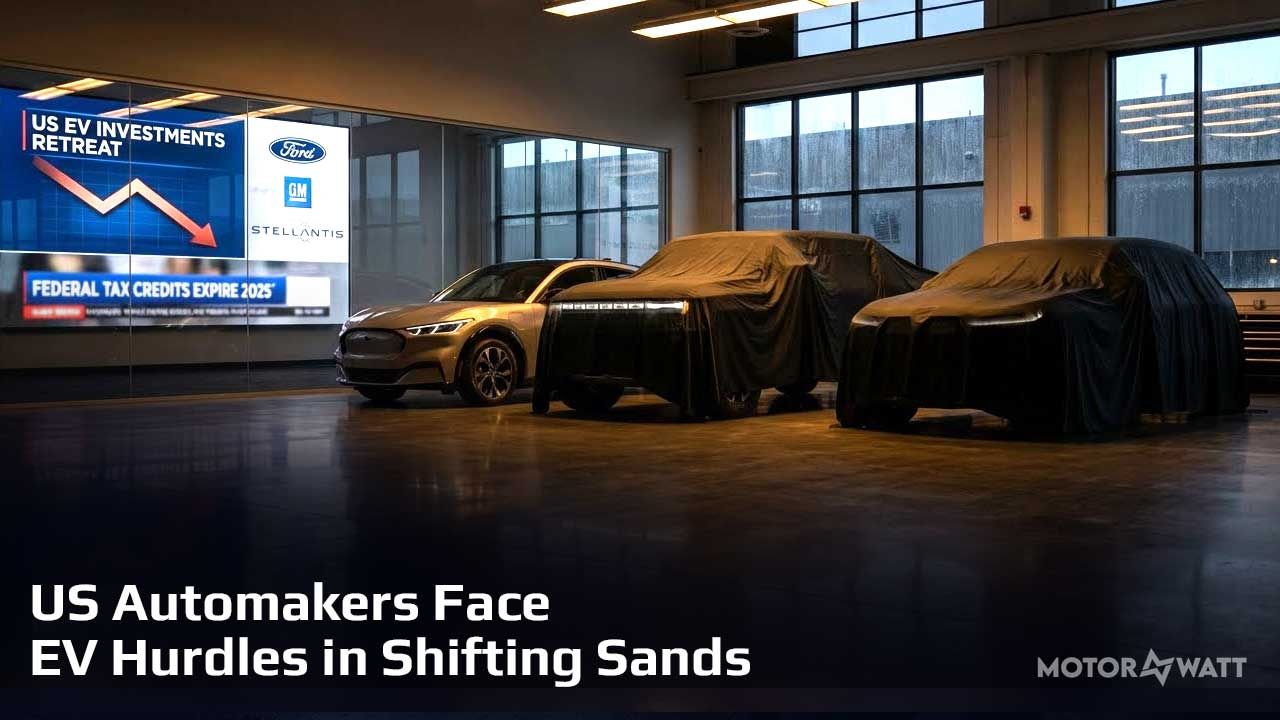
US Automakers refers to major American car companies like Ford, GM, and Stellantis, which in 2025 are retreating from aggressive EV investments due to expiring federal tax credits and policy changes. Ford's $19.5 billion asset write-off (about €16.58 billion) highlights the hit, with EV sales falling 61% in November to 4,247 units. Overall US EV deliveries are forecast at 1.275 million, down 2.1% from 2024—the first drop since 2019—as buyers flock to gas trucks and hybrids amid higher costs without the $7,500 incentive (€6,375). Chinese firms like BYD outpace with cheap models, but Tesla thrives on autonomy tech like Cybercab, signaling a temporary halt before rebound.
Spotting the Early Signs of Pullback
Out here in California, where EVs zip by like everyday commuters, it's jarring to see US Automakers pump the brakes on their electric dreams. Ford and GM, those stalwart names in the game, started whispering about cutbacks months ago, much like a driver easing off the gas before a sharp turn. The EV retreat 2025 feels like a collective sigh after chasing subsidies that vanished quicker than morning fog over the bay.
Think about it—without that federal nudge, the math gets tricky. Buyers who once eyed battery-powered rides now ponder if the upfront hit justifies the long-haul savings. I've driven plenty of these machines, and while they hum smoothly, the sticker shock without rebates hits hard, akin to paying premium for a coffee that tastes just okay.
Yet, there's a silver lining for savvy shoppers. Deals pop up on lingering inventory, turning what could be a setback into a bargain hunt. US Automakers might be rethinking, but that opens doors for hybrids bridging the gap.
Financial Jolts Shaking the Foundations
Ford's massive write-off stands out like a sore thumb in this tale. That $19.5 billion charge, translating to roughly 17.7 billion euros at current rates, stems from scrapped plans and dissolved partnerships. It's as if the company bet big on a horse that stumbled at the gate, forcing a reevaluation of the entire stable.
GM follows suit, ditching leasing tricks to extend credits and funding perks themselves. This EV pivot mirrors a chess move, sacrificing a pawn to protect the king—in this case, profitable truck lines. US Automakers know their bread-and-butter lies in those burly haulers, measuring success in tons rather than kilowatts.
For everyday drivers, this means watching resale values closely. EVs depreciate faster without incentives, much like tech gadgets outdated by next year's model. But hold on, as battery tech advances, those worries might fade like old tire tracks.
- Model e losses since 2023: $13 billion (€11.05 billion)
- Projected 2025 loss: $5 billion (€4.25 billion)
- Total Ford EV costs since 2022: $35.1 billion (€29.84 billion)
EV Retreat 2025 Unfolds in Real Time
Market Data Telling the Tale
As someone who's clocked miles on highways from coast to coast, the numbers hit home. US EV sales decline paints a picture of caution, with November figures dropping like autumn leaves. That 41% plunge overall, leaving BEVs at a mere 5.1% share, feels like a detour from the fast lane we expected.
Ford's F-150 Lightning, once a beacon for electric workhorses, saw deliveries crater 72%. It's reminiscent of trying to push a heavy cart uphill without enough momentum. US Automakers face this slump head-on, questioning if pure electrics suit every driver's needs right now.
Globally, though, the scene differs wildly. China and Europe rack up 18.5 million units, subsidized and charging ahead. Here in the States, with only 69,000 public plugs—far short of gas stations—rural folks hesitate, pondering range in kilometers (about 111,000 km of worry-free travel? Not yet).
Still, optimism brews. Analysts spy a 2026 uptick, driven by tech leaps. For now, this retreat recalibrates expectations, like fine-tuning an engine for better efficiency.
Consumer Shifts Driving Decisions
Buyers aren't villains here; they're pragmatic. Without the $7,500 boost (€6,375), averages hover at $50,000 (€42,500) versus $36,000 (€30,600) for gas sippers. It's like choosing a fancy meal over a reliable diner—tempting but not always practical.
Range anxiety lingers, especially for long hauls. A 300-mile (483 km) battery sounds solid, but factor in cold weather drops, and it's a gamble. US Automakers spot this, pivoting to hybrids that offer 50 mpg (21 km/l) without full commitment.
I've tested hybrids that feel seamless, blending power sources like a well-mixed cocktail. This surge—up 50% in sales—signals a bridge, easing folks into greener habits without the full plunge.
- Average EV price: $50,000 (€42,500)
- Gas car average: $36,000 (€30,600)
- Hybrid sales growth: 50%
Ford EV Write-Off Echoes Across the Industry
Breaking Down the Billion-Dollar Hit
Ford's mid-December bombshell rippled like waves from a skipped stone. That $8.5 billion (€7.23 billion) for canceled models and $6 billion (€5.1 billion) from ending the SK joint venture? It's a stark admission that ambitions outpaced reality.
Scrapping all-electric Lightning expansions feels like shelving a sequel before the first film's buzz fades. US Automakers like Ford emphasize ICE vehicles, which haul in profits measured in billions, not headaches.
Yet, this isn't defeat; it's strategy. By focusing on hybrids, they cater to drivers wanting efficiency without infrastructure woes. Picture it as upgrading from a sprint to a marathon pace.
Lessons from the Ledger
Since 2023, Model e bled $13 billion (€11.05 billion), with more red ink ahead. It's a cautionary yarn for any gearhead dreaming big. US Automakers learn fast, reallocating funds to what sells—like full-size trucks boasting 500 horsepower (373 kW).
Critics holler shortsighted, but I've seen cycles in this biz. This pullback might spark innovation, pushing batteries toward 600 miles (966 km) without breaking banks.
For buyers, it means hunting deals. Discounts like $11,000 (€9,350) off Kia EV6s turn lemons into lemonade.
| Product | Price (USD) | Price (EUR) |
|---|---|---|
| Ford Mustang Mach-E | $45,000 | €38,250 |
| Chevy Equinox EV | $35,000 | €29,750 |
| Kia EV6 | $42,000 (with discount) | €35,700 |
GM EV Pivot Mirrors Broader Trends
Self-Funding Incentives and Beyond
GM's October switch-up, funding credits sans leasing loopholes, shows grit. Mary Barra's quip about gauging true demand? Spot on, like testing waters before diving in. US Automakers adapt, channeling cash to SUVs that dominate lots.
This mirrors Ford's moves, creating a unified front. Without policy crutches, they stand tall on profitable pillars, much like oaks weathering storms.
Environmental pushback stings, but practicality wins. Hybrids surge as alternatives, offering 40-50 miles (64-80 km) electric-only before gas kicks in.
Resource Reallocation Realities
Shifting to full-size rigs, GM eyes segments where torque rules—up to 460 lb-ft (624 Nm). It's a nod to American tastes, big and bold. US Automakers balance sheets thank them, avoiding further $5 billion (€4.25 billion) pitfalls.
I've cruised in these beasts; they handle like champs. This pivot ensures survival, paving ways for eventual EV dominance.
Buyers benefit from stability. Predictable lineups mean better service, fewer surprises.
- GM projected losses: Similar to Ford's scale
- Truck torque: 460 lb-ft (624 Nm)
- Hybrid range: 40-50 miles (64-80 km)
Expiring Tax Credits Fuel the Fire
Policy Whipsaw Effects
The $7,500 credit's September sunset sparked Q3 rushes, like last-minute shoppers. Now gone, prices climb, turning affordable dreams sour. US Automakers invested billions under old rules, now facing voids.
Trump's rollbacks ease mandates, emboldening profit chases. Tariffs shield from China, but don't fill incentive gaps. It's like patching a tire without air.
State perks in California persist, offering lifelines. For coastal drivers, it's business as usual, charging at home with solar boosts.
Incentive Impacts on Affordability
Without rebates, middle-class families balk. A $50,000 EV (€42,500) versus subsidized? Night and day. US Automakers spot this, pushing hybrids as stopgaps.
I've chatted with owners; savings on fuel (up to 100 mpg-e or 2.35 l/100km equivalent) sway them. This shift educates markets, prepping for full electric waves.
Long-term, it fosters resilience. Independent growth trumps subsidy dependence.
Chinese EV Rivalry Heats Up
BYD and Global Pressures
BYD's affordable onslaught threatens like a storm cloud. Selling millions under $10,000 (€8,500), they out-innovate Detroit. US Automakers counter with tariffs, but innovation lags.
Domestically, options thin, pushing imports. Yet, quality concerns temper appeal. It's a cat-and-mouse game, spurring improvements.
Tesla's edge? Vertical control, from cells to chargers. US Automakers could emulate, building ecosystems.
Competitive Edges and Gaps
Chinese models pack tech, but US tariffs hike costs. Hybrids fill voids, surging 50%. US Automakers leverage heritage, trusted for durability.
I've compared rides; BYD's zippy, but Ford's rugged. This rivalry polishes offerings, benefiting all.
Future? Autonomy bridges gaps, with Cybercab promising robotaxi ease.
- BYD price: Under $10,000 (€8,500)
- Global EV sales: 18.5 million
- US public chargers: 69,000
Tesla Resilience Stands Out
Autonomy as the Ace
Tesla bucks trends, despite Q4 dips. Full Self-Driving rollout? Game-shifter, like handing keys to a smart butler. US Automakers watch, pondering partnerships.
Cybercab production eyes 2026, transforming commutes. In cities like Austin, it's urban freedom.
Vertical integration insulates; batteries, software, networks. Others envy this fortress.
Forecasting the Rebound
Experts predict 2026 growth, with solid-state packs hitting 600 miles (966 km). Tesla leads, but US Automakers catch up via hybrids.
I've felt autonomy's thrill; hands-free miles melt stress. This tech pulls EVs back into favor.
Buyers, rejoice—innovation looms, making electrics irresistible.
Hybrid Surge Offers Breathing Room
Bridging Technologies Shine
Hybrids fly off shelves, up 50%. Ford's Maverick exemplifies, blending efficiency with familiarity. US Automakers lean here, avoiding EV pitfalls.
Offering 42 mpg (5.6 l/100km), they suit varied drives. Like a Swiss army knife for mobility.
This surge buys time, educating on electrics without full switch.
Practical Perks for Drivers
No range fret; gas backups ensure. Cheaper than pure EVs, they democratize green tech.
I've put miles on them; seamless shifts impress. US Automakers smartly pivot, sustaining momentum.
Future blends? Hybrids evolve, paving electric paths.
EV Policy Shifts Shape the Path
Government Roles in Flux
Trump's stance favors "big" cars, loosening strings. US Automakers breathe easier, prioritizing profits over mandates.
Inflation Reduction Act's legacy? Billions invested, now waning. It's a policy rollercoaster.
States like mine step up, incentivizing locals. This patchwork drives uneven adoption.
Balancing Acts Ahead
Critics fear climate slips, but market forces push forward. Autonomy, better batteries (up to 100 kWh) promise revival.
US Automakers navigate wisely, ensuring viability. For drivers, it's informed choices amid changes.
This dynamic keeps the industry vibrant, like a engine revving for the next lap.
Final Thoughts on Navigating the EV Landscape
Pros of US Automakers' Strategic Shift
- Focus on profitable segments like trucks preserves jobs and stability.
- Hybrid emphasis provides efficient options without full EV commitment.
- Learnings from losses spur smarter investments in future tech.
- Bargains on current EVs make entry affordable for many.
Cons of US Automakers' Strategic Shift
- Delayed electrification cedes ground to global rivals like BYD.
- Fewer domestic EV choices increase import reliance.
- Policy dependence highlights vulnerability to changes.
- Short-term sales dips could slow infrastructure growth.
Summing Up the Benefits for EV Enthusiasts
For those keen on electric wheels or green shifts, this US Automakers' pivot offers clarity and opportunity. It weeds out overhype, focusing on viable paths like hybrids and autonomy, ensuring sustainable progress that fits real-world wallets and roads. Ultimately, it primes a stronger, more accessible electric era ahead.
Related Video