
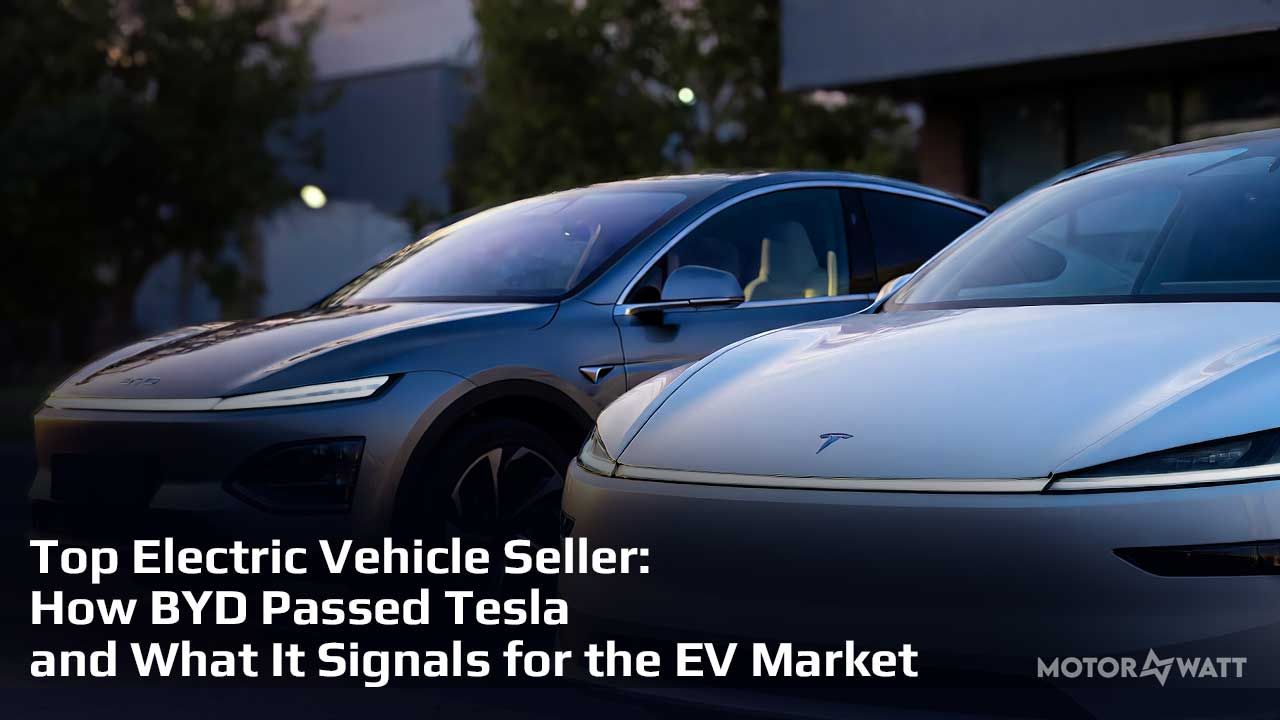
Top Electric Vehicle Seller status shifted during 2025 as BYD moved ahead of Tesla in global pure battery electric vehicle deliveries. The change reflects pricing pressure, faster charging progress, and overseas growth that reshaped buyer behavior and altered how the global EV race looks heading into 2026.
Global EV sales shift reshapes industry balance
A year that rewrote expectations
The electric vehicle business entered 2025 with most observers expecting Tesla to keep leading pure EV sales. Instead, the year ended with a clear upset. BYD closed the calendar year delivering about two point two six million battery electric vehicles worldwide, while Tesla finished closer to one point six four million units.
What the numbers reveal
Tesla experienced a year-over-year drop near nine percent, marking a second consecutive annual decline. BYD moved the opposite direction with growth close to twenty eight percent. The gap between both brands widened to more than six hundred thousand vehicles, a margin few analysts predicted twelve months earlier.
- BYD pure EV sales 2025: ~2.26 million units
- Tesla pure EV sales 2025: ~1.64 million units
- Difference: ~620,000 vehicles
Units shown are approximate annual battery electric vehicle sales or deliveries. BYD leads in 2025.
2025 crossover: BYD ~2.26M vs Tesla ~1.64M, putting BYD ahead by about 620,000 vehicles.
BYD electric vehicle sales built on vertical control
Battery roots shape strategy
BYD started life as a battery producer during the mid-1990s and later expanded into vehicle manufacturing. That origin matters. In-house battery design, pack assembly, and vehicle production allow cost control that many competitors still chase through suppliers.
Pricing as a market lever
Models such as the Seagull hatchback undercut rivals in many regions by several thousand dollars. Competitive pricing opened doors in markets where EV adoption stalled due to affordability. Buyers responded quickly, especially across Asia, Europe, and Latin America.
- Low-cost entry EVs widen adoption
- Premium Ocean and Dynasty series target higher margins
- In-house batteries reduce exposure to supplier pricing
Charging technology accelerates adoption
Megawatt charging shortens stops
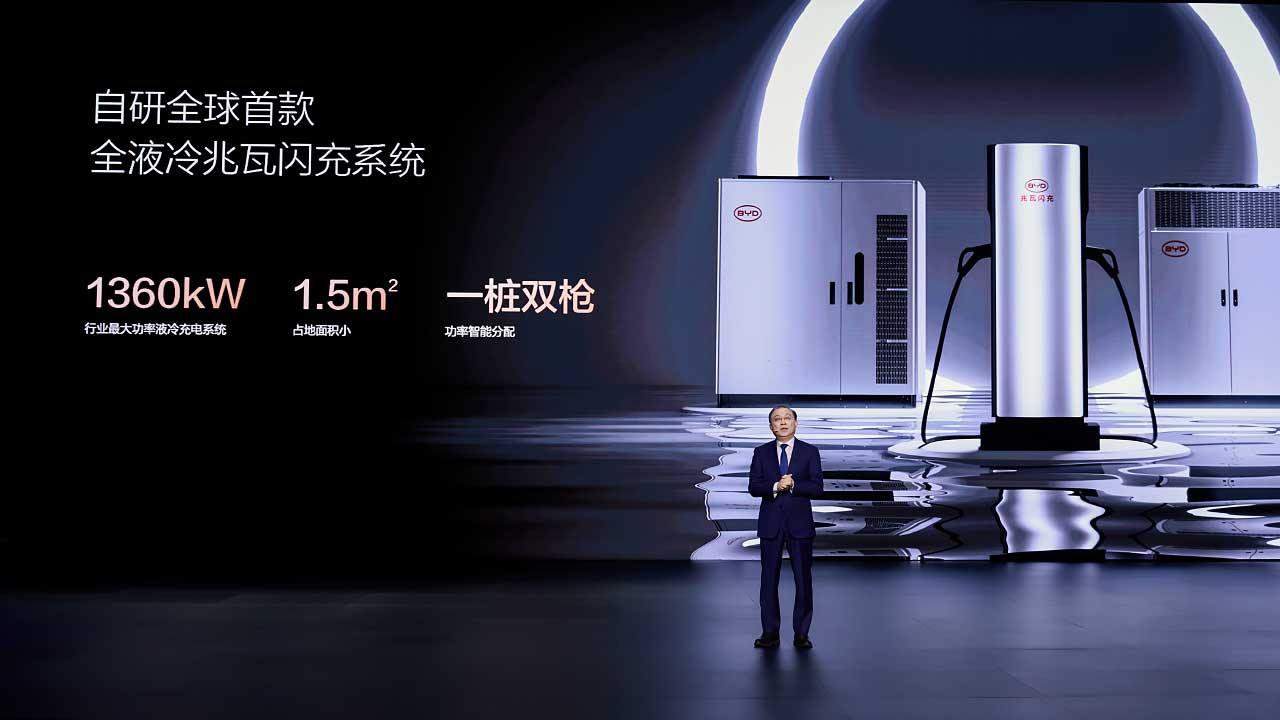
BYD introduced its Super e-Platform during 2025, supporting flash charging at peak levels near one thousand kilowatts. Demonstrations showed vehicles adding roughly four hundred kilometers, about two hundred forty nine miles, of range in five minutes.
Infrastructure support follows hardware
High-output chargers alone do little without deployment. BYD paired hardware advances with thousands of compatible stations across China, with additional rollout planned overseas. Reduced charging time lowers psychological barriers for long-distance travel.
- Peak charging output: up to 1,000 kW
- Range added in five minutes: ~249 miles / 400 km
- 10–70 percent recharge: about six minutes
Tesla EV sales face mounting pressure
Incentives and demand softness
Tesla entered 2025 facing the expiration of the seven thousand five hundred dollar federal EV credit in the United States. Demand softened quickly, especially during the fourth quarter, when deliveries slid by roughly sixteen percent compared with the same period a year earlier.
Product cadence challenges
The lineup leaned heavily on refreshed versions of Model 3 and Model Y. While updates improved efficiency and cabin feel, buyers seeking novelty looked elsewhere. Competition from Chinese manufacturers intensified across global markets.
- U.S. market share: ~45 percent
- Q4 delivery decline: ~16 percent
- Primary products: Model 3 and Model Y updates
Leadership focus shifts within Tesla
Autonomy and energy take center stage
Tesla emphasized autonomous driving development, robotaxi planning, and grid-scale energy storage. Energy product deployments reached record volume, though vehicle sales momentum slowed. The strategy reflects long-term ambition, yet left near-term EV volume exposed.
Brand perception factors
Public reaction to leadership commentary and political involvement influenced buyer sentiment in certain regions. While difficult to quantify, brand image matters in premium segments where alternatives continue expanding.
Overseas markets fuel BYD growth
Europe, Asia, and beyond
Overseas deliveries passed one million units during 2025, growing roughly one hundred fifty percent year over year. Europe recorded strong momentum despite tariffs, while Southeast Asia, Australia, and Latin America contributed meaningful volume.
Manufacturing footprint expands
New factories, including a European plant in Hungary, shorten logistics chains and reduce tariff exposure. Plans target up to one point six million overseas sales during 2026, reinforcing BYD’s global ambitions.
- Overseas sales growth: ~150 percent
- Key regions: Europe, Southeast Asia, Latin America
- European production: Hungary facility
U.S. market implications of global EV leadership
Tariffs limit consumer choice
American buyers currently lack access to BYD passenger vehicles due to trade restrictions. Tariffs protect domestic manufacturers but also shield consumers from low-cost, high-tech alternatives reshaping other regions.
Competitive pressure rises indirectly
Even without direct U.S. sales, BYD’s scale influences battery pricing, charging expectations, and software development. Domestic brands face growing pressure to accelerate innovation while controlling costs.
Legacy automakers adjust EV strategies
Hybrid interest grows
As incentives faded, hybrids gained traction as transitional options. Several manufacturers slowed aggressive EV rollout plans, citing high costs and uneven demand.
Global contrast remains sharp
While U.S. adoption cooled temporarily, global electrification accelerated. BYD’s results demonstrate how pricing discipline and infrastructure alignment can drive mass adoption even during uncertain economic periods.
Pricing comparison and market position
Global pricing context
Final thoughts on Top Electric Vehicle Seller status
Pros
- Lower EV pricing accelerates global adoption
- Ultra-fast charging reduces ownership friction
- Vertical integration improves supply stability
- Overseas manufacturing strengthens resilience
Cons
- Limited U.S. availability restricts consumer access
- Tariffs complicate global pricing balance
- Rapid scale challenges quality consistency
What the shift means going forward
Top Electric Vehicle Seller leadership moving from Tesla to BYD reflects changing priorities across the EV market. Pricing discipline, charging speed, and global reach now carry as much weight as brand recognition, shaping how manufacturers compete and how buyers evaluate electric mobility worldwide.
Related Video