







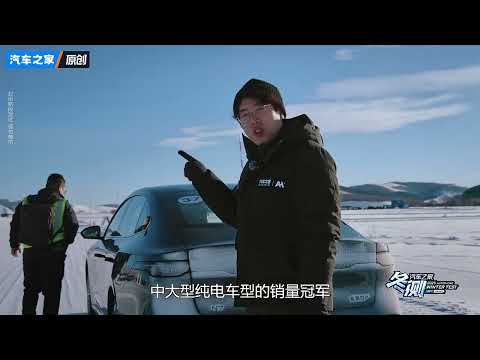
EV winter test: 67 cars, freezing -25 °C, seven extreme scenarios
Brutal Cold and Battery Blues
Driving an electric car during a mild spring afternoon feels effortless. The torque arrives instantly, the cabin remains silent, and the range estimator stays honest. However, move that experience to Yakeshi, Inner Mongolia, where temperatures routinely plummet to minus twenty-five degrees Celsius, and the narrative changes entirely. Autohome, the largest automotive outlet in China, recently wrapped up its annual winter evaluation. The findings serve as a cold shower for anyone expecting laboratory-grade performance in sub-zero environments.
The testing site in Yakeshi provides a merciless backdrop for modern machinery. When the mercury hits such lows, the chemical reactions inside a battery pack slow down to a crawl. The electrolyte liquid becomes more viscous, hindering the movement of lithium ions between the anode and cathode. The Autohome team focused on seven key categories to see which manufacturers actually managed to engineer their way out of a frozen stalemate. These categories included range, consumption, fast charging, air conditioning efficiency, automated emergency braking, acceleration, and off-road capability.
The Science of Lithium Ion Sluggishness
To understand why these tests matter, one must look at the internal resistance of the battery. As the temperature drops, internal resistance increases. That physical reality means more energy is wasted as heat instead of being converted into motion. It also means that regenerative braking, which usually helps claw back some efficiency, is often severely curtailed or disabled entirely to protect the cells from damage.
- Lithium ion mobility decreases significantly as temperatures fall below zero.
- Battery management systems must divert precious energy to internal heaters just to keep the pack operational.
- High voltage systems struggle to maintain consistent output under heavy load in extreme frost.
Automakers often quote range figures based on the China Light-Duty Vehicle Test Cycle, which assumes moderate temperatures and gentle driving. In the real world, especially in a place like Inner Mongolia, those numbers evaporate faster than hot coffee in a blizzard. The Autohome data highlights a staggering gap between marketing promises and icy reality. Some vehicles lost over half of their advertised range during the long-distance endurance runs.
Real World Range Versus Laboratory Estimates
Range remains the primary anxiety for potential buyers. During the Autohome evaluation, the team drove a variety of models until the batteries were completely depleted. The results were telling. Vehicles equipped with heat pumps generally fared better than those relying on traditional resistive heaters. A heat pump works like a refrigerator in reverse, scavenging heat from the outside air and the drivetrain to warm the cabin. Even at minus twenty degrees, a well-tuned heat pump can offer a substantial efficiency advantage.
Consumption figures were equally eye-opening. The kilowatt-hour per hundred kilometer metrics nearly doubled for several popular sedans. When the car has to fight against thickened grease in the bearings, high-rolling resistance from winter tires, and the constant demand of the HVAC system, efficiency takes a backseat. The data suggests that buyers in cold climates should essentially halve the official range figures when planning a winter road trip.
- Heat pump technology remains a critical factor for maintaining efficiency in sub-zero conditions.
- Aerodynamic drag increases in cold, dense air, further penalizing high-speed highway travel.
- Energy consumption for cabin heating can sometimes equal the energy used for propulsion itself.
Fast Charging Hurdles in Inner Mongolia
If the reduced range was not enough of a headache, the charging times in Yakeshi were enough to test the patience of a saint. Cold batteries cannot accept high currents. If a charger attempts to force energy into a frozen cell, it can cause lithium plating, which permanently degrades the battery and can even lead to short circuits. Consequently, the car's computer throttles the charging speed until the pack reaches a safe temperature.
The Autohome test measured the time required to go from thirty to eighty percent state of charge. In optimal conditions, some of these cars can complete that task in under twenty minutes. In the Inner Mongolian frost, some took over an hour. The most successful models used pre-conditioning software. By using the navigation system to flag a charging stop, the car began warming the battery pack while still on the move. That foresight allowed for much faster speeds upon arrival at the plug.
- Battery pre-conditioning is no longer a luxury but a necessity for winter usability.
- Charging curves at minus twenty degrees are significantly flatter than those at room temperature.
- Thermal management systems play a pivotal role in determining the total duration of a winter commute.
Active Safety Performance on Slick Surfaces
Safety tech like Automated Emergency Braking is great on dry asphalt, but how does it handle a sheet of ice? The Autohome crew tested these systems against stationary targets on low-friction surfaces. The results were mixed. Camera-based systems struggled with the glare from the snow and the frost buildup on the windshield. Lidar and radar units were generally more reliable, but the physical limitation of tire grip on ice meant that even the smartest computer could not defy the laws of physics.
Stopping distances on ice are roughly four to five times longer than on dry pavement. The software must account for this discrepancy. Some systems were too aggressive, triggering ABS too early and losing steering control, while others were too timid, failing to apply enough pressure to avoid a collision. The best performers utilized sophisticated torque vectoring to maintain stability while the brakes were pulsing.
- Sensor calibration must account for snow interference and lens frosting.
- Braking algorithms require specific winter tuning to prevent wheels from locking on black ice.
- Integration between the stability control and the emergency braking system is crucial for avoiding skids.
Off Road Capabilities and Low Grip Physics
The off-road portion of the test was particularly grueling. Deep snow acts a lot like sand, requiring constant momentum and precise throttle control. For an electric motor, the challenge is managing the massive, instantaneous torque. Without a fine-tuned traction control system, the wheels simply spin and dig a hole, high-centering the vehicle.
Some dual-motor setups showed impressive prowess. By independenty controlling the front and rear axles, the computers could send power to the wheels with the most bite. However, the added weight of the battery packs worked against them in some scenarios. A heavy SUV can sink into soft snow banks where a lighter internal combustion vehicle might stay on top. The Autohome testing emphasized the importance of dedicated winter driving modes that soften the initial power delivery to prevent wheel spin.
- Electric motors provide excellent low-end torque for climbing through snow, provided the software can manage the grip.
- Ground clearance is a limiting factor when traversing unplowed Mongolian trails.
- Low temperature affects the elasticity of rubber seals and suspension bushings, impacting ride quality.
Cabin Comfort and Thermal Management
Nobody wants to drive while shivering. The air conditioning test measured how long it took for the cabin to reach a comfortable twenty degrees Celsius from a cold soak at minus twenty. This is where the sheer power of the electrical system is put to the test. Some cars managed to toast the occupants in less than ten minutes, while others struggled to keep the windows clear of fog.
The trade-off is obvious: every watt used to warm your toes is a watt that will not move the wheels. Modern designs are increasingly using radiant heating panels in the doors and floorboards to keep passengers warm with less energy than blowing hot air around. Autohome noted that seat and steering wheel heaters are far more efficient than the main HVAC system, advising drivers to lean on those features to preserve range.
- Efficient thermal management involves more than just a powerful heater; it requires smart insulation.
- Remote start and cabin pre-heating while plugged in are the best ways to ensure comfort without sacrificing mileage.
- Defrosting performance is a critical safety metric that varies wildly between budget and premium models.
Future Directions for Cold Weather Engineering
The 2025 winter test from Autohome proves that while the industry has come a long way, the cold remains a formidable adversary. The transition to solid-state batteries could eventually solve many of these issues, as they are theoretically less sensitive to temperature fluctuations. Until then, engineers must continue to refine heat pump designs, battery chemistry, and thermal insulation.
For the average driver, the takeaway is clear. If you live in a region where the wind chill makes your face hurt, you need to do your homework. Look for vehicles with advanced thermal management and robust battery pre-conditioning. The Autohome results provide the data needed to cut through the fluff and see which cars can actually survive a night in the frozen north without becoming a glorified ice cube.
- Solid state batteries offer a potential long term solution to cold weather performance degradation.
- Software updates continue to improve how existing cars manage their energy reserves in winter.
- The Yakeshi tests remain a vital reality check for an industry moving toward total electrification.