
Tesla Robotaxi Las Vegas: Inside Nevada's 2,500-Car Gamble for 2026
How Many Robotaxis Will Tesla Really Run in Las Vegas in 2026?
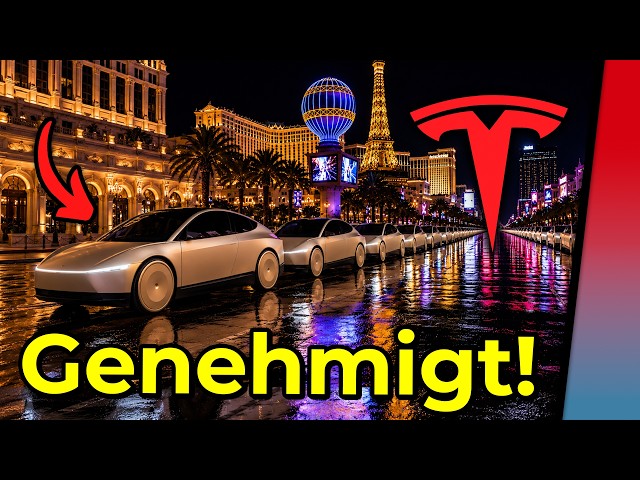
Tesla will likely field somewhere between 2,500 and 5,000 robotaxis on the Las Vegas Strip by mid-2027, according to the company's own Cybercab chief engineer, even though Nevada regulators just cleared the automaker for the full 5,000-vehicle ceiling it originally requested. That gap between what Tesla asked for and what Tesla actually expects to deliver is the real story behind Nevada's biggest autonomous-vehicle decision to date.
- The Nevada Transportation Authority approved permits letting Tesla, Uber, and Waymo collectively deploy up to 8,000 robotaxis across Clark County within twelve months.
- Tesla's own Cybercab chief engineer, Eric Early, told regulators the company would be "extremely happy" reaching roughly 2,500 vehicles in year one.
- The approval follows an interim July permit that capped Tesla at just ten vehicles, restricted to a 45 mph corridor on the Strip with no airport pickups.
- Nevada becomes the third state, after Texas and Florida, to greenlight Tesla's Unsupervised Full Self-Driving robotaxi platform.
What Exactly Did the Nevada Transportation Authority Approve?
On Thursday, August 20, 2026, the Nevada Transportation Authority unanimously issued three separate Autonomous Vehicle Network Company permits. Tesla walked away authorized for up to 5,000 vehicles. Waymo and Uber each received clearance for 1,000 robotaxis, with Uber running its fleet through partnerships with Hyundai's Motional unit and Amazon-owned Zoox. Combined, that's an 8,000-vehicle ceiling for a single metro area, a scale nobody in the robotaxi business has attempted in North America before.
The permits cover all of Clark County, home to roughly 2.3 million residents and the Las Vegas Strip itself. Regulators structured the approval so operators must notify the commission before expanding service beyond the county, giving the state a built-in checkpoint as deployment scales. It's a notably different posture than the interim permit issued a month earlier, which had capped Tesla at ten vehicles running under strict human-supervision requirements.
Why Did Nevada Initially Cap Tesla at Just Ten Vehicles?
Tesla Robotaxi LLC filed its original application back in June, requesting authority for 5,000 vehicles across Clark County, plus pickup rights at Harry Reid International Airport and Henderson Executive Airport. The Authority's July 27 response stunned the company: a "maximum fleet of ten fully autonomous vehicles," confined to an authority-approved corridor along the Strip with a hard 45 mph speed ceiling.
The interim permit also barred passenger pickups within a quarter-mile of the airport, required every vehicle to display "Robotaxi" branding, and mandated that riders receive notice before each driverless trip. Perhaps most notably, it demanded "appropriate human supervision" under Society of Automotive Engineers standards, a meaningfully stricter posture than what Tesla runs in Austin, where the company has operated without an in-vehicle safety monitor since January 2026.
- Ten-vehicle fleet cap during the interim period
- 45 mph maximum speed on the approved corridor
- No pickups within a quarter-mile of Harry Reid International Airport
- Mandatory human supervision under SAE guidelines
Why Does Tesla Expect Only 2,500 Vehicles, Not 5,000?
Permits and fleets are two different things. Eric Early, Tesla's Cybercab chief engineer, addressed that gap directly during the August hearing. "The 5,000 has always been a ceiling for us," he told commissioners. "I don't think we'll be in a position by this time next year to deploy 5,000 vehicles, and it's not because of the technology. I think we would be extremely happy and satisfied if we could get ourselves up to 2,500, maybe a bit higher than that in the next year."
Tesla representatives reiterated a phased rollout, describing an initial small-scale launch that expands gradually rather than a mass simultaneous deployment. That framing matters for anyone tracking whether the 8,000-vehicle regional ceiling translates into an actual traffic and labor shift on the ground. Even a 2,500-vehicle Tesla fleet, layered against Waymo's 1,000 and Uber's 1,000, would still represent one of the densest robotaxi concentrations anywhere in the country.
What Does This Mean for the Las Vegas Economy?
The Strip isn't just tourist scenery, it's an economic engine that regulators can't afford to disrupt carelessly. Casinos along the corridor generated roughly $8.8 billion in gaming revenue during 2025, about $24 million a day, and accounted for around 56 percent of the state's $15.8 billion in total gaming revenue that year. Las Vegas drew 38.5 million visitors in 2025, supporting more than 250,000 area jobs.
Against that backdrop, opposition from local taxi operators was predictable. Kimberly Maxson-Rushton, an attorney representing the Livery Operators Association, raised two central concerns during the hearing: potential oversaturation of the commercial transportation market and worsened roadway congestion, particularly in the Golden Triangle, an area that has already absorbed heavy autonomous-vehicle testing traffic. Uber, notably, pushed for a hybrid model blending human drivers with robotaxis rather than flooding the market with driverless capacity all at once.
How Does Nevada's Approach Compare to Texas and Florida?
Nevada is now the third state to authorize Tesla's Unsupervised Full Self-Driving robotaxi platform, joining Texas and Florida. But the regulatory texture differs meaningfully. Austin has allowed Tesla to run without an in-vehicle safety monitor since January 2026, a lighter-touch model regulators there consider proven enough to loosen. Nevada, by contrast, opened with the strictest possible interim conditions before easing into a broader permit, suggesting state officials wanted operational evidence before extending trust.
Zoox offers another useful comparison point. Amazon's robotaxi subsidiary has operated in Nevada since 2025 and had been capped at 100 vehicles before Thursday's decision reshuffled the competitive field. That existing track record likely gave commissioners a baseline for judging autonomous-vehicle safety performance within the state before they extended Tesla and Waymo similarly large allowances.
What Should Las Vegas Residents and Visitors Expect Next?
Rollout timing remains the open question. Tesla told regulators it plans a small initial launch followed by gradual expansion, rather than an immediate flood of thousands of vehicles onto Strip-adjacent streets. Riders should expect Robotaxi-branded vehicles, mandatory in-app or in-vehicle notice that a trip is driverless, and geofenced service areas that expand only as the company reports data back to the Authority.
- Watch for phased vehicle counts reported through Nevada Transportation Authority filings over the next two to three quarters.
- Expect service to concentrate initially along Strip-adjacent corridors before spreading countywide.
- Anticipate continued friction from traditional livery operators as fleet numbers climb toward four figures.
- Track Waymo and Uber's parallel 1,000-vehicle rollouts, since combined competition will shape pricing faster than any single operator's pace.
For now, the headline number worth remembering isn't 5,000, it's 2,500. That's the figure Tesla's own engineering leadership put on the table, and it's the number that will most realistically define what robotaxi service in Las Vegas looks like heading into 2027.
Tesla Cybercab Launch Event and First Drive!
https://www.youtube.com/watch?v=noalr6NcsVY