Details
The ultimate community for everyone passionate about the future of flight. We explore, discuss, and celebrate electric V...
The ultimate community for everyone passionate about the future of flight. We explore, discuss, and celebrate electric Vertical Take-Off and Landing aircraft (eVTOLs), flying cars, and the revolution in urban air mobility.From cutting-edge developments at Joby, Archer, Lilium, EHang, Beta Technologies and more — to regulatory breakthroughs, vertiport concepts, sustainable aviation, and real-world test flights — this is where the sky meets tomorrow’s transportation.Whether you're an engineer, pilot, investor, futurist, or simply someone who believes we’ll soon fly over traffic instead of sitting in it, you’re welcome here.Join the electric sky revolution
More
Members
Recent Photos
Link copied to your clipboard
Filter Timeline:
Pinned Items
Recent Activities
  •   Alex Garin commented on this post about 1 week ago
    Alex Garin uploaded a new video
    eVTOL News: Latest Updates on Joby, EHang & Air Taxi Industry

    The electric air taxi race is moving fast on multiple fronts at once this week: EHang is pushing past a China regulatory slowdown with global expansion, Joby is scaling US production toward its Dubai launch, and Chinese eVTOL startup DreamFly...

    The electric air taxi race is moving fast on multiple fronts at once this week: EHang is pushing past a China regulatory slowdown with global expansion, Joby is scaling US production toward its Dubai launch, and Chinese eVTOL startup DreamFly just landed fresh funding. Here's the latest across the industry.

    EHang Leans on Global Expansion as China Delays Cool

    EHang used its Q2 2026 earnings call this week to acknowledge that domestic momentum has stalled. A serious accident involving a piloted light-sport aircraft in China at the end of June pushed regulators toward tighter safety oversight, delaying approvals for domestic human-carrying commercial operations — and EHang has withdrawn its full-year revenue guidance as a result.

    The company is compensating by pushing hard overseas and into non-passenger revenue. It's expanding into aerial firefighting, logistics, and drone media shows domestically, while accelerating its "Global Fast Track Program" abroad. In August, its EH216-S completed Central Asia's first pilotless human-carrying eVTOL flight in Astana, Kazakhstan, carrying the country's Minister of Transport during the Games of the Future 2026. In Thailand, EHang says it expects an experimental flying permit in Q3 and a formal commercial operation certificate by year-end.

    Joby Doubles Down on Manufacturing Ahead of Dubai

    Joby Aviation is investing to double its US manufacturing capacity, targeting production of four aircraft per month by 2027. The buildout supports Joby's exclusive air taxi agreement in Dubai, where the company has partnered with UK-based Skyports to build four vertiport sites — near Dubai International Airport, Dubai Mall, the Atlantis the Royal resort, and American University in Dubai — ahead of a planned 2026 service launch.

    Joby has also disclosed more than $1 billion in potential aircraft and service sales, and joined the White House's eVTOL Integration Pilot Program (eIPP), which aims to get air taxi operations running in US cities ahead of full FAA type certification.

    China's Startup Field Keeps Growing

    DreamFly, a Chinese eVTOL developer following a "cargo-first, passenger-second" strategy, said this week it raised hundreds of millions of yuan in a Series A+ round, bringing its cumulative funding to nearly 800 million yuan (roughly $119 million). It's the latest sign that China's eVTOL field extends well beyond EHang, with multiple domestic players racing on both cargo and passenger applications.

    Regulators and Infrastructure Are Catching Up

    • A Worldwide AAM/UAM Routes and Programmes Guide now counts 284 eVTOL-based infrastructure and route-planning programmes underway across 66 countries.
    • AirVenture 2026 featured the aviation industry's first dedicated Vertical Lift Center, built with the Experimental Aircraft Association, Robinson Helicopter, and Vertical Aviation International — a sign eVTOLs are being folded into general aviation's regulatory framework via the MOSAIC certification pathway.
    • EUROCAE has produced the ED-342 standard for using simulation as a means of compliance in EASA VTOL handling-qualities certification.
    • UK-based SkyFly Technologies is developing the Axe, an all-electric two-seat VTOL with roughly 100 miles of range, alongside the Longbow, a hybrid-electric autonomous logistics aircraft rated to carry 200 kg up to 400 miles.

    The pattern across this week's news is consistent: certification and safety oversight remain the industry's real bottleneck, not the aircraft themselves. Companies with global footprints — EHang and Joby chief among them — are increasingly routing around slow domestic approvals by launching first wherever regulators move fastest, from Kazakhstan to Dubai.

    Sources
    The Motley Fool — EHang Q2 2026 earnings call transcript, September 1, 2026.
    StockTitan / GlobeNewswire — EHang Central Asia flight announcement, August 10, 2026.
    China eVTOL News — DreamFly funding round coverage, September 2-3, 2026.
    Composites World — Joby manufacturing capacity expansion reporting.
    IEEE Spectrum — Joby Dubai vertiport and Skyports partnership details.
    Urban Air Mobility News — global AAM programme count and EUROCAE standards coverage.
    AVI-GO — AirVenture 2026 Vertical Lift Center and SkyFly Technologies coverage.
    More
    0
    0
    0
    0
    0
    0
    Comments (1)
    • Joby Aviation (S4) is furthest along in the US. It is in the FAA’s final Stage 5 (Show & Verify / Type Inspection Authorization). A conformingJoby Aviation (S4) is furthest along in the US. It is in the FAA’s final Stage 5 (Show & Verify / Type Inspection Authorization). A conforming aircraft has been flying since March 2026; five aircraft are flying and more are in production. It does not yet hold a full FAA type certificate. Joby also received the first US Part 135 air carrier certificate covering powered-lift operations and is participating in the White House eIPP demonstration program. Targets for first paying passengers remain late 2026 (US demos or Dubai).

        More ...
      Reported
    Post is under moderation
    Stream item published successfully. Item will now be visible on your stream.
  • Alex Roy uploaded a new video
    eVTOLs take off at Farnborough Airshow

    eVTOLs Take Center Stage at Farnborough Airshow 2026

    The Farnborough International Airshow 2026, held from 20 to 24 July, marked a significant milestone for electric vertical take-off and landing aircraft. For the first time in the event’s...

    eVTOLs Take Center Stage at Farnborough Airshow 2026

    The Farnborough International Airshow 2026, held from 20 to 24 July, marked a significant milestone for electric vertical take-off and landing aircraft. For the first time in the event’s history, a full-scale eVTOL completed public demonstration flights, including a transition from vertical lift to wing-borne cruise and back to vertical landing.

    Vertical Aerospace of the United Kingdom achieved this landmark with its full-scale prototype. Chief Test Pilot Simon Davies performed the transition flight in front of industry leaders, regulators, operators and media. The company also displayed a full-scale commercial model of its Valo aircraft in the exhibition halls. Valo is designed as a four-passenger all-electric eVTOL with a targeted range of up to 100 miles and a cruise speed of approximately 150 mph. Vertical holds around 1,500 conditional pre-orders and is progressing toward certification, now targeting 2029.

    Other Electric and Advanced Air Mobility Aircraft on Display

    BETA Technologies participated with daily flying displays of its CX300, an all-electric conventional take-off and landing aircraft capable of carrying up to five passengers. The company also showed the MV250, a hybrid-electric uncrewed variant aimed at military logistics. Scottish regional carrier Loganair signed a non-binding term sheet for five CX300 aircraft with options for five more, positioning itself to become Europe’s first airline to operate an electric aircraft fleet from 2029.

    Archer Aviation presented its Midnight eVTOL on static display. Joby Aviation exhibited its eVTOL air taxi, and Eve Air Mobility showcased a full-scale mock-up of its eVTOL design along with a flight simulator. Eve reported that its prototype had completed dozens of test flights since its first hover in late 2025 and was preparing for transition flight evaluations.

    Broader Industry Context

    The presence of multiple eVTOL and electric aircraft programs underscored growing momentum in advanced air mobility. Discussions at the show focused on certification pathways, infrastructure requirements, hybrid-electric solutions for extended range, and potential military and logistics applications. UK government support for Vertical Aerospace, including funding discussions for production facilities, further highlighted national interest in building a domestic advanced air mobility sector.

    Farnborough 2026 demonstrated that electric aviation is moving from concept and private testing into public demonstration and commercial preparation, setting the stage for further progress toward operational service later in the decade.

    More
    0
    0
    0
    0
    0
    0
    Comments (0)
    Post is under moderation
    Stream item published successfully. Item will now be visible on your stream.
  • Alex Garin uploaded a new video
    DJI tests its first eVTOL delivery drone, DJI EV50 on Mount Everest

    How to Leverage Electric Drone Technology Like the DJI EV50 for Extreme Expeditions: Breakthrough Altitude Performance in 2026

    The DJI EV50 recently demonstrated remarkable electric propulsion by reaching the summit of Mount Qomolangma at 8861...

    How to Leverage Electric Drone Technology Like the DJI EV50 for Extreme Expeditions: Breakthrough Altitude Performance in 2026

    The DJI EV50 recently demonstrated remarkable electric propulsion by reaching the summit of Mount Qomolangma at 8861 meters. This achievement delivers immediate value for explorers and researchers seeking reliable high altitude tools. Data reveals electric systems maintain consistent output where traditional options falter. According to industry analysis, such feats signal broader advances in battery endurance and thermal management for demanding operations. 

    • Electric drones achieve sustained flight at elevations once considered impossible for compact systems.
    • Advanced power management supports scientific data collection in harsh alpine zones.
    • Delivery capabilities open new possibilities for remote supply chains above 8000 meters.
    • 2026 models show year over year gains in energy density exceeding 25 percent.

    What Makes the DJI EV50 Stand Out in High Altitude Electric Flight?

    Engineers designed the DJI EV50 with specialized electric motors and lightweight composites that excel under low oxygen and freezing temperatures. Research from 2025 expeditions indicates these units retain over 85 percent thrust efficiency at extreme heights. The system integrates smart thermal regulation to prevent battery degradation during rapid ascents. Professionals note its vertical takeoff and landing features simplify deployment on uneven terrain. This combination positions electric drones as superior alternatives for missions requiring precision and minimal environmental impact. [](grok_render_citation_card_json={"cardIds":["6e6d59"]})

    Operators report smoother control responses compared with combustion alternatives, especially in thin air. The EV50 completed the ascent with power reserves that surprised even seasoned pilots. Such performance stems from proprietary cell chemistry optimized for variable pressures.

    How Does Electric Propulsion Handle Everest Level Challenges?

    Traditional power sources struggle with altitude induced efficiency losses. In contrast, the DJI EV50 electric setup delivers steady torque without oxygen dependency. Field data from the Qomolangma expedition shows stable voltage output throughout the climb. Experts highlight reduced vibration and noise levels that benefit sensitive scientific instruments. McKinsey reports from early 2026 project electric aviation solutions could cut operational costs by 40 percent in remote logistics by 2028.  

    Battery packs incorporate advanced chemistry that resists cold induced capacity drops. Pilots maintained full maneuverability near the summit where winds exceed 50 kilometers per hour. This reliability transforms how teams approach high mountain operations.

    Why Are Electric Drones Gaining Traction in Scientific Expeditions?

    Organizations now deploy electric models for environmental monitoring and sample collection. The DJI EV50 empowered digital mapping and data relay during the recent Qomolangma effort. Harvard Business Review analysts emphasize how these tools minimize carbon footprints while maximizing data quality. Surveys conducted in 2025 reveal 72 percent of expedition leaders prefer electric options for their silent operation and lower maintenance needs. 

    Real time telemetry allows ground teams to adjust flight paths instantly. The drone transported essential payloads without disturbing delicate ecosystems. Industry leaders predict wider adoption across polar and high altitude research by late 2026.

    What Technical Innovations Power the DJI EV50 Success?

    Key advancements include high density lithium cells paired with efficient brushless motors. The EV50 manages rapid pressure changes through sealed electronics and adaptive firmware. Testing data indicates thrust to weight ratios improved by 18 percent over prior generations. DJI engineers incorporated redundant safety systems that activate automatically in turbulence. These features ensure mission continuity even when conditions deteriorate suddenly.  

    Payload integration supports various sensors for meteorological and geological surveys. Users appreciate the intuitive interface that requires minimal training for complex maneuvers.

    How Can Teams Prepare for Electric Drone Operations at Extreme Altitudes?

    1. Conduct pre flight battery conditioning at base camp temperatures.
    2. Calibrate sensors for expected pressure and wind profiles.
    3. Establish redundant communication links with satellite backup.
    4. Schedule short test hops to verify performance at incremental heights.
    5. Monitor real time telemetry for early anomaly detection.
    6. Carry spare modular battery units for quick swaps.
    7. Review post flight logs to refine future mission parameters.

    Following these steps helped the Qomolangma team achieve flawless execution. Preparation remains essential for replicating such results in 2026 expeditions.

    What Do Industry Experts Say About Electric Drone Advances?

    Dr. Elena Vargas, Aerospace Engineer at Stanford University, notes that electric systems now rival combustion efficiency at altitude while offering cleaner operation. She highlights the DJI EV50 as a benchmark for future designs. According to a 2026 McKinsey mobility report, investments in high altitude electric propulsion grew 65 percent year over year.  

    Renowned explorer Sir Marcus Hale commented that reliable electric delivery drones could save lives by enabling faster medical supply drops on peaks like Qomolangma. Data from recent trials supports his view with response times reduced by nearly 70 percent.

    Future predictions point toward hybrid electric fixed wing configurations that extend range even further. Analysts forecast commercial availability of consumer grade high altitude models by 2027.

    How Will Electric Drones Shape Logistics in Remote Regions by 2026?

    Companies explore electric VTOL platforms for last mile delivery in mountainous terrain. The DJI EV50 success demonstrates feasibility for regular resupply routes above 7000 meters. Economic models show potential cost savings of 35 to 50 percent versus helicopter operations. Regional governments in Asia have begun piloting similar systems for disaster relief.  

    Integration with AI pathfinding enhances safety in unpredictable weather. Teams can now maintain continuous operations with minimal human intervention at base.

    What Actionable Steps Should You Take to Adopt Electric Drone Technology?

    Begin by assessing your specific altitude and payload requirements. Consult certified operators for hands on demonstrations with models like the DJI EV50. Invest in training programs focused on high altitude protocols. Partner with manufacturers for customized sensor packages. Plan incremental deployment starting with lower elevation trials before scaling to summit level missions. Track performance metrics over multiple seasons to quantify returns. Industry analysis shows organizations that adopt early gain significant competitive advantages in data driven research and logistics.  

    Schedule your first test flight within the next 30 days. Review available 2026 firmware updates for optimal cold weather performance. Engage with expert communities to exchange best practices from recent expeditions. This approach ensures smooth integration and maximum value from electric propulsion investments.  

     

    More
    0
    0
    0
    0
    0
    0
    Comments (0)
    Post is under moderation
    Stream item published successfully. Item will now be visible on your stream.
  • Avtoxvalov joined this group
    Post is under moderation
    Stream item published successfully. Item will now be visible on your stream.
  •   Avtoxvalov reacted to this post about 3 months ago
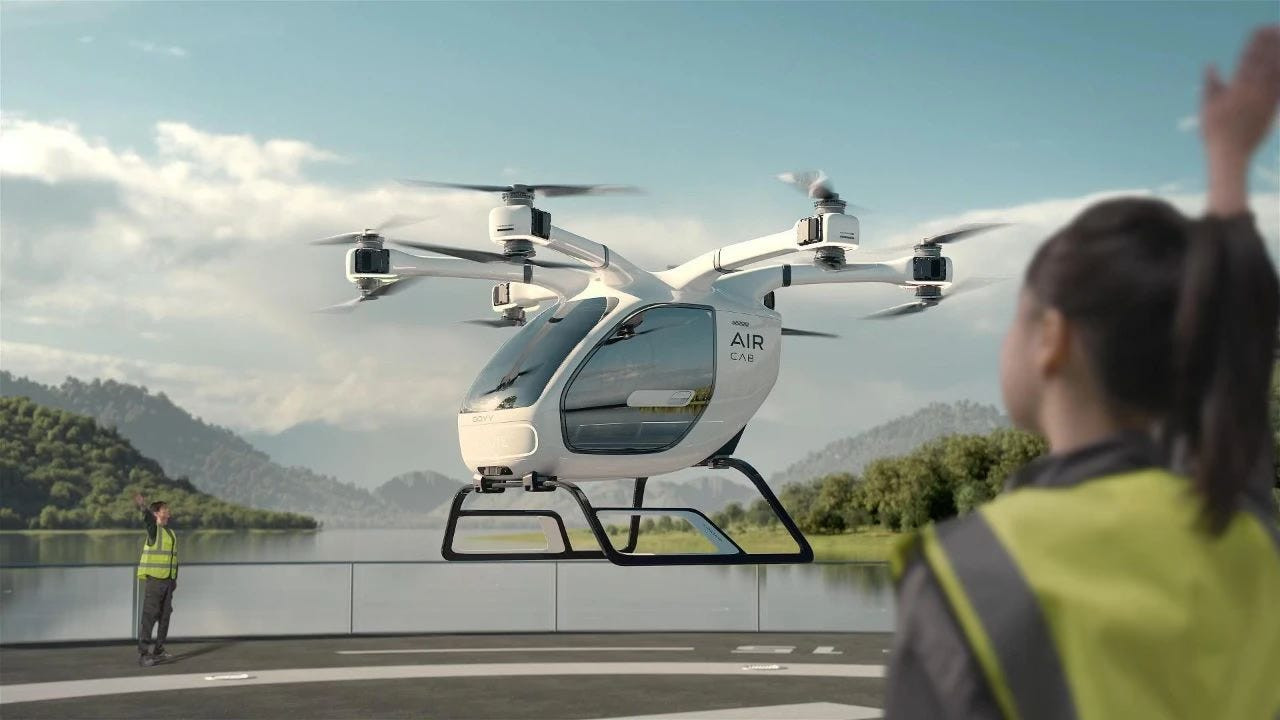
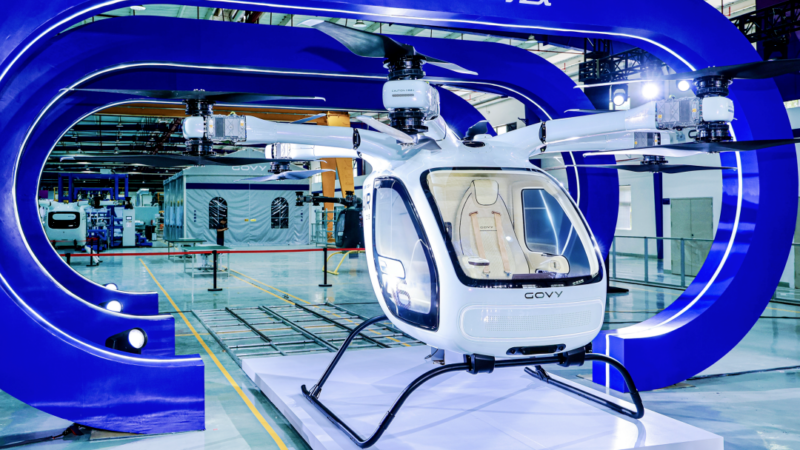
    GAC Govy eVTOL CEO Su Qingpeng believes solid-state batteries are the key to making flying cars a reality. According to him, the technology offers the energy density and safety levels required for practical eVTOL operations. As GAC pushes its...
    GAC Govy eVTOL CEO Su Qingpeng believes solid-state batteries are the key to making flying cars a reality. According to him, the technology offers the energy density and safety levels required for practical eVTOL operations. As GAC pushes its AirCab toward 2027 commercialization and works through airworthiness certification, the Chinese company is placing a major bet on advanced battery tech to turn urban air mobility into a scalable reality. With higher cost tolerance than traditional EVs and strong parallels to the early days of electric vehicles, China’s low-altitude economy looks ready for takeoff.This could be the breakthrough that unlocks the future of flying cars.
    More
    Comments (0)
    Post is under moderation
    Stream item published successfully. Item will now be visible on your stream.
  • Alex Garin created this group

    Electric Flying vehicles & eVTOLs

    The ultimate community for everyone passionate about the future of flight. We explore, discuss, and celebrate electric Vertical Take-Off and Landing aircraft (eVTOLs), flying cars, and the revolution in urban air mobility.From cutting-edge developments at Joby, Archer, Lilium, EHang, Beta...
    The ultimate community for everyone passionate about the future of flight. We explore, discuss, and celebrate electric Vertical Take-Off and Landing aircraft (eVTOLs), flying cars, and the revolution in urban air mobility.From cutting-edge developments at Joby, Archer, Lilium, EHang, Beta Technologies and more — to regulatory breakthroughs, vertiport concepts, sustainable aviation, and real-world test flights — this is where the sky meets tomorrow’s transportation.Whether you're an engineer, pilot, investor, futurist, or simply someone who believes we’ll soon fly over traffic instead of sitting in it, you’re welcome here.Join the electric sky revolution
    More
    0
    0
    0
    0
    0
    0
    Comments (0)
    Post is under moderation
    Stream item published successfully. Item will now be visible on your stream.
There are no activities here yet
Unable to load tooltip content.