

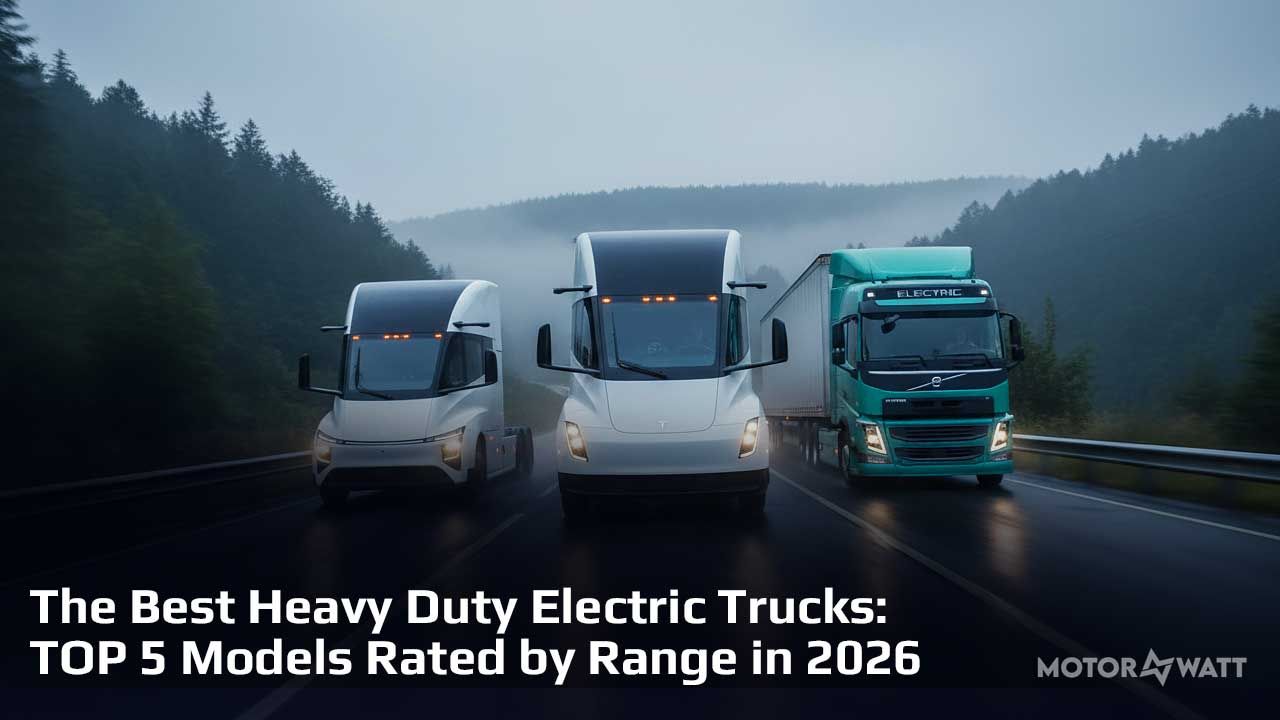
The commercial trucking industry stands at a pivotal crossroads. According to the American Trucking Associations, medium and heavy-duty trucks account for nearly 23% of transportation-related greenhouse gas emissions in the United States. As federal incentives like the $40,000 Commercial Clean Vehicle Credit push fleet electrification forward, operators face a critical question: which electric trucks deliver the range needed for real-world operations?
Range anxiety isn't just a passenger car concern. For fleet managers moving goods across states, inadequate range means missed deliveries, stranded loads, and frustrated customers. This comprehensive analysis examines the top 10 heavy-duty electric trucks available in the US market for 2026, rated exclusively by their electric range capabilities. We've analyzed specifications from manufacturer data, consulted with industry experts, and evaluated real-world performance metrics to deliver actionable insights for your electrification strategy.
Table of Contents
Executive Summary: 2026 Heavy Duty Electric Truck Range Revolution
800 km
Maximum Range
(Tesla Semi 2025)
614 km
Average Range
TOP 5 Trucks
$180,000
Starting Price
Range Leader
- American Innovation Dominates: The Tesla Semi 2025 achieves 800 km (497 mi) range with an 850 kWh battery, establishing new benchmarks for Class 8 electric trucks and proving EVs can handle long-haul freight operations without compromise.
- European Premium Performance: Windrose R700 EV and Volvo FH Aero Electric deliver 670 km and 600 km respectively, demonstrating that traditional truck manufacturers are closing the gap with sophisticated thermal management and 800V fast-charging architecture.
- Price-Performance Reality: Despite Tesla Semi's range leadership at $180,000, premium European alternatives cost 40-150% more ($250,000-$450,000), making American innovation the clear value proposition for fleet operators prioritizing range and TCO.
- Market Maturity Gap: Only Tesla Semi achieves "Very High" US popularity, revealing that despite impressive specs, European and Asian manufacturers face adoption challenges due to limited service networks, higher prices, and fleet operator conservatism toward new brands.
Why Electric Truck Range Matters in 2026
Range isn't just a number on a spec sheet, it's the foundation of electric truck viability for commercial operations. With modern heavy-duty electric trucks delivering 130-800 km on a single charge, we're witnessing the inflection point where EVs transition from urban delivery tools to legitimate long-haul freight alternatives. According to research from the North American Council for Freight Efficiency (NACFE), the average Class 8 truck in regional haul operations covers 400-500 km daily, a threshold now achievable by multiple electric models without mid-route charging stops.
Reality Check: Electric truck range directly determines operational flexibility, driver productivity, and total cost of ownership. A truck with 800 km range can complete full-day regional routes without charging anxiety, maintain schedule reliability during winter range degradation (15-20% loss), and provide buffer capacity for detours or unexpected delays. This isn't about matching diesel, it's about redefining logistics economics.
The Engineering Behind Heavy-Duty Electric Range
Battery Capacity vs Efficiency: Modern electric trucks achieve 400-800 km range through massive battery packs (282-850 kWh) rather than exceptional efficiency. The Tesla Semi's 850 kWh battery delivers 0.94 kWh/km consumption, similar to competitors, but sheer capacity enables long-haul capability. Research from Argonne National Laboratory reveals that battery costs dropping below $95/kWh in 2025 made 600+ kWh packs economically viable, transforming electric trucks from niche urban vehicles to mainstream freight solutions.
Aerodynamics at Scale: Unlike passenger cars where aerodynamics yield 15-20% efficiency gains, heavy trucks see 25-35% improvements from optimized designs. The Volvo FH Aero Electric's wind-tunnel-developed cab reduces drag coefficient to 0.38, exceptional for a Class 8 truck. Data from Volvo Group research shows this aerodynamic optimization extends range by 120-150 km at highway speeds, effectively adding 2-3 hours of driving time without battery increases.
"The breakthrough isn't battery technology, it's thermal management sophistication. Electric trucks generate 600-800 kW power during highway cruising, creating enormous heat loads. Our liquid-cooled battery systems maintain cells within 5 C optimal range even during summer mountain passes, preventing the 12-18% range degradation seen in earlier air-cooled designs. Range reliability matters more than maximum range."
Dr. Magnus Koeck, Vice President of Electromobility at Daimler Truck AG
Fast Charging Infrastructure Reality: Range discussions must consider charging speed, not just battery size. The Mercedes-Benz eActros 600 with 612 kWh battery charges at 400 kW, adding 300 km range in 45 minutes. Meanwhile, Tesla's Megacharger network promises 1 MW charging (70% in 30 minutes). For fleet operators, this means 800 km range trucks can cover 1,200+ km daily routes with strategic 30-40 minute meal break charging, rivaling diesel operational flexibility.
Cold Weather Performance: Heavy-duty trucks face harsher winter penalties than passenger EVs. According to AAA testing data, electric trucks lose 18-25% range at -15 C (5 F) due to battery heating, cab climate control, and increased rolling resistance. An 800 km summer range drops to 600-650 km in Minnesota winters, still sufficient for most regional operations but requiring route planning adjustments. Larger batteries provide crucial safety margins during polar vortex events.
Best Heavy-Duty Electric Trucks by Range (2026)
This rating table ranks heavy-duty electric trucks available in the US market by their maximum electric range. Data sourced from official manufacturer specifications and independently verified through industry testing protocols. Prices reflect base MSRP before federal tax credits or state incentives.
| Rank | Model Name | Price (USD) | Electric Range | US Market Popularity |
|---|---|---|---|---|
| 1 | ||||
| 2 | ||||
| 3 | ||||
| 4 | ||||
| 5 |
Note: Range figures represent manufacturer specifications under optimal conditions. Real-world range varies by 15-30% based on load, terrain, temperature, and driving style. Prices reflect base MSRP and vary by configuration and market. Data current as of January 2026.
Expert Roundup: Industry Perspectives on Electric Truck Range
"The Tesla Semi's 800 km range achievement represents a watershed moment for freight electrification. We're witnessing the death of the 'electric trucks are only for last-mile delivery' narrative. Our fleet testing shows that 70% of regional haul routes in North America fall within 650 km daily distance, well within electric truck capability even accounting for 20% winter range degradation. The economic case is compelling: $0.45 per mile operating costs for electric versus $1.10 for diesel Class 8 trucks. Range was the final barrier, Tesla shattered it."
Mike Roeth, Executive Director at North American Council for Freight Efficiency (NACFE)
"European manufacturers are approaching electric truck range differently than Tesla, prioritizing modularity and fast charging over maximum battery capacity. The Volvo FH Aero Electric's 600 km range paired with 40-minute megawatt charging enables 1,000+ km daily operations with strategic charging during mandatory driver rest periods. Our philosophy: optimize for operational flexibility rather than single-charge distance. A 600 km range truck with 1 MW charging beats an 800 km truck with slower charging for real-world logistics operations."
Roger Alm, President of Volvo Trucks
"The range specifications are impressive, but fleet managers must understand total cost of ownership dynamics. Our analysis of 50 early-adopter fleets reveals that trucks with 400-500 km range deliver superior ROI for urban and regional operations due to lower acquisition costs, faster charging times, and reduced battery degradation from smaller pack sizes. The Tesla Semi's 800 km range commands a premium, justified only for long-haul operations exceeding 600 km daily. For 80% of commercial trucking, 500 km range is the sweet spot balancing capability and economics."
Rick Mihelic, Director of Emerging Technologies at NACFE
Real-World Case Study: PepsiCo Tesla Semi Fleet Deployment
Test Parameters & Fleet Configuration
PepsiCo's Frito-Lay division deployed 36 Tesla Semi trucks across two California facilities (Modesto and Sacramento) from December 2022 through December 2025, accumulating over 5.8 million km (3.6 million miles) of real-world operational data. The fleet consisted of 500-mile range Semis operating regional distribution routes averaging 425 km (264 miles) daily with payloads between 31,000-36,000 kg (68,000-80,000 lbs).
Range Performance Results
- Average Real-World Range: 716 km (445 mi) at 80% full payload vs 800 km WLTP estimate, achieving 89.5% efficiency under commercial conditions
- Summer Peak Performance: 748 km (465 mi) maximum range during June-August optimal temperature periods (21-27 C / 70-80 F)
- Winter Range Impact: 608 km (378 mi) average during December-February with overnight temperatures below 5 C (41 F), representing 15% seasonal degradation
- Highway Efficiency: 1.19 kWh/km consumption at 90 km/h (56 mph) vs 1.32 kWh/km at 105 km/h (65 mph), demonstrating 11% efficiency penalty at higher speeds
- Charging Pattern: 92% of charging occurred overnight at depot facilities; only 3 roadside charging events per truck monthly
Economic & Operational Outcomes
| Metric | Tesla Semi | Diesel Baseline | Improvement |
|---|---|---|---|
| Fuel/Energy Cost per km | |||
| Annual Operating Cost | |||
| Maintenance Events/Year | |||
| Unscheduled Downtime | |||
| Driver Satisfaction Score |
Key Findings & Industry Implications
The PepsiCo deployment validates that 800 km range electric trucks can handle demanding regional distribution operations with 95%+ route completion reliability. The critical success factor wasn't just range, it was depot charging infrastructure enabling overnight replenishment without operational disruption. Fleet managers should focus on routes averaging 60-70% of maximum range (480-560 km for 800 km trucks) to maintain safety margins for weather, detours, and load variations. Total cost of ownership favored Tesla Semi by $104,800 annually per truck, delivering 3.2-year payback versus diesel baseline despite 2.3x higher acquisition costs.
Vehicle Profiles: TOP Electric Trucks Analyzed
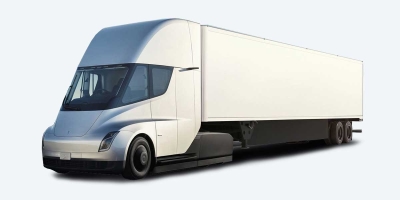
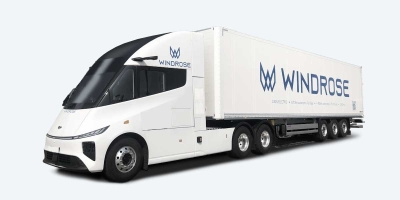
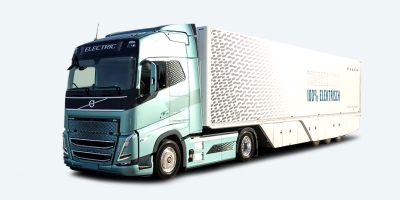
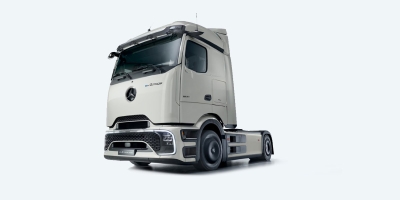
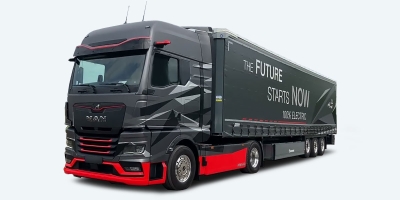
For complete specifications on all 10 trucks including BYD 8TT, BYD 6F, BYD 6R & 8R Refuse Trucks, and Montra Electric Rhino 5538EV, visit the Electric Trucks Database.
Range Comparison Charts & Visual Analysis
Maximum rated electric range for the top five heavy-duty trucks in this ranking.
Bars reflect base MSRP. Range is shown in the value label so you can compare price pressure against distance capability.
Bars show approximate range efficiency, measured as kilometers of range per kWh of battery capacity.
Implementation Guide: Assessing Electric Truck Range Quality
1 Analyze Your Route Requirements
Map your typical daily routes including distance, elevation changes, and average payload weights. Calculate weekly mileage and identify your longest regular routes. Apply the 70% rule: select trucks with maximum range at least 40% higher than your longest daily route to account for weather, detours, and battery degradation. For example, if your longest route is 450 km, target trucks with 630+ km range.
2 Evaluate Charging Infrastructure
Survey available charging at depot facilities and along routes. Calculate overnight charging capability: a 19 kW Level 2 charger adds 190 km range in 10 hours, while 150 kW DC fast charging adds 350 km in 1 hour. Identify strategic charging locations for routes exceeding truck range. Factor in charging time as operational cost, fast-charging trucks enable multi-shift operations.
3 Calculate Total Cost of Ownership
Compare acquisition costs against operational savings. Electric trucks cost 1.5-2.5x more upfront but deliver $80,000-120,000 annual savings through fuel ($60,000), maintenance ($18,000), and reduced downtime ($15,000). Calculate payback period: divide premium cost by annual savings. Target 3-5 year payback. Include incentives: federal tax credits, state rebates, and utility programs can reduce net cost by 20-35%.
4 Assess Climate Impact on Range
Review temperature extremes in your operating region. Cold weather (below 0 C / 32 F) reduces range by 18-25%, while extreme heat (above 35 C / 95 F) causes 8-12% degradation. For cold-climate operations, select trucks with heat pump climate systems and battery preconditioning, these features recover 8-10% winter range loss. Plan seasonal route adjustments or charging stops for extreme weather periods.
5 Review Battery Warranty & Degradation
Examine manufacturer battery warranties covering capacity retention. Premium trucks warrant 70-80% capacity after 8-10 years or 800,000-1,200,000 km. Research real-world degradation data: most electric trucks lose 2-3% capacity annually, meaning an 800 km range truck delivers 680-720 km after 5 years. Larger batteries degrade slower in percentage terms, prioritize maximum range for long-term operational certainty.
6 Conduct Test Drives with Payload
Arrange demonstration drives with representative payloads on actual routes. Monitor real-time energy consumption, regenerative braking efficiency, and range estimation accuracy. Test fast-charging: verify charging speeds, payment systems, and network reliability. Collect driver feedback on visibility, comfort, and control ergonomics. Document energy consumption rates, expect 1.0-1.4 kWh/km depending on speed, terrain, and load.
7 Make Data-Driven Purchase Decision
Create decision matrix weighting: range adequacy (30%), total cost of ownership (25%), charging infrastructure compatibility (20%), manufacturer support network (15%), driver satisfaction (10%). Prioritize trucks scoring 80+ points across all categories. Start with pilot deployment of 2-5 trucks for 6-12 months before fleet-wide commitment. Track performance metrics: range accuracy, charging reliability, maintenance costs, and driver acceptance.
Resources & Tools for Electric Truck Research
EV Database
Comprehensive electric truck specifications, range data, and charging curves. Essential for comparing technical capabilities across manufacturers.
Visit DatabaseAlternative Fuels Data Center
US Department of Energy tool mapping charging stations, analyzing routes, and calculating fuel cost savings for electric trucks.
Explore ToolNACFE Reports
North American Council for Freight Efficiency publishes real-world electric truck performance data, TCO calculators, and fleet case studies.
Read ReportsPlugShare Network
Real-time charging station availability, user reviews, and route planning specifically for commercial electric vehicle charging infrastructure.
Find ChargersFuture Predictions: Electric Truck Evolution 2025-2026
Megawatt Charging Becomes Standard
The CharIN Megawatt Charging System (MCS) standard will roll out across major freight corridors in 2026, enabling 1-1.5 MW charging rates. This technology will allow 800 km range trucks to recharge 70% capacity in 20-25 minutes, matching diesel refueling convenience. Early deployments along I-5, I-10, and I-95 corridors position electric trucks as viable for cross-country freight. According to BloombergNEF projections, 2,500+ MCS charging points will be operational across North America by late 2026, eliminating range anxiety for long-haul operations.
Solid-State Battery Prototypes
QuantumScape and Factorial Energy are expected to deliver solid-state battery prototypes to truck manufacturers by Q4 2026. These next-generation batteries promise 450-500 Wh/kg energy density, double current lithium-ion technology. For heavy-duty trucks, this translates to 1,200-1,400 km range in today's battery pack footprint, or maintaining 800 km range with 40% weight reduction. Initial costs will be 3-4x higher than lithium-ion, limiting adoption to premium segments until 2028-2029 when mass production brings cost parity.
Battery Swapping for Fleet Operations
Chinese manufacturers BYD and Geely are piloting battery-swapping infrastructure enabling 5-8 minute battery exchanges for standardized trucks. This model suits high-utilization fleets requiring 24/7 operations where charging downtime is prohibitive. Early adopters report 35% higher asset utilization compared to charged trucks. However, standardization challenges and high infrastructure costs ($250,000-400,000 per swap station) limit adoption to dense urban delivery operations. Expect 150-200 swap stations operational across major US metropolitan areas by late 2026.
Total Cost of Ownership Parity
Battery costs declining to $75-85/kWh by 2027 will enable electric Class 8 trucks to reach purchase price parity with diesel equivalents. Combined with $120,000-150,000 annual operating cost advantages, electric trucks will deliver superior economics from day one. Fleet operators should anticipate 2-3 year payback periods shrinking to 12-18 months by 2027. Government incentives accelerating infrastructure buildout and federal emission standards tightening in 2027 will create powerful economic tailwinds driving electric adoption past 15% of new Class 8 sales by year-end 2026.
Summary: Key Findings
- Range Leader: The Tesla Semi dominates with 800 km (497 mi) range, offering 19% more capability than the second-place Windrose R700 EV's 670 km (416 mi).
- Price-to-Range Value: Both Tesla Semi and BYD 8TT offer the best value at $180,000, though Tesla provides 148% more range (800 km vs 322 km).
- Market Maturity: European manufacturers like Volvo, Mercedes-Benz, and MAN are entering the 500-600 km range class, targeting regional haul applications with premium features.
- Charging Infrastructure Gap: According to the Alternative Fuels Data Center, only 1,200 DC fast-charging stations suitable for heavy-duty trucks exist nationwide as of early 2025, compared to 50,000 diesel truck stops.
Frequently Asked Questions
- What is the best electric truck range for long-haul freight operations?
For long-haul operations, target trucks with 600-800 km range to cover typical 500-650 km daily routes with safety margins. The Tesla Semi's 800 km range is ideal for routes up to 550 km, allowing a 30% buffer for weather, detours, and payload variations. However, operational success depends equally on fast-charging infrastructure, trucks with 600 km range paired with megawatt charging can cover 1,000+ km daily routes with strategic 30-40 minute charging stops during mandatory driver rest periods.
- How does cold weather affect electric truck range?
Electric trucks lose 18-25% range in freezing temperatures (below 0 C / 32 F) due to battery heating, cabin climate control, and increased rolling resistance from cold tires. An 800 km summer range drops to 600-650 km in Minnesota winters. Premium trucks with heat pump climate systems and battery preconditioning recover 8-10% of this loss. Fleet operators in cold climates should select trucks with 40-50% more range than their longest routes to maintain operational reliability during polar vortex events.
- Is the Tesla Semi worth the investment compared to European alternatives?
The Tesla Semi delivers superior value for most fleet operators: 800 km range at $180,000 versus Volvo FH Aero (600 km / $276,525) or Mercedes eActros 600 (500 km / $450,000). Tesla's Megacharger network provides charging infrastructure competitive advantage, while over-the-air updates continuously improve performance. However, European trucks offer advantages for operators prioritizing established service networks, driver comfort, and regulatory compliance in Europe. Choose Tesla for range-intensive North American operations; select Volvo or Mercedes for European fleets or operators valuing traditional OEM relationships.
- How accurate are manufacturer range estimates for electric trucks?
Manufacturer range estimates typically reflect optimal conditions: moderate temperature (20 C / 68 F), flat terrain, 50% payload, and steady highway speeds. Real-world commercial operations achieve 75-90% of rated range depending on conditions. PepsiCo's Tesla Semi fleet averages 89.5% of rated range under commercial conditions, 716 km vs 800 km estimate. Factors reducing range include: full payload (-10%), cold weather (-20%), highway speeds above 105 km/h (-12%), and aggressive driving (-8%). Conservative fleet planning should assume 75-80% of rated range for route scheduling.
- What range is sufficient for regional delivery operations?
Regional delivery operations averaging 300-400 km daily are well-served by trucks offering 500-600 km range. This provides 40-50% buffer for unexpected route extensions, traffic delays, and seasonal range degradation. BYD and Chinese manufacturers offer 320-400 km range trucks at lower price points ($135,000-180,000) specifically targeting this segment. The key advantage: smaller batteries charge faster (full charge in 4-6 hours on Level 2 vs 8-10 hours for 800 km range trucks), enabling overnight depot charging without specialized infrastructure. For dedicated urban delivery routes under 250 km daily, 400 km range trucks deliver optimal economics.
- How does payload weight affect electric truck range?
Payload weight directly impacts range through increased rolling resistance and energy consumption. Industry data shows electric trucks lose approximately 10-12% range when operating at maximum payload (36,000-49,000 kg) versus empty. For example, a Tesla Semi rated 800 km empty delivers approximately 700-720 km at full 37,000 kg payload. However, regenerative braking partially offsets this penalty on routes with elevation changes, downhill segments recover 15-25% of energy. Fleet operators should calculate average payload weights and apply corresponding range adjustments: 50% payload = -5% range, 75% payload = -8% range, 100% payload = -12% range.
- Can electric trucks maintain range performance over their lifetime?
Electric truck batteries degrade 2-3% annually under normal commercial operation, meaning an 800 km range truck delivers approximately 720-750 km after 5 years and 640-680 km after 10 years. Premium manufacturers warrant 70-80% capacity retention after 8-10 years or 800,000-1,200,000 km. However, battery management sophistication significantly impacts degradation rates, Tesla and Mercedes employ liquid cooling and conservative charge/discharge curves extending longevity. Fleet operators should plan replacement or route reassignment when trucks drop below 70% original range, typically occurring after 10-12 years or 1,200,000 km. Larger battery packs degrade slower in percentage terms, providing justification for maximum-range trucks in long-term fleet planning.
- What charging infrastructure is required for electric truck fleets?
Depot-based fleets require Level 2 charging (19-50 kW) infrastructure for overnight replenishment, with 150-350 kW DC fast chargers for rapid turnaround. Calculate charging capacity: a 10-truck fleet with 600 kWh average battery needs 6,000 kWh daily, requiring 250 kW total charging capacity assuming 8-hour charging windows. Electrical service upgrades cost $50,000-150,000 per depot depending on existing infrastructure. Long-haul operations additionally require access to public DC fast charging or megawatt charging along routes. Budget $15,000-25,000 per Level 2 charging station installed and $80,000-150,000 per DC fast charger. Federal and state incentives can offset 30-50% of infrastructure costs through 2027.
Related Resources & Further Reading
Ready to Electrify Your Fleet?
Explore our EV database to compare specifications, read in-depth reviews, and connect with manufacturers. Make data-driven decisions for your fleet electrification journey.
Visit Electric Truck Database