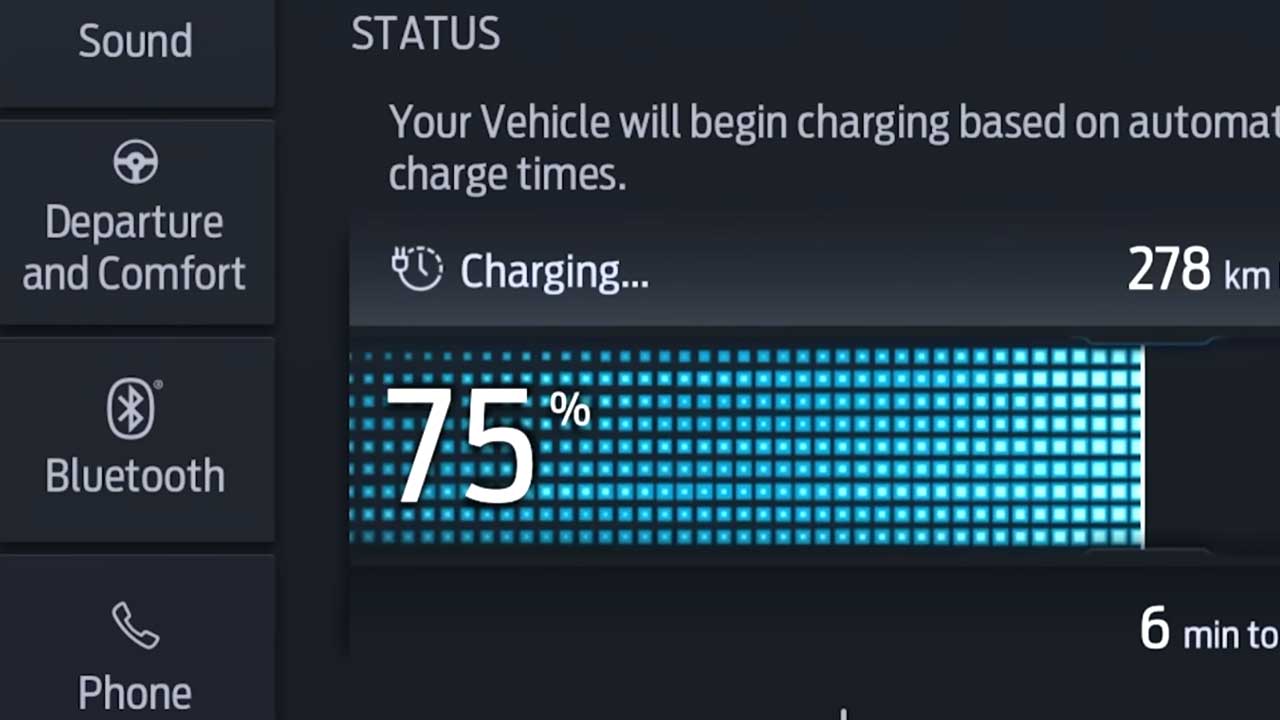

DC fast charging is not significantly bad for your EV battery when used occasionally. A 2025 Geotab analysis of 22,700 electric vehicles found that the average battery degradation rate is 2.3% per year, and high-power DC fast charging is the leading accelerant - but only for heavy, daily users. Occasional fast charging adds roughly 0.1% extra annual degradation versus AC-only charging. Battery chemistry matters enormously: LFP cells tolerate fast charging far better than NMC or NCA. The biggest threats to your battery are extreme temperatures, charging above 80%, and deep discharges below 20% - not the occasional pit stop at a Level 3 station.
Key Findings at a Glance
- Verdict: Mostly safe. Occasional DCFC adds only ~0.1% extra capacity loss per year - negligible for most drivers.
- Chemistry is everything. LFP batteries handle fast charging with near-zero extra degradation; NMC batteries show the steepest decline under heavy fast-charging use.
- Temperature is the silent killer. SOC gain drops by up to 27% in sub-zero conditions; charge at 77-113°F (25-45°C) for best battery health.
- Stay between 20-80% SoC. Avoiding extreme charge levels is the single highest-impact habit to extend battery life - more so than avoiding fast chargers.
Table of Contents
You're on I-40 somewhere between Flagstaff and Albuquerque, the range indicator is blinking at 18%, and the nearest supercharger is 14 miles away. You plug in, grab a coffee, and 22 minutes later you're back on the road with 80% charge. Convenient? Absolutely. But is that fast charging slowly destroying your battery? That's the question every EV driver eventually Googles - and the answer is far more nuanced than most articles let on.
According to the latest Geotab study (January 2026) analyzing over 22,700 electric vehicles across 21 models, the average EV battery degrades at 2.3% per year - and high-power DC fast charging is now identified as the primary behavioral accelerant. But here's the thing: that headline buries the most important detail. The impact of DC fast charging on battery health depends almost entirely on how often you do it, what temperature you're in, and what chemistry your battery uses. Let's dig in.
1. What Is DC Fast Charging - and How Does It Work?
DC fast charging - also called Level 3 charging or DCFC - bypasses your EV's onboard AC-to-DC converter and delivers direct current straight to the battery pack. Because the conversion hardware lives at the charging station rather than inside your car, the power levels can be dramatically higher.
Standard Outlet (AC)
120V / 1.4 kW output. Adds roughly 3-5 miles (5-8 km) of range per hour. Best for top-offs and PHEVs. Full charge: 24-40 hours.
Home or Public AC Charger
240V / 7-22 kW output. Adds 20-40 miles (32-64 km) per hour. Typical home charge: 6-10 hours. The daily-driver gold standard.
DC Fast Charger
50-350+ kW output. 0-80% in 20-45 minutes depending on vehicle. 15 min at 350 kW can add up to 186 miles (300 km) of range.
A DC fast charger is in constant digital communication with your vehicle. It monitors battery temperature, state of charge (SoC), and cell voltages - then delivers only as much power as the car's Battery Management System (BMS) approves. Once the battery hits around 80% SoC, the charging curve tapers dramatically toward Level 2 speeds. That's not a flaw - it's deliberate protection built into every modern EV.
Power Context: A 350 kW DC fast charger delivers 7-50x more power than a Level 2 charger. That's like filling a gas tank at 350 gallons-per-minute vs. 7. The speed is remarkable - but so is the thermal management needed to keep the battery safe.
2. How Bad Is DC Fast Charging for Your Battery - Really?
The short, honest answer: for most EV drivers, DC fast charging is not a meaningful threat to battery longevity. The nuance is in "most." Let's look at the actual numbers.
(Geotab, 2020)
(Idaho National Lab)
(Idaho National Lab)
(Geotab 2026 update)
Source: Idaho National Laboratory (INL) Nissan Leaf study - controlled test conditions
That 4-percentage-point difference - 27% vs. 23% - represents the "damage" done by exclusive use of DC fast charging over two years of hard driving. And crucially, the INL study was conducted in Arizona-level heat with twice-daily charges. Real-world drivers using a mix of charging methods in moderate climates see far less difference.
Old Thinking vs. Current Science: How the Narrative Has Shifted
| Concern | Old Belief (pre-2022) | Current Science (2024-2026) | Verdict |
|---|---|---|---|
| Degradation from DCFC | |||
| Temperature & degradation | |||
| LFP vs. NMC chemistry | |||
| Charging to 100% | |||
| Discharging to 0% | |||
| BMS protection during DCFC | |||
| Battery warranty coverage |
3. The Science of Battery Degradation: Why Fast Charging Stresses Cells
To understand why DC fast charging creates any battery wear at all, you need to understand what's happening inside your battery pack at the electrochemical level. It's fascinating - and it explains why not all EVs respond the same way.
Three Mechanisms of Degradation
1 Lithium Plating (Primary DCFC Culprit)
When charging too fast, lithium ions can't intercalate (insert) into the anode graphite quickly enough. Instead, they plate out as metallic lithium on the anode surface - a process that's largely irreversible. This "loss of lithium inventory" (LLI) permanently reduces the battery's usable capacity. It's the #1 degradation pathway for DC fast charging at high C-rates, confirmed by multiple ScienceDirect peer-reviewed studies (2024-2025).
2 SEI Layer Growth (Thermal Amplifier)
The Solid Electrolyte Interphase (SEI) is a protective film that naturally forms on the anode. Fast charging generates significant heat - accelerating side reactions that grow this layer thicker. A thicker SEI increases internal resistance and traps lithium ions permanently. At temperatures above 45°C (113°F), SEI growth accelerates by a factor of 2-4x compared to 25°C (77°F) operation.
3 Cathode Micro-Cracking (High-Voltage Issue)
Charging to 100% SoC puts the cathode under maximum mechanical stress. Rapid lithium extraction during fast charging at high SoC causes micro-cracks in the cathode crystal structure - particularly severe in NMC and NCA chemistries with high nickel content. Research published in Applied Energy (2025) found that restricting fast charging to the 20%-80% SoC window reduces lifetime pack replacement costs from $27,000 to $0 for NMC batteries.
"Lithium plating at the anode is the dominant degradation mechanism during DC fast charging. It is largely irreversible and directly proportional to the charging C-rate and the battery's state of charge at the time of charging."
Estimated relative contribution to total capacity loss (conceptual, based on peer-reviewed literature 2024-2025)
Level 2 AC Charging
DC Fast Charging (50-150 kW)
DC Fast Charging (150-350 kW) - High C-Rate
4. Does Battery Chemistry Make a Difference? (It Makes All the Difference)
This is the part most EV articles skip - and it's arguably the most important variable. A landmark 2025 ScienceDirect study tested NMC, NCA, and LFP cells under five different fast-charging regimes for up to 16 months. The results were striking.
| Battery Chemistry | Common EV Examples | Extra Pack Cost (>90% DCFC, full SoC) | Extra Pack Cost (20-80% SoC limit) | DCFC Tolerance | Thermal Stability |
|---|---|---|---|---|---|
| LFP (Lithium Iron Phosphate) | |||||
| NMC (Nickel Manganese Cobalt) | |||||
| NCA (Nickel Cobalt Aluminum) |
Pro Tip: If you fast-charge frequently and your EV uses LFP chemistry - like the standard-range Tesla Model 3 or BYD Seal - you can relax. LFP cells showed zero extra pack replacement costs even under 90%+ fast-charging regimes in the most comprehensive study to date. LFP also allows charging to 100% routinely without the voltage stress that damages NMC and NCA cells.
"The chemistry of the battery is the primary determinant of how much DC fast charging degrades it over time. LFP chemistry has emerged as the clear winner for drivers who rely heavily on public fast charging - essentially no extra degradation cost across its entire lifetime."
Dr. Hanwei Zhou
5. The Temperature Factor: Your Battery's Biggest Enemy Isn't the Charger
Here's the uncomfortable truth that most charging-anxiety articles overlook: temperature causes more battery degradation than fast charging frequency. A 2025 study analyzing 1,320 real-world EV charging sessions (published in SAGE Journals) found that temperature swings cause dramatic performance drops that dwarf the impact of moderate DCFC use.
Source: Rajesh G. & Sebasthirani K., SAGE Journals, 2025 - 1,320 real-world EV charging sessions
Most modern EVs compensate with Battery Thermal Management Systems (BTMS) - active heating in winter and liquid cooling in summer. But these systems consume energy themselves (adding 20-25% extra energy draw in extreme conditions) and slow charging speed to protect the cells. Planning ahead - pre-conditioning your battery before arriving at a fast charger - is one of the highest-ROI habits a cold-climate EV driver can build.
Summer Warning: Avoid DC fast charging in direct sunlight on days above 95°F (35°C). Park in shade, pre-cool the cabin AND the battery pack using the EV's climate pre-conditioning feature, then plug in. The battery's optimal charging window is 77-113°F (25-45°C).
6. Real-World Data from 22,700+ EVs: What the Numbers Actually Show
Enough lab theory - let's look at what's happening in driveways and parking lots across America. Geotab's 2026 update (published January 2026) is the most comprehensive real-world EV battery health dataset ever assembled. Here's what it shows.
"Our 2025 analysis of over 22,700 electric vehicles confirms that modern EV batteries are robust and built to last beyond a typical vehicle's service life. However, high-power DC fast charging is a dominant stressor, leading to the highest annual battery degradation rate - a critical finding given the industry's trend toward high-power charging infrastructure."
Geotab Research Team
Source: Geotab EV Battery Health Study 2026 (22,700 vehicles). General degradation patterns from combined research.
Separately, a Recurrent Motors analysis of over 12,500 Tesla vehicles in the US found no significant difference in battery capacity loss between cars that fast-charged more than 90% of the time versus those that did so less than 10% of the time. This aligns with Tesla's use of NMC and LFP packs with mature BMS software - a reminder that software matters nearly as much as hardware.
Industry Context: The number of DC fast charging stations in the US grew from approximately 5,000 in 2019 to over 34,000 in 2024 - a 580% increase in five years. As infrastructure scales, smart charging habits become increasingly important for the fleet-wide health of America's EV batteries.
7. What EV Manufacturers Actually Say About DC Fast Charging
Automakers are in a tricky position: they want to sell you on fast-charge capability as a feature, while also protecting their battery warranties. Here's what the major players recommend - and what those recommendations reveal about their battery chemistry choices.
| Manufacturer / Model | Battery Chemistry | Pack Capacity | Max DCFC Rate | Official DCFC Guidance | Warranty |
|---|---|---|---|---|---|
| Tesla Model 3 (STD) | |||||
| Tesla Model 3 Long Range | |||||
| Kia EV6 / EV9 | |||||
| Ford F-150 Lightning | |||||
| Chevy Equinox EV | |||||
| Rivian R1T | |||||
| Nissan Leaf (older gen.) |
Nissan Leaf Warning (2011-2017): Early Leaf models had no active liquid thermal management. This made them acutely sensitive to DC fast charging heat. If you own a first- or second-gen Leaf, limit DCFC use - especially in summer - or the 27% capacity loss cited in the INL study is an understatement for your situation.
8. NACS, CCS, and CHAdeMO: Which Connector Are You Using - and Does It Matter?
The connector on your fast charger doesn't directly determine battery health, but it does determine which charging network you can access - and therefore how conveniently you can implement smart charging habits. Here's the 2026 connector landscape in the US.
Tesla / NACS
Originally Tesla's proprietary plug. Now open standard adopted by Ford, GM, Rivian, Volvo, Polestar, and more. Supports up to 350 kW. Over 20,000 Supercharger stalls in North America. The de-facto US standard as of 2025-2026.
SAE CCS1 / CCS2
Used by most non-Tesla US EVs before 2024. Supports up to 350 kW. Widely available on Electrify America, EVgo, and ChargePoint networks. Many older CCS vehicles now ship with NACS adapters.
CHAdeMO
Used by Nissan Leaf and some early Kia/Mitsubishi EVs. Largely obsolete in the US. Max ~62.5 kW for most vehicles. Significantly fewer charging stations. Not recommended as a primary charging solution in 2026.
GB/T DC
Chinese national standard. Used by BYD and other Chinese-market EVs. Rare in North America. Supports up to 250 kW. Increasingly relevant as BYD eyes US expansion.
9. Ten Smart Charging Habits That Protect Your Battery in 2026
Here's the practical bottom line - a prioritized list of evidence-based habits that actually move the needle on battery longevity. Not all of these are about avoiding DC fast charging.
- Keep daily SoC between 20% and 80%. This is the single highest-impact habit. Voltage stress above 80% and deep discharge below 20% are documented accelerants of all three major degradation mechanisms. Most EVs let you set charge limits in the app or onboard software. Set it and forget it.
- Use Level 2 AC for daily charging; save DCFC for road trips. Level 2 home charging ($500-$1,500 installed / €436-€1,308) is the cheapest, gentlest way to start every day topped up. If you need a Level 2 charger recommendation, check our EV Road Trip Planning guide.
- Pre-condition your battery before DC fast charging in cold weather. Use your EV's "preheat battery" or navigation-based conditioning feature to warm the pack to optimal temperature before arriving at the charger. This alone can recover 20-27% of charging efficiency lost in sub-zero conditions.
- Stop DC fast charging at 80%, not 100%. The charging curve above 80% dramatically slows anyway (tapering to Level 2 speeds), and the additional 20% adds disproportionate voltage stress. You save time AND battery life.
- Avoid fast charging immediately after vigorous driving in summer heat. A battery pack already at 40°C (104°F) from highway driving in 95°F (35°C) weather is more vulnerable to thermal degradation during charging. Park in shade for 10-15 minutes and let the BMS cool the pack first.
- Don't let your battery sit at 100% for hours. If you charge to full the night before a trip, use the "departure time" scheduling feature so the charge completes close to when you leave - not hours before. High SoC + time = accelerated calendar aging.
- Check your charging station's power output before plugging in. A 350 kW station with a vehicle that accepts only 50 kW (like the older Nissan Leaf) won't fast-charge you faster - the car limits the rate. But a 350 kW station with a Hyundai Ioniq 6 (800V system, 233 kW acceptance) is a perfect match that minimizes time at the charger.
- Monitor your battery state of health (SoH) annually. Use your EV's onboard diagnostics, or third-party apps like Recurrent Auto or Geotab telematics (for fleet operators), to track capacity fade. Catching unexpected degradation early allows you to adjust habits or invoke warranty coverage.
- Choose reputable, well-maintained charging stations. A poorly maintained DCFC station that fails to communicate properly with your BMS can deliver incorrect power levels. Stick to networks with high uptime reputations - Tesla Supercharger, Electrify America, and EVgo consistently rank highest in J.D. Power reliability surveys.
- Know your chemistry. If your EV uses LFP cells (Tesla Standard Range, BYD, Chevy Equinox EV), relax - fast charge freely and charge to 100% regularly. If you have NMC or NCA, respect the 20-80% rule religiously, especially for DC fast charging sessions.
The 5-Phase Smart Charging Strategy: From Habit to Habit Stack
Here's how to layer these ten habits into a practical, sustainable charging strategy that protects your battery across different driving scenarios:
Set Your Baseline: Configure Daily Limits (Week 1)
Open your EV app or onboard settings. Set the daily charge limit to 80% SoC. Set the minimum departure SoC to 20%. Schedule overnight charging to complete 30 minutes before your usual departure time. This one-time setup is the highest-leverage action in this entire guide.
Build the Pre-Conditioning Habit (Week 2-3)
Whenever you plan a fast-charge stop more than 20 minutes away, enter the destination in your EV's navigation. Most modern EVs (Tesla, Hyundai, Kia, BMW) will automatically pre-condition the battery to optimal temperature. In manual EVs, activate battery heating/cooling 15-20 minutes before arrival.
Optimize Your Road Trip Charging Stops (Ongoing)
Plan stops between 10-80% SoC. Use PlugShare or A Better Routeplanner (ABRP) to route between high-power stations with compatible connectors. Aim for stops of 20-25 minutes max - that's where the charging curve is fastest and battery stress is lowest. A 75 kWh pack at a 150 kW station adds roughly 50 miles (80 km) of range in 20 minutes.
Seasonal Adjustments (Quarterly)
In winter: enable battery preheating, expect 15-20% reduced range in temperatures below 14°F (-10°C), and plan for an extra charging stop on long trips. In summer above 95°F (35°C): prefer morning or evening charging, park in shade, and avoid back-to-back DCFC sessions without a 10-minute cooldown in between.
Annual Health Check (Every 12 Months)
Pull a battery health report from your EV's diagnostics or a third-party tool. If capacity has dropped more than 10% in under 2 years, review charging patterns and consult your dealer - some warranty claims require documented degradation above threshold. Geotab's 2026 data shows that 2.3% annual loss is the new "normal baseline" - anything significantly above that warrants investigation.
10. The Future: Solid-State Batteries and 800V Platforms Change Everything
The current limitations of DC fast charging's impact on battery life are largely chemistry problems. And chemistry is changing fast.
Solid-State Batteries
Replace liquid electrolyte with solid ceramic or polymer alternatives. Dramatically reduce lithium plating risk - the #1 DCFC degradation mechanism. Expected to handle 6C+ charge rates (10-minute 0-80% charges) with minimal degradation. Toyota targets 2027; QuantumScape supplies VW from 2025 in limited pilot volumes. Will cost approximately $100-$150/kWh initially (€87-€131/kWh).
800-Volt EV Platforms
Hyundai Ioniq 6, Kia EV6, Porsche Taycan, and others use 800V architecture that delivers the same power at half the current. Lower current means less heat generation per kilowatt delivered - fundamentally reducing the thermal stress that causes degradation. The Ioniq 6 can add 68 miles (110 km) of range in just 5 minutes at a 350 kW station.
AI-Powered BMS
Next-generation Battery Management Systems use machine learning to predict optimal charging curves in real time, adapting to each cell's unique degradation history. CATL's "Cell to Pack" technology and BYD's "Blade Battery" are early examples of chemistry + software working together to enable stress-free fast charging. Research published in PMC (2025) demonstrated AI-based SOH estimation with under 0.3°C temperature prediction error.
"800V EV platforms represent a fundamental shift in the fast-charging equation. By halving the current required to deliver the same power, these systems intrinsically reduce the thermal and electrochemical stress that has historically been the price of speed."
Industry Analysis
Based on published manufacturer specifications and industry research projections (2026)
DC Fast Charging: The Full Pros and Cons for 2026
Pros of DC Fast Charging
- 80% charge in 20-45 minutes - essential for long-distance travel
- Minimal impact on battery health when used occasionally (0.1% extra annual degradation)
- Zero extra degradation on LFP-chemistry batteries even with heavy use
- Modern BMS systems manage thermal risk automatically during fast charging
- 800V platforms reduce heat generation per kW delivered
- Network growing rapidly: 34,000+ DCFC stations in the US as of 2024
- Costs typically $0.35-$0.65/kWh ($0.31-$0.57/kWh - varies by network and location)
Cons of DC Fast Charging
- Daily exclusive use can increase annual degradation by 1.6-3.6% vs. AC charging alone
- NMC/NCA batteries show significant extra pack costs under heavy fast-charging regimes
- More expensive per kWh than Level 2 home charging ($0.10-$0.15/kWh or €0.09-€0.13)
- Thermal stress elevated at high ambient temperatures above 40°C (104°F)
- Charging curve slows above 80% SoC - making 100% charges inefficient and harmful
- Old EVs without liquid thermal management (Nissan Leaf gen 1-2) are particularly vulnerable
- Station availability still inconsistent in rural areas; reliability varies by network
Frequently Asked Questions: DC Fast Charging and Battery Health
- Is DC fast charging bad for your battery?
Not significantly, for most drivers. Occasional DC fast charging adds approximately 0.1% extra annual battery degradation compared to AC-only charging, according to Geotab's real-world study. The impact becomes more pronounced with daily exclusive fast charging, particularly for NMC and NCA battery chemistries. LFP batteries show essentially zero additional degradation from DC fast charging. The key is moderation: use Level 2 AC for daily charging and reserve DC fast charging for road trips.
- How often is it safe to use DC fast charging without damaging my battery?
For most EVs with NMC or NCA batteries, limiting DC fast charging to no more than 2-4 times per week is a practical guideline. For LFP-equipped vehicles, daily fast charging is essentially safe. The Idaho National Laboratory study - considered the benchmark research in this area - found measurable but modest degradation differences only when DCFC was the exclusive charging method for an entire year. Occasional road-trip fast charging carries negligible long-term risk.
- Does DC fast charging void my EV warranty?
No - DC fast charging does not void your EV's battery warranty. Virtually all major manufacturers' warranties explicitly cover normal use of DC fast charging. The standard EV battery warranty in the US covers 8 years or 100,000-175,000 miles (160,934-281,635 km) against defects and significant capacity loss (typically defined as a drop below 70-75% of original capacity). Some warranties, like Rivian's 8-year / 175,000-mile (281,635 km) coverage, are particularly generous.
- What temperature is best for DC fast charging?
The optimal temperature range for EV battery charging is 25-45°C (77-113°F). At sub-zero temperatures, SOC gain can drop by up to 27%, meaning your battery charges far more slowly AND the thermal management system drains more energy. Above 40°C (104°F), charging efficiency drops by about 19% and thermal stress increases. Most modern EVs automatically pre-condition the battery when navigating to a fast charger - use this feature whenever available.
- How much does it cost to DC fast charge an EV in 2026?
DC fast charging typically costs $0.35-$0.65 per kWh in the US (€0.31-€0.57 at April 2026 exchange rate of 1 USD = 0.872 EUR). For a 75 kWh pack charging from 20% to 80% (adding ~45 kWh), that's approximately $15.75-$29.25 per session (€13.73-€25.51). By comparison, home Level 2 charging at the US average of $0.13/kWh (€0.11/kWh) costs about $5.85 (€5.10) for the same session. Network memberships (Tesla, Electrify America, EVgo) can reduce fast-charging rates by 20-35%.
- Should I charge my EV to 100% with a DC fast charger?
Generally, no - for two reasons. First, the charging curve above 80% SoC slows dramatically to Level 2 speeds, so you're sitting at a paid public station for diminishing returns. Second, high-voltage stress above 80% SoC accelerates cathode degradation in NMC and NCA batteries. The exception is LFP batteries, which tolerate 100% charges well and actually benefit from occasional full charges to help the BMS calibrate cell balancing. For non-LFP vehicles, stop at 80% and hit the road.
- Will solid-state batteries solve the fast-charging problem?
Solid-state batteries are expected to be a major step forward. By replacing the liquid electrolyte with a solid ceramic or polymer alternative, they drastically reduce the lithium-plating risk that is the primary degradation mechanism during high-rate DC fast charging. Projected 2027-2030 commercialization timelines suggest 10-minute 0-80% charges with minimal battery wear. Initial pricing will be approximately $100-$150 per kWh (€87-€131), compared to about $80-$100/kWh (€70-€87) for current lithium-ion packs. Expect solid-state in premium EVs first, followed by broader adoption in the early 2030s.
Conclusion: Smart Charging Beats Charging Anxiety
Let's cut through the noise. DC fast charging is not your EV battery's enemy - bad habits are. The science is clear: occasional DCFC use adds a negligible 0.1% extra annual degradation for most drivers. The real battery killers are charging consistently to 100%, deep discharges below 20%, and extreme temperatures - and none of those require you to avoid a Level 3 charger on your road trip.
Your battery chemistry matters enormously. LFP drivers? Fast charge freely. NMC and NCA drivers? Respect the 20-80% window and reserve DCFC for travel days. And if your EV is a first-generation Nissan Leaf without liquid thermal cooling - handle that fast charger with genuine care in hot weather.
The good news is that technology is catching up. 800V platforms are already here, reducing heat generation at every kilowatt delivered. Solid-state batteries are arriving by 2027-2030, promising stress-free charging in under 10 minutes. And smarter BMS software is being pushed over-the-air to existing vehicles right now.
For today? Follow the five-phase strategy above. Set your 80% daily limit. Pre-condition your battery. Stop charging at 80% during trips. Know your chemistry. And enjoy the road - that's what the fast charger is there for.
Your 30-Day Battery Protection Action Plan
Set Your Charge Limit
Open your EV app or onboard settings right now and set daily charge limit to 80%. Schedule morning departure charging. Takes 5 minutes; protects your battery for years.
Learn Your Car's Pre-Conditioning Feature
Find and test your EV's battery pre-conditioning or "charge planner" feature. Practice setting a destination in the navigation and confirming the battery pre-conditioning activates automatically.
Audit Your Current Charging Habits
Review the past month of charging data in your EV app. Note how often you've used DCFC, what SoC levels you've charged to, and whether you've charged in temperature extremes. Identify your top habit to improve.
Get a Battery Health Baseline
Record your current battery state of health - either from onboard diagnostics or a tool like Recurrent Auto. This is your year-one benchmark. Compare annually to confirm your healthy charging habits are working.
Planning a Road Trip That Needs DC Fast Charging?
Our EV Road Trip Planning guide covers how to route for fast chargers, manage your SoC across multiple stops, and get the most range from your battery in any season.
Read the EV Road Trip GuideSources & References
- Geotab Research Team. EV Battery Health: Key Findings from 22,700 Vehicle Data Analysis. Geotab, January 2026. geotab.com
- Idaho National Laboratory (INL). Plug-in Electric Vehicle and Infrastructure Analysis - Nissan Leaf DCFC degradation study. US Department of Energy.
- Zhou H., Alujjage A.S. et al. Effect of fast charging on degradation and safety characteristics of lithium-ion batteries with LFP cathodes. Applied Energy, Vol. 377, January 2025. DOI: 10.1016/j.apenergy.2024.124465
- Zhou H., Alujjage A.S. et al. Quantifying the degradation cost of frequent fast charging across multiple EV battery chemistries (NMC, NCA, LFP). ScienceDirect, June 2025. DOI: 10.1016/j.apenergy.2024.124465
- Rajesh G. & Sebasthirani K. Impact of fast charging on battery performance and SOC variations across temperature conditions. SAGE Journals, September 2025. DOI: 10.1177/09544070251366341
- Recurrent Motors. Fast Charging and Tesla Battery Degradation: Analysis of 12,500 US Tesla Vehicles. Recurrent Auto, 2023-2024.
- EVBox. Is DC fast charging bad for your EV battery? EVBox Blog, May 2023.
- Power Sonic. Does DC Fast Charging Damage EV Batteries? Power-Sonic.com, October 2025.
- EVDANCE. How Fast Charging Affects EV Battery Over Time. EVDances Blog, December 2025.
- PMC / National Institutes of Health. Battery state of health estimation under fast charging via deep transfer learning. PMC, May 2025.
- Wise.com. USD to EUR Exchange Rate History. April 2026. 1 USD = 0.872 EUR.