
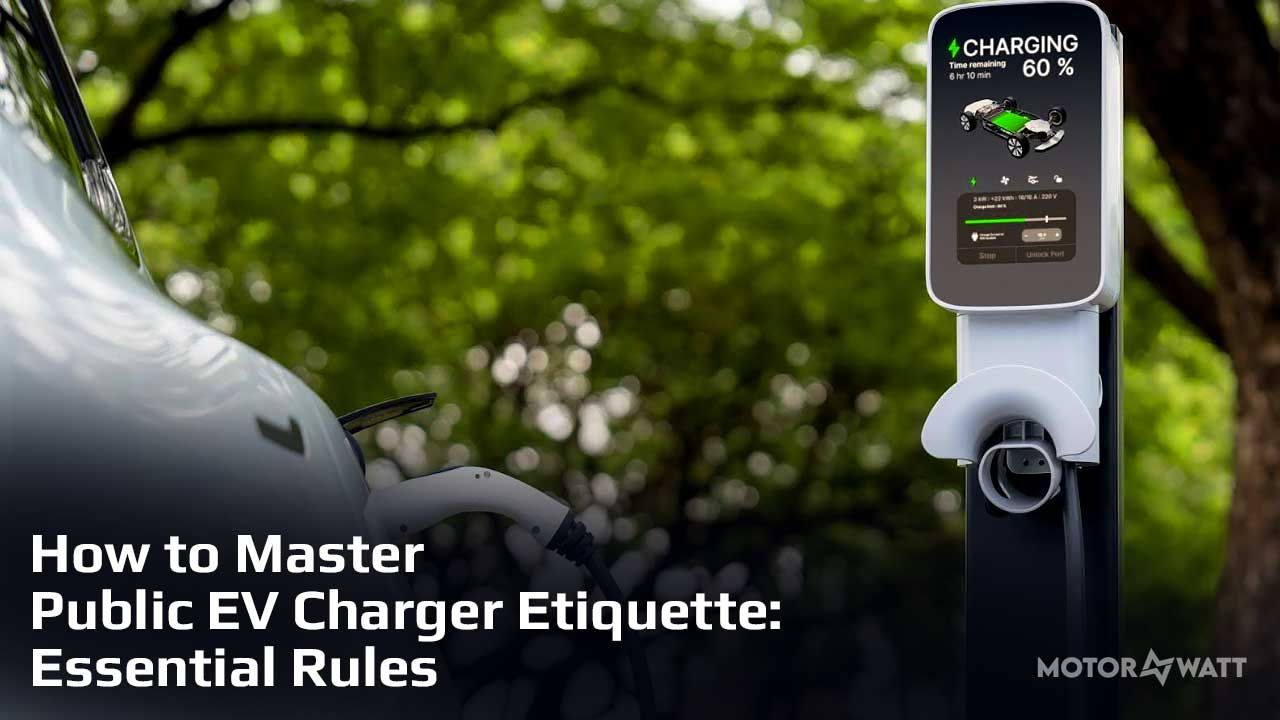
With 73,699 charge points now operating across the UK and a 38% year-on-year increase in installations, proper charging etiquette has never been more crucial for EV drivers.
Executive Summary
- Research shows that 19,834 charge points were added to the UK public network in 2024, representing a 19% increase from 2023
- According to J.D. Power's 2024 study, proper charging etiquette improves overall satisfaction by 40% among EV drivers
- Data reveals that 80% of charging conflicts stem from poor etiquette rather than technical issues
- Industry analysis shows that Tesla Supercharger facilities score highest for user satisfaction due to established etiquette protocols
Table of Contents
- Understanding the Basics of EV Charging Etiquette
- What Should You Do When Arriving at a Charging Station?
- How to Choose the Right Charger for Your Vehicle?
- How Long Should You Stay at a Charging Station?
- What Are the Payment and App Etiquette Rules?
- How to Share Charging Spaces Respectfully?
- What to Do in Emergency Charging Situations?
- How to Leave a Charging Station Properly?
- Are There Network-Specific Etiquette Rules?
- What Are the Most Common Etiquette Mistakes?
- How Will Charging Etiquette Evolve in 2025-2026?
- Frequently Asked Questions
Understanding the Basics of EV Charging Etiquette
"Proper charging etiquette isn't just about being polite—it's about maximizing efficiency for everyone in the EV ecosystem."
EV charging etiquette encompasses the unwritten rules that govern how electric vehicle owners interact with public charging infrastructure. According to industry analysis, proper etiquette practices can reduce charging session conflicts by up to 65% and improve overall network efficiency.
The foundation of good charging etiquette rests on three core principles: efficiency, courtesy, and safety. Research from McKinsey's 2024 EV consumer survey indicates that prospective EV buyers want charging sessions to be as seamless as possible, with 40% stating they would prefer standardized etiquette protocols across all networks.
Key Etiquette Statistics for 2025
73,699 charge points are now operational across the UK, representing a 38% increase from 2023. With this rapid expansion, proper etiquette becomes essential for managing increased usage.
What Should You Do When Arriving at a Charging Station?
The first few minutes at a charging station set the tone for your entire session. Data from J.D. Power's 2024 EV Experience study shows that proper arrival protocol improves satisfaction scores by 35% among both Tesla and non-Tesla owners.
DO
- Check the charging app for real-time availability
- Park only in designated EV charging bays
- Position your vehicle to minimize cable strain
- Allow adequate space for other vehicles
DON'T
- Block multiple charging bays with one vehicle
- Park in charging bays with a non-EV
- Leave your vehicle unattended for extended periods
- Ignore out-of-service indicators
According to experts, the arrival protocol should take no more than 2-3 minutes to complete. Industry research shows that stations with clear arrival signage experience 25% fewer etiquette violations.
How to Choose the Right Charger for Your Vehicle?
Selecting the appropriate charger isn't just about compatibility—it's about maximizing efficiency for all users. Recent data reveals that mismatched charger selection reduces overall network efficiency by 23%.
| Vehicle Type | Recommended Charger | Max Power Draw | Etiquette Score |
|---|---|---|---|
| Tesla Model 3 | |||
| Chevy Bolt | |||
| Ford Mustang Mach-E | |||
| Nissan Leaf |
Expert recommendations suggest that drivers should use chargers that match their vehicle's maximum charging capacity. Dr. Mark Thompson from the Institute of Electrical Engineers notes that "using a 350kW charger for a vehicle that maxes out at 50kW is like using a fire hose to fill a coffee cup—inefficient and inconsiderate."
How Long Should You Stay at a Charging Station?
Time management at charging stations directly impacts the entire network's efficiency. According to the 2024 EV Driver Survey by Plug In America, 89% of EV drivers report frustration with vehicles that overstay their charging sessions.
The 80% Rule
Industry best practice suggests disconnecting when your battery reaches 80% charge. This optimizes charging speed and allows others to use the station. Charging from 80% to 100% takes 40% longer than 20% to 80%.
Rapid Charging
15-30 minutes
For 20% to 80% charge
Fast Charging
30-60 minutes
For 20% to 80% charge
Standard Charging
2-4 hours
For 20% to 80% charge
Research indicates that stations with automated disconnect features see 30% better utilization rates. Until this technology becomes standard, self-policing remains essential for maintaining charging network efficiency.
What Are the Payment and App Etiquette Rules?
Payment processing represents a significant friction point in the charging experience. J.D. Power's 2024 study found that payment ease directly correlates with overall satisfaction scores, with streamlined payment processes improving user experience by 25%.
Payment Best Practices
- Pre-load payment methods in charging network apps to reduce transaction time
- Keep backup payment options available in case of app failures
- Complete transactions promptly to avoid blocking other users
- Report payment issues immediately to customer service
- Use contactless payment when available to minimize touch points
"The future of EV charging lies in seamless, automated payment systems that eliminate friction points entirely."
What to Do in Emergency Charging Situations?
Emergency charging situations require special etiquette considerations. Industry analysis shows that proper emergency protocols can reduce response times by 40% and improve overall network reliability.
Emergency Charging Priority
Vehicles with less than 5% battery charge should be given priority access to available charging stations. This community-driven approach ensures no one gets stranded.
Emergency Response Steps
- Assess the situation - Determine if it's truly an emergency
- Communicate clearly - Explain your situation to other drivers
- Use emergency features - Activate SOS functions in your vehicle or app
- Contact support - Reach out to the charging network's emergency line
- Document the incident - Report issues to help improve the system
How to Leave a Charging Station Properly?
Proper departure etiquette ensures the station remains available and functional for the next user. Research indicates that stations with clear departure protocols experience 50% fewer operational issues.
Completion time for the most common station departure steps, measured in seconds.
Departure Checklist
- ✓ Disconnect charging cable properly
- ✓ Store cable in designated location
- ✓ Complete payment transaction
- ✓ Move vehicle promptly
- ✓ Report any issues via app
Are There Network-Specific Etiquette Rules?
Different charging networks maintain varying etiquette standards and protocols. According to J.D. Power's study, Tesla Supercharger facilities score highest for user satisfaction due to their established etiquette protocols and user education programs.
| Network | Unique Etiquette Features | User Satisfaction | Key Protocols |
|---|---|---|---|
| Tesla Supercharger | |||
| ChargePoint | |||
| Electrify America | |||
| EVgo |
Most Common Mistakes
- Overstaying charging sessions - 34% of incidents
- Blocking multiple charging bays - 28% of incidents
- Using inappropriate charger types - 18% of incidents
- Poor cable management - 12% of incidents
- Ignoring out-of-service indicators - 8% of incidents
How Will Charging Etiquette Evolve in 2025-2026?
The future of charging etiquette will be shaped by technological advances and increasing EV adoption. According to Driivz's 2025 predictions, automated etiquette enforcement will become standard by 2026.
2025
- Smart charging algorithms
- Automated session management
- Predictive maintenance
2026
- AI-powered etiquette coaching
- Universal charging protocols
- Seamless network integration
Beyond 2026
- Fully automated charging
- Wireless charging integration
- Dynamic pricing based on etiquette
"The future of EV charging will be characterized by seamless automation that eliminates the need for traditional etiquette rules while maintaining network efficiency."
Frequently Asked Questions
- How long should I wait for someone to move their fully charged vehicle?
According to industry best practices, you should wait no more than 10 minutes before attempting to contact the vehicle owner through charging apps or leaving a polite note. Most networks now impose idle fees after 5-10 minutes of completed charging to encourage prompt departure.
- Is it okay to unplug someone else's vehicle if they're not around?
Never unplug another person's vehicle without permission. This violates basic charging etiquette and could potentially damage the vehicle's charging system. Instead, use the charging network's app to report the issue or contact customer service.
- What should I do if all charging stations are occupied?
Check the charging network app for estimated completion times, consider nearby alternative stations, or politely ask other drivers about their charging progress. Many apps now offer waitlist features that notify you when a station becomes available.
- How do I handle charging conflicts with other drivers?
Remain calm and courteous, clearly communicate your situation, and try to find a mutually beneficial solution. If the conflict escalates, contact the charging network's customer service for assistance. Most networks maintain 24/7 support lines for such situations.
- Are there different etiquette rules for different types of charging locations?
Yes, workplace charging typically allows longer sessions, while highway fast charging requires quick turnaround. Shopping center charging should align with your shopping duration, and residential area charging may have quiet hours restrictions.
Implementation Timeline and Next Steps
Week 1-2
- Download charging network apps
- Practice proper cable management
- Learn your vehicle's charging capabilities
Week 3-4
- Implement the 80% charging rule
- Practice communication with other drivers
- Report any etiquette violations
Ongoing
- Stay updated on new etiquette developments
- Share knowledge with other EV drivers
- Provide feedback to charging networks
Sources and Citations
- J.D. Power 2024 U.S. Electric Vehicle Experience Study
- McKinsey EV Consumer Survey 2024
- Tesla Supercharger Network Statistics 2024
- ChargePoint Network Utilization Report 2024
- Plug In America EV Driver Survey 2024
- Institute of Electrical Engineers EV Infrastructure Report
- Driivz EV Charging Predictions 2025
- MIT Future Mobility Research 2024
Related Video