
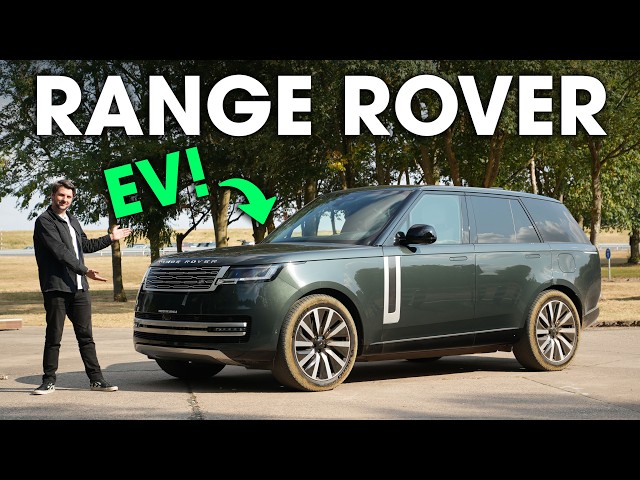
The electric Range Rover SUV has gone on sale.
After a 56-year run on combustion engines, Range Rover Electric is officially on sale. JLR opened order books on September 2, 2026, with prices starting at $138,000 in the US and £154,070 in the UK — pricing that lands close to the flagship V8 Autobiography rather than at a premium.
118.5kWh
Double-stacked battery pack
333mi
EPA range (US), 372mi WLTP (UK)
405kW
System power output
61K+
Pre-orders on the waitlist
A Long Time Coming
The Range Rover Electric's waitlist opened back in late 2023 and drew more than 61,000 names, but JLR pushed the on-sale date from its original late-2025 target into 2026. The delay was blamed partly on softer global EV demand and partly on a severe cyberattack that hit JLR's production systems starting August 31, 2025, halting manufacturing worldwide for over a month and contributing to a reported £559 million quarterly loss.
Now built alongside its combustion siblings at JLR's Solihull plant in the UK, the electric Range Rover is finally shipping — and JLR is positioning it not as a stripped-down EV variant, but as, in the company's words, the most accomplished Range Rover it has ever built.
Specifications
|
Starting price (US)
|
$138,000 MSRP
|
|
Starting price (UK)
|
£154,070
|
|
Battery
|
118.5 kWh, double-stacked, 800V architecture
|
|
Range (EPA, US)
|
Up to 333 miles (536 km)
|
|
Range (WLTP, UK)
|
Up to 372 miles (599-600 km)
|
|
System power
|
405 kW (EV550 powertrain), V8-rivalling output
|
|
Max charging
|
350 kW
|
|
Wading depth
|
Up to 35 inches
|
|
Trims
|
SE, HSE, Autobiography, SV, SV Ultra, SV Black, plus a First Edition launch model
|
|
Configurations
|
Standard and long-wheelbase
|
|
Cabin noise
|
7 dBA quieter under full throttle vs. the V8
|
|
Assembly
|
Solihull, UK
|
How Its Range Stacks Up
The Range Rover Electric's headline number — a nearly 120 kWh battery — is genuinely huge, but its EPA range doesn't lead the luxury electric SUV pack. Rivals with smaller or similarly sized packs post longer estimated ranges, a sign of how much efficiency still separates a legacy automaker's first EV platform from purpose-built rivals.
Estimated EPA range: luxury electric SUVs
EPA or manufacturer-estimated range figures as reported at each model's launch. Data: JLR, Cadillac, Lucid, BMW, Rivian, via Tech-ish.
Cadillac Escalade IQ
460 mi
Lucid Gravity Grand Touring
450 mi
BMW iX5
435 mi
Rivian R1S Dual Max
410 mi
Range Rover Electric
333 mi
What's New, What's Familiar
Visually, JLR kept changes subtle. The Electric is nearly indistinguishable from the fifth-generation combustion Range Rover that launched in late 2021 — a slipperier grille and new alloy wheels are about the extent of the exterior redesign, together trimming the drag coefficient by just 0.01 Cd. The cabin carries over largely unchanged too, aside from EV-specific graphics with AI-assisted range prediction and over-the-air battery updates.
Where JLR clearly did put in the work is refinement: the electric model runs about 7 dBA quieter under full throttle than the V8, and the brand is leaning hard into "Rolls-Royce-like" hush as a selling point over outright EV specs.
Pros
- Genuine V8-rivaling power (405 kW) with none of the combustion noise or vibration
- Massive 118.5 kWh battery and 350 kW charging keep road-trip stops reasonable
- Full Range Rover capability retained, including 35-inch wading depth
- Priced close to the V8 Autobiography rather than at a steep EV premium
- 61,000+ pre-orders show strong demand despite the delay
Cons
- EPA range trails newer rivals like the Escalade IQ and Lucid Gravity by well over 100 miles
- Arrives roughly five years after Range Rover first previewed electrification plans
- Exterior and interior design carry over almost unchanged from the combustion model
The Range Rover Electric isn't trying to win a range or efficiency contest — it's betting that buyers who already want a Range Rover will pay for one that's quieter, just as capable off-road, and finally electric. Whether that's enough against faster-charging, longer-range rivals will become clear as the first deliveries reach customers.
Sources