---
title: "Best Home EV Charger in 2026: Level 2 Chargers Ranked"
description: "We tested and rated the best home EV chargers of 2026 — Level 2 picks for speed, budget, and smart features. Plus installation cost, rebates, and J1772 vs NACS explained."
url: "https://motorwatt.com/ratings/best-home-ev-charger-in-2026"
date: "2026-05-12T11:51:26+00:00"
language: "en-GB"
---
# Best Home EV Charger in 2026: Level 2 Chargers Ranked
[ 
Rated by MOTORWATT
MOTORWATT Experts Group
](https://motorwatt.com/community/motorwatt)
Share this article in Social Media:
- [](https://t.me/share/url?url=https%3A%2F%2Fmotorwatt.com%2Fratings%2Fbest-home-ev-charger-in-2026.md&text= "Telegram")
- [](https://www.facebook.com/sharer/sharer.php?u=https%3A%2F%2Fmotorwatt.com%2Fratings%2Fbest-home-ev-charger-in-2026.md "Facebook")
- [](https://x.com/intent/post?url=https%3A%2F%2Fmotorwatt.com%2Fratings%2Fbest-home-ev-charger-in-2026.md&text= "Twitter")
- [](https://www.linkedin.com/sharing/share-offsite/?url=https%3A%2F%2Fmotorwatt.com%2Fratings%2Fbest-home-ev-charger-in-2026.md "LinkedIn")
- [](http://pinterest.com/pin/create/button/?url=https%3A%2F%2Fmotorwatt.com%2Fratings%2Fbest-home-ev-charger-in-2026.md "Pinterest")
- [](https://api.whatsapp.com/send?text=https%3A%2F%2Fmotorwatt.com%2Fratings%2Fbest-home-ev-charger-in-2026.md "Whatsapp")
Published: 12 May 2026
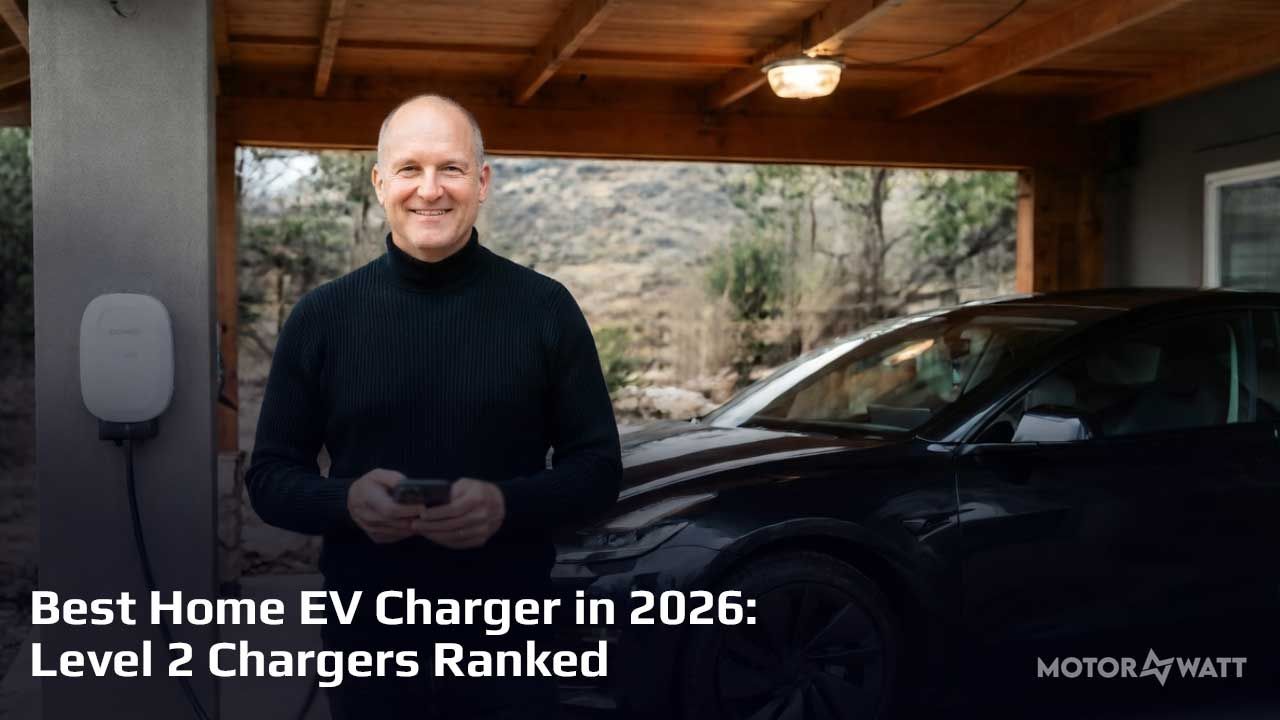
If you want the short answer, the **Emporia Classic** is the best home EV charger for most people because it gives you 48-amp charging, smart scheduling, a long cable, and a price that still undercuts several rivals. If you drive a Tesla, want the most app control, or need something portable, there are better-fit picks below.
Home charging is where EV ownership either feels effortless or annoying. Get the right charger and you wake up every morning with enough range, lower charging costs, and none of the drama that comes with hunting for a public plug. Get the wrong one and you overpay for power your car cannot use, buy a cable that does not reach, or install a unit your panel does not really support.
That is why this guide does not just chase spec-sheet bragging rights. We compared the chargers that real U.S. shoppers keep running into, then ranked them by charging output, installation flexibility, connector support, weather protection, app quality, warranty coverage, and overall value.
The result is simple: most homes do not need an 80-amp monster. They need a safe, reliable, outdoor-ready Level 2 charger in the 40A to 50A zone, with enough cable reach and enough smart features to take advantage of off-peak rates.
## The Best Home EV Chargers at a Glance
| Charger | Best for | Max output | Install | Why it stands out |
|---|---|---|---|---|
| Emporia Classic | Most drivers | 48A / 11.5 kW | Plug-in or hardwired | Strong value, smart scheduling, 25-foot cable, broad compatibility |
| Tesla Universal Wall Connector | Tesla owners and mixed-EV households | 48A / 11.5 kW | Hardwired | Built-in adapter, Tesla app integration, clean future-proof setup |
| Grizzl-E Classic | Budget durability | 40A / about 9.6 kW | Plug-in | Rugged enclosure, low MSRP, simple no-fuss charging |
| Grizzl-E Ultimate 80A | Maximum AC charging speed | 80A / 19.2 kW | Hardwired only | Huge headroom for large-battery EVs that can actually use it |
| ChargePoint Home Flex | Smart features and app control | 50A / 12 kW | Plug-in or hardwired | Flexible amperage settings and one of the best-known charging apps |
| Lectron Portable Level 2 | Travel and occasional 240V charging | 40A / 9.6 kW | Portable NEMA 14-50 | Lower entry price and easy pack-and-go flexibility |
How much charging speed changes as amperage rises
ChargePoint's Home Flex guidance shows how quickly home charging steps up as you move from a smaller circuit to a 40A to 50A setup. For most households, the biggest practical jump happens before you ever reach 80A. Source: [ChargePoint Home Flex Installation FAQ](https://www.chargepoint.com/en-ca/drivers/home/installation/flex).
16A setup
12 mi/hr
24A setup
18 mi/hr
32A setup
25 mi/hr
40A setup
30 mi/hr
48A setup
36 mi/hr
50A setup
37 mi/hr
## What Is a Level 2 EV Charger? (And Why You Need One)
A Level 2 EV charger is a 240-volt home charging setup that delivers much faster charging than a standard 120-volt wall outlet. In practical terms, it is the difference between adding just a few miles of range per hour and adding enough range overnight for normal daily driving.
Level 1 charging is still useful, especially for plug-in hybrids or drivers with very short commutes, but it is slow. ENERGY STAR says Level 1 usually adds about 2 to 5 miles of range per hour, while Level 2 commonly adds 10 to 20 miles per hour and often more with higher-output units. The U.S. Department of Energy's AFDC goes a bit broader, noting that Level 2 home charging commonly lands in the 10 to 30 miles-per-hour range depending on the vehicle and charger.
That is why most full battery-electric vehicles feel better with Level 2 at home. You stop thinking in terms of recovering yesterday's miles and start thinking in terms of topping off whenever the car is parked.
### Expert view: ENERGY STAR
[ENERGY STAR's EV charger guidance](https://www.energystar.gov/products/ev_chargers) says drivers who travel more than 40 miles per day in a fully electric vehicle usually need a 240-volt Level 2 charger, while many plug-in hybrid owners and light commuters can stay on Level 1. The same guidance also recommends certified chargers because they use less standby energy and have been safety tested by a recognized lab.
## The Best Level 2 EV Chargers for Home - Our Top Picks
If you only read one section, read this one. These are the chargers that make sense for the widest range of buyers right now.
### Best Overall: Emporia Classic Level 2 EV Charger
The Emporia Classic is the best home EV charger for most people, full stop. It hits the sweet spot on price, output, cable length, connector choice, and basic smart features without pushing you into premium-charger money.
- Output: up to 48A / 11.5 kW when hardwired
- Installation: NEMA 14-50 plug or hardwire
- Cable: 25 feet
- Connectivity: Wi-Fi app with scheduling and energy tracking
- Current listed price: $429 to $479 depending on connector and configuration
Emporia's big advantage is that it does the stuff most owners actually care about. You can schedule charging around time-of-use rates, track usage, and install either a plug-in or hardwired version. That makes it easier to fit older garages, rentals, or households that are not ready to commit to a full hardwire-only setup on day one.
### Best for Tesla Owners: Tesla Universal Wall Connector
If you drive a Tesla now, or you expect your household to mix Tesla and non-Tesla EVs, the Universal Wall Connector is the cleanest long-term answer.
- Output: up to 48A / 11.5 kW
- Installation: professional hardwired installation
- Cable: 24 feet
- Connector strategy: integrated adapter for non-Tesla charging
- Current listed price: $600
Tesla says the unit can add up to 44 miles of range per hour depending on vehicle, and the built-in adapter is the real trick here. You do not have to play games with separate dongles every day, and you stay inside Tesla's polished app ecosystem for scheduling and access control.
### Best Budget Home EV Charger: Grizzl-E Classic
The Grizzl-E Classic is the charger for people who care more about durability than fancy software. It is not elegant. It is just tough.
- Output: up to 40A with adjustable settings
- Installation: plug-in versions with NEMA 14-50 or 6-50 options
- Cable: 24 feet
- Weather protection: heavy-duty NEMA 4 aluminum enclosure
- Current MSRP seen in market: about $320 to $380
This is the pick for buyers who want a simple wall charger that can live in a cold driveway or busy garage without turning into a delicate smart-home gadget. The tradeoff is obvious: you give up the slickest app experience and some fine-grained software features.
### Best for Maximum Charging Speed: Grizzl-E Ultimate 80A
The Grizzl-E Ultimate 80A is a niche charger, but it is a real niche. If your vehicle can accept very high AC charging rates and your home can support a 100A circuit, this is the fastest AC home setup in this group.
- Output: up to 80A / 19.2 kW
- Installation: hardwired only
- Cable: 25 feet
- Connectivity: Wi-Fi app support on current Ultimate models
- Reality check: most homes and most EVs will not benefit from all 80 amps
That last point matters. This charger makes sense for a small slice of shoppers, especially owners of large-battery trucks and SUVs with high onboard AC charging limits. For everyone else, a 40A to 50A charger is usually the smarter use of money and panel capacity.
### Best Smart Charger with Wi-Fi: ChargePoint Home Flex
The ChargePoint Home Flex earns its place because the software side is genuinely useful, not just brochure filler.
- Output: up to 50A / 12 kW
- Installation: plug-in or hardwired depending on amperage
- Cable: 23 feet
- App strengths: scheduling, reminders, utility-rate awareness, familiar interface
- Current MSRP cited by Consumer Reports: $549
If you like seeing charging data, want flexible amperage settings, or expect to move between homes with different electrical capacity, the Home Flex is easy to recommend. It is not the cheapest unit here, but it is one of the easiest to live with long term.
### Best Portable Level 2 EV Charger: Lectron Portable
The Lectron Portable Level 2 makes sense when your charger cannot stay married to one garage wall.
- Output: up to 40A / 9.6 kW
- Installation: plug-and-play NEMA 14-50
- Cable: 16 feet
- Use case: road trips, temporary setups, second homes, backup charging
- Current listed price: about $300 to $320
This is not the pick for a polished, permanent flagship install. The shorter cable gives that away immediately. But if you want something you can throw in the trunk, move between properties, or keep as a flexible backup, Lectron's portable unit is the practical call.
Power spread across our top charger picks
Higher power is not automatically better. The real question is whether your EV can use it and whether your home can support it. Sources: [Emporia](https://shop.emporiaenergy.com/products/emporia-ev-charger), [Tesla](https://shop.tesla.com/product/universal-wall-connector), [ChargePoint](https://www.chargepoint.com/resources/introducing-chargepoint-home-flex), [Grizzl-E FAQ](https://grizzl-e.com/faq), and [Lectron](https://ev-lectron.com/products/lectron-level-1-level-2-portable-j1772-ev-charger-16-amp-32-amp-with-dual-charging-plugs-nema-5-15-14-50-compatible-with-all-j1772-evs-white).
Lectron Portable
9.6 kW
Grizzl-E Classic
about 9.6 kW
Emporia Classic
11.5 kW
Tesla Universal
11.5 kW
ChargePoint Home Flex
12 kW
Grizzl-E Ultimate 80A
19.2 kW
## Full Specs Comparison: Level 2 Home EV Chargers
| Charger | Output | Cable | Install type | Smart features | Warranty | Price snapshot |
|---|---|---|---|---|---|---|
| Emporia Classic | 48A / 11.5 kW | 25 ft | NEMA 14-50 or hardwire | Scheduling, monitoring, app control | 3 years | $429 to $479 |
| Tesla Universal Wall Connector | 48A / 11.5 kW | 24 ft | Hardwire | Tesla app, access control, updates | 4 years residential | $600 |
| Grizzl-E Classic | 40A / about 9.6 kW | 24 ft | Plug-in models common | Minimal on Classic | 3 years | about $320 to $380 |
| Grizzl-E Ultimate 80A | 80A / 19.2 kW | 25 ft | Hardwire only | Wi-Fi app support | 3 years standard | premium, often around $900+ |
| ChargePoint Home Flex | 50A / 12 kW | 23 ft | Plug-in or hardwire | Strong app, reminders, scheduling | 3 years | $549 MSRP |
| Lectron Portable Level 2 | 40A / 9.6 kW | 16 ft | Portable NEMA 14-50 | Basic or app-equipped versions | Varies by version | about $300 to $320 |
## How Much Does EV Charger Installation Cost?
For a straightforward install near your electrical panel, expect roughly **$551 to $1,385**, with a national average around **$1,000**, according to Consumer Reports. That is the answer most searchers want, and for simple garage installs it is usually close enough.
The catch is that charger installation cost does not scale evenly. A short, clean run to a garage wall is one price. A panel upgrade, trench to a detached garage, or long conduit run is another problem entirely.
### Expert view: Consumer Reports
[Consumer Reports](https://www.consumerreports.org/cars/hybrids-evs/how-to-choose-the-best-home-wall-charger-for-your-electric-vehicle-a6908889697/) says the national average installation cost is about $1,000 and notes that its own staff paid anywhere from $500 to $4,000 depending on the electrical work involved. Its advice is sensible: get multiple bids, make sure the installer is licensed and insured, and match charger amperage to what your home and your car can actually use.
Installation cost scenarios escalate fast
These are not charger prices. They show how installation can change from a manageable project to an expensive one once trenching, long cable runs, or service upgrades enter the picture. Source: [Consumer Reports](https://www.consumerreports.org/cars/hybrids-evs/how-to-choose-the-best-home-wall-charger-for-your-electric-vehicle-a6908889697/).
Simple install
$551
National average
$1,000
Upper typical range
$1,385
Complex real-world case
$4,000
### Plug-In vs. Hardwired: Which Installation Is Right for You?
Plug-in chargers are easier to remove, easier to replace, and friendlier if you move. That makes them great for 32A to 40A use cases. Hardwired chargers usually give you cleaner installation, more amperage headroom, and fewer code headaches when you push toward 48A and beyond.
If you want the simplest rule, use this one: plug-in is about flexibility, hardwire is about maximum performance and permanence.
### Do You Need an Electrical Panel Upgrade?
Not always, but this is the question that decides whether your installation stays affordable. A 40A or 48A charger can be no problem in one house and a non-starter in another, depending on panel size and what else already lives on that service. If your home runs electric heat, electric water heating, an electric dryer, and an electric range, your electrician may recommend load management, lower charger amperage, or a service upgrade.
## EV Charger Rebates and Tax Credits: How to Cut Your Cost
Do not buy a charger before checking incentives. The math can change fast once federal credits and utility rebates enter the picture.
The U.S. Department of Energy's [Alternative Fuel Infrastructure Tax Credit page](https://afdc.energy.gov/laws/10513?_variant=ddcpreview) says that consumers who install qualifying charging equipment at a principal residence in a qualified location can claim **30% of the cost, up to $1,000**, for property placed in service through **June 30, 2026**. That includes both the charger and eligible installation labor.
That qualified-location caveat matters. This is not a universal credit for every U.S. address. Check current IRS and DOE guidance before you count the money, then check your utility for charger-specific rebates, off-peak charging programs, or managed-charging incentives.
### Expert view: DOE AFDC
[The Department of Energy's AFDC home-charging guide](https://afdc.energy.gov/fuels/electricity-charging-home?os=ios) emphasizes that most EV owners charge overnight at home and that outdoor charging is safe when you use outdoor-rated equipment. That is the practical takeaway for shoppers: buy the charger that matches your parking reality, not the one that looks best in a perfect garage you do not actually have.
## What to Look for in a Home EV Charger
### Amperage: Why 40A-50A Is the Home Sweet Spot
For most households, 40A to 50A is the sweet spot because it adds meaningful overnight range without forcing an extreme electrical upgrade. Consumer Reports recommends at least a 32-amp charger and notes that many vehicles will not benefit from going far beyond that unless their onboard AC charger can accept the power.
In plain English: do not pay for 80A just because the sticker says faster. Pay for the highest output your home can comfortably support and your EV can actually use.
### J1772 vs. NACS: Which Connector Do You Need?
Today, most non-Tesla EVs still use J1772 for Level 2 home charging, while Tesla uses NACS. That line is getting blurrier as more automakers shift toward NACS, but shoppers still need to think about their current vehicle first.
- If you drive a Tesla now, a Tesla-native setup is the cleanest daily experience.
- If you drive a non-Tesla EV, J1772 is still the safest universal answer today.
- If your household may mix brands, a charger with broader compatibility or a built-in adapter starts making more sense.
The Tesla Universal Wall Connector deserves special attention here because it reduces adapter clutter for mixed-brand households. That is a real quality-of-life win, not just a marketing trick.
### Smart Features: Wi-Fi, Scheduling, and Energy Monitoring
Smart features are worth paying for when they save money or reduce friction. Scheduling around off-peak utility rates is useful. Usage tracking can be useful. Remote firmware updates can be useful. A confusing app you never open is not useful.
ChargePoint and Tesla have the strongest mainstream software experience in this lineup. Emporia is close behind on pure value because it gives you the core scheduling and monitoring tools without the premium price jump.
### Outdoor Rating and Cable Length
Do not treat cable length like a small detail. It decides where the charger can go, whether it can reach your next EV, and whether daily use feels neat or irritating. Consumer Reports recommends buying the longest cable you can reasonably afford, usually around 25 feet.
Weather rating matters too. If you charge outside, buy an outdoor-rated unit on purpose, not by accident. That is one reason the Grizzl-E line keeps showing up in these conversations: the enclosures are rugged and built for ugly conditions.
## How We Tested and Rated Home EV Chargers
We should be clear about what this guide is and is not. This is not a bench-test article where we measured charging losses with lab gear on every charger named here. Instead, we rated these units on the things that most directly affect the buying decision:
- published max output and real installation headroom
- plug-in versus hardwired flexibility
- connector strategy for J1772, NACS, and mixed-EV households
- cable length and outdoor readiness
- app quality, scheduling, and energy-monitoring usefulness
- warranty coverage and overall value
That is also why the rankings lean toward practical 40A to 50A chargers. On paper, the highest-power model always looks heroic. In real homes, the better charger is usually the one you can install cleanly, use every day, and keep for years without second-guessing the purchase.
## Frequently Asked Questions
- Can I plug my EV directly into a 240V outlet?Yes, if you use a plug-in Level 2 charger designed for that outlet, usually a NEMA 14-50 or 6-50. You should not plug the car directly into a bare 240V receptacle without the correct EV charging equipment between the outlet and the vehicle.
- Is it cheaper to charge an EV at home or at a public station?Usually home charging is cheaper, especially if your utility offers time-of-use rates. That is one of the main reasons a home EV charger pays off over time, even if the upfront install feels expensive.
- How long does a home EV charger last?A quality charger should last many years, but cable wear, weather exposure, and installation quality matter. In practical shopping terms, the safest shortcut is to stick with UL-listed equipment from established brands and to avoid bargain units with vague safety language.
- How do I charge a Tesla with a non-Tesla charger?If the charger uses J1772, you typically use Tesla's adapter. If you want the neatest daily setup for both Tesla and non-Tesla vehicles, a charger like the Tesla Universal Wall Connector simplifies that process by keeping the compatibility built into the unit.
- What is the best home EV charger for most people?Right now, it is the Emporia Classic for most buyers. It gives you the mix that matters most: strong 48-amp charging, long cable reach, app-based scheduling, and a price that still feels rational.
The best home EV charger is rarely the one with the biggest number on the box. It is the one your home can support, your car can actually use, and you will still be happy with after the install bill lands. For most drivers, that means a smart, safe, 40A to 50A Level 2 charger with enough cable, enough app control, and none of the unnecessary drama.
---
[  ](https://motorwatt.com/component/banners/click/29 "TSK")
- [ NEWS EV Market News
](https://motorwatt.com/index.php?Itemid=2215)
- [ BLOG MOTORWATT Blog
](https://motorwatt.com/index.php?Itemid=2287)
- [ Market Trends BLOG Category
](https://motorwatt.com/index.php?Itemid=2288)
- [ Reviews BLOG Category
](https://motorwatt.com/index.php?Itemid=2289)
- [ EV HOWTOs BLOG Category
](https://motorwatt.com/index.php?Itemid=2313)
## Popular Ratings:
[### Best electric cars 2025
The Premier Electric Vehicles to Consider Electric vehicles (EVs) are increasingly becoming the talk of the town, with MOTORWATT diligently curating their rankings based on intricate testing and genuine feedback from the road. Considering aspects like spee…
](https://motorwatt.com/index.php?option=com_content&view=article&id=129:best-electric-cers-2025&catid=109)
[### Choose the Best Electric SUV: TOP 10 Electric SUVs by Range in 2026
TOP US Popular Electric SUVs by range refers to the definitive ranking of electric utility vehicles based on their maximum distance per single charge. In 2026, the segment is led by the Lucid Gravity Grand Touring (435 mi) and Rivian R1S (410 mi), marking a…
](https://motorwatt.com/index.php?option=com_content&view=article&id=267:top-electric-suvs-by-range&catid=109)
[### Best electric motorcycles 2025
Leading Electric Motorcycles of 2025 Electric motorcycles are stealing the spotlight in 2025, with MOTORWATT providing top-notch rankings shaped by extensive trials and genuine on-road experiences. By focusing on elements such as velocity, agility, comfort…
](https://motorwatt.com/index.php?option=com_content&view=article&id=130:best-electric-motorcycles-2025&catid=109)
[### Best eVTOLs (electric vertical takeoff and landing)
Electric vertical takeoff and landing vehicles, or eVTOLs, have emerged as a symbol of innovation. As the world pivots away from fossil fuels, eVTOLs are at the forefront of redefining how we navigate our cities and beyond. These futuristic aircraft promise t…
](https://motorwatt.com/index.php?option=com_content&view=article&id=131:best-evtols&catid=109)
[### Fastest Electric Cars in 2026: Top 10 EVs by 0-60 and Top Speed
TOP Fastest Electric Cars by acceleration ranks vehicles by 0-60 mph times. The Pininfarina Battista leads at 1.8 seconds with 1,900 hp and AWD traction, followed by Tesla Roadster (1.9s, 722 hp) and RIMAC Nevera (1.97s, 1,914 hp). Electric motors deliver i…
](https://motorwatt.com/index.php?option=com_content&view=article&id=269:fastest-electric-cars&catid=109)
[### The Best Heavy Duty Electric Trucks: TOP 5 Models Rated by Range in 2026
The commercial trucking industry stands at a pivotal crossroads. According to the American Trucking Associations, medium and heavy-duty trucks account for nearly 23% of transportation-related greenhouse gas emissions in the United States. As federal incenti…
](https://motorwatt.com/index.php?option=com_content&view=article&id=277:best-heavy-duty-electric-trucks&catid=109)
[### The Best Electric Sedans: TOP 10 US Popular Electric Sedans by Battery Capacity in 2026
TOP US Popular Electric Sedans by battery capacity represents the definitive ranking of luxury electric sedans based on their energy storage capability. In 2026, the segment is dominated by the Mercedes-Benz EQS 450+ (108 kWh) and German engineering excelle…
](https://motorwatt.com/index.php?option=com_content&view=article&id=268:top-electric-sedans-by-battery&catid=109)
[### Top 50 Instagram Accounts Making Content About Electric Vehicles
Instagram's top 50 electric vehicle accounts reach over 150 million followers in 2025, led by Lewis Hamilton (42M) and Supercar Blondie (18M). These influencers accelerate EV adoption through technical reviews, charging infrastructure guides, and conversion…
](https://motorwatt.com/index.php?option=com_content&view=article&id=266:ev-instagram-accounts&catid=109)
[### TOP 100 EV YouTube Channels Shaping the Future of Electric Mobility
Top EV YouTube channels in 2025 range from MKBHD (20.6M subscribers) to specialized creators with under 20K followers. Leading channels: carwow (10.7M), JerryRigEverything (9.76M), and Fully Charged Show (1.1M) deliver reviews, teardowns, and real-world tes…
](https://motorwatt.com/index.php?option=com_content&view=article&id=263:ev-youtube-channels&catid=109)
[### TOP 50 X Channels About EV: The Definitive 2025 Guide to Electric Vehicle Influencers
The TOP 50 X accounts focused on electric vehicles command over 270 million combined followers, led by Elon Musk (229.6M) and Tesla (24.5M). These influential voices shape EV market trends, with 68% of prospective buyers consulting them before purchase deci…
](https://motorwatt.com/index.php?option=com_content&view=article&id=265:x-channels-about-ev&catid=109)
## Schema
```json
{
"@context": "https://schema.org",
"@type": "BlogPosting",
"mainEntityOfPage": {
"@type": "WebPage",
"@id": "https://motorwatt.com/ratings/best-home-ev-charger-in-2026"
},
"headline": "Best Home EV Charger in 2026: Level 2 Chargers Ranked",
"description": "If you want the short answer, the Emporia Classic is the best home EV charger for most people because it gives you 48-amp charging, smart scheduling, a long cable, and a price that still undercuts several rivals. If you drive a Tesla, want the most app control, or need something portable, there are better-fit picks below. Home charging is where EV ownership either feels effortless or annoying. Get the right charger and you wake up every morning with enough range, lower charging costs, and none of the drama that comes with hunting for a public plug. Get the wrong one and you overpay for power your car cannot use, buy a cable that does not reach, or install a unit your panel does not really support. That is why this guide does not just chase spec-sheet bragging rights. We compared the chargers that real U.S. shoppers keep running into, then ranked them by charging output, installation flexibility, connector support, weather protection, app quality, warranty coverage, and overall value. The result is simple: most homes do not need an 80-amp monster. They need a safe, reliable, outdoor-ready Level 2 charger in the 40A to 50A zone, with enough cable reach and enough smart features to take advantage of off-peak rates. The Best Home EV Chargers at a Glance ChargerBest forMax outputInstallWhy it stands out Emporia Classic Most drivers 48A / 11.5 kW Plug-in or hardwired Strong value, smart scheduling, 25-foot cable, broad compatibility Tesla Universal Wall Connector Tesla owners and mixed-EV households 48A / 11.5 kW Hardwired Built-in adapter, Tesla app integration, clean future-proof setup Grizzl-E Classic Budget durability 40A / about 9.6 kW Plug-in Rugged enclosure, low MSRP, simple no-fuss charging Grizzl-E Ultimate 80A Maximum AC charging speed 80A / 19.2 kW Hardwired only Huge headroom for large-battery EVs that can actually use it ChargePoint Home Flex Smart features and app control 50A / 12 kW Plug-in or hardwired Flexible amperage settings and one of the best-known charging apps Lectron Portable Level 2 Travel and occasional 240V charging 40A / 9.6 kW Portable NEMA 14-50 Lower entry price and easy pack-and-go flexibility How much charging speed changes as amperage rises ChargePoint's Home Flex guidance shows how quickly home charging steps up as you move from a smaller circuit to a 40A to 50A setup. For most households, the biggest practical jump happens before you ever reach 80A. Source: ChargePoint Home Flex Installation FAQ. 16A setup 12 mi/hr 24A setup 18 mi/hr 32A setup 25 mi/hr 40A setup 30 mi/hr 48A setup 36 mi/hr 50A setup 37 mi/hr What Is a Level 2 EV Charger? (And Why You Need One) A Level 2 EV charger is a 240-volt home charging setup that delivers much faster charging than a standard 120-volt wall outlet. In practical terms, it is the difference between adding just a few miles of range per hour and adding enough range overnight for normal daily driving. Level 1 charging is still useful, especially for plug-in hybrids or drivers with very short commutes, but it is slow. ENERGY STAR says Level 1 usually adds about 2 to 5 miles of range per hour, while Level 2 commonly adds 10 to 20 miles per hour and often more with higher-output units. The U.S. Department of Energy's AFDC goes a bit broader, noting that Level 2 home charging commonly lands in the 10 to 30 miles-per-hour range depending on the vehicle and charger. That is why most full battery-electric vehicles feel better with Level 2 at home. You stop thinking in terms of recovering yesterday's miles and start thinking in terms of topping off whenever the car is parked. Expert view: ENERGY STAR ENERGY STAR's EV charger guidance says drivers who travel more than 40 miles per day in a fully electric vehicle usually need a 240-volt Level 2 charger, while many plug-in hybrid owners and light commuters can stay on Level 1. The same guidance also recommends certified chargers because they use less standby energy and have been safety tested by a recognized lab. The Best Level 2 EV Chargers for Home - Our Top Picks If you only read one section, read this one. These are the chargers that make sense for the widest range of buyers right now. Best Overall: Emporia Classic Level 2 EV Charger The Emporia Classic is the best home EV charger for most people, full stop. It hits the sweet spot on price, output, cable length, connector choice, and basic smart features without pushing you into premium-charger money. Output: up to 48A / 11.5 kW when hardwired Installation: NEMA 14-50 plug or hardwire Cable: 25 feet Connectivity: Wi-Fi app with scheduling and energy tracking Current listed price: $429 to $479 depending on connector and configuration Emporia's big advantage is that it does the stuff most owners actually care about. You can schedule charging around time-of-use rates, track usage, and install either a plug-in or hardwired version. That makes it easier to fit older garages, rentals, or households that are not ready to commit to a full hardwire-only setup on day one. Best for Tesla Owners: Tesla Universal Wall Connector If you drive a Tesla now, or you expect your household to mix Tesla and non-Tesla EVs, the Universal Wall Connector is the cleanest long-term answer. Output: up to 48A / 11.5 kW Installation: professional hardwired installation Cable: 24 feet Connector strategy: integrated adapter for non-Tesla charging Current listed price: $600 Tesla says the unit can add up to 44 miles of range per hour depending on vehicle, and the built-in adapter is the real trick here. You do not have to play games with separate dongles every day, and you stay inside Tesla's polished app ecosystem for scheduling and access control. Best Budget Home EV Charger: Grizzl-E Classic The Grizzl-E Classic is the charger for people who care more about durability than fancy software. It is not elegant. It is just tough. Output: up to 40A with adjustable settings Installation: plug-in versions with NEMA 14-50 or 6-50 options Cable: 24 feet Weather protection: heavy-duty NEMA 4 aluminum enclosure Current MSRP seen in market: about $320 to $380 This is the pick for buyers who want a simple wall charger that can live in a cold driveway or busy garage without turning into a delicate smart-home gadget. The tradeoff is obvious: you give up the slickest app experience and some fine-grained software features. Best for Maximum Charging Speed: Grizzl-E Ultimate 80A The Grizzl-E Ultimate 80A is a niche charger, but it is a real niche. If your vehicle can accept very high AC charging rates and your home can support a 100A circuit, this is the fastest AC home setup in this group. Output: up to 80A / 19.2 kW Installation: hardwired only Cable: 25 feet Connectivity: Wi-Fi app support on current Ultimate models Reality check: most homes and most EVs will not benefit from all 80 amps That last point matters. This charger makes sense for a small slice of shoppers, especially owners of large-battery trucks and SUVs with high onboard AC charging limits. For everyone else, a 40A to 50A charger is usually the smarter use of money and panel capacity. Best Smart Charger with Wi-Fi: ChargePoint Home Flex The ChargePoint Home Flex earns its place because the software side is genuinely useful, not just brochure filler. Output: up to 50A / 12 kW Installation: plug-in or hardwired depending on amperage Cable: 23 feet App strengths: scheduling, reminders, utility-rate awareness, familiar interface Current MSRP cited by Consumer Reports: $549 If you like seeing charging data, want flexible amperage settings, or expect to move between homes with different electrical capacity, the Home Flex is easy to recommend. It is not the cheapest unit here, but it is one of the easiest to live with long term. Best Portable Level 2 EV Charger: Lectron Portable The Lectron Portable Level 2 makes sense when your charger cannot stay married to one garage wall. Output: up to 40A / 9.6 kW Installation: plug-and-play NEMA 14-50 Cable: 16 feet Use case: road trips, temporary setups, second homes, backup charging Current listed price: about $300 to $320 This is not the pick for a polished, permanent flagship install. The shorter cable gives that away immediately. But if you want something you can throw in the trunk, move between properties, or keep as a flexible backup, Lectron's portable unit is the practical call. Power spread across our top charger picks Higher power is not automatically better. The real question is whether your EV can use it and whether your home can support it. Sources: Emporia, Tesla, ChargePoint, Grizzl-E FAQ, and Lectron. Lectron Portable 9.6 kW Grizzl-E Classic about 9.6 kW Emporia Classic 11.5 kW Tesla Universal 11.5 kW ChargePoint Home Flex 12 kW Grizzl-E Ultimate 80A 19.2 kW Full Specs Comparison: Level 2 Home EV Chargers ChargerOutputCableInstall typeSmart featuresWarrantyPrice snapshot Emporia Classic 48A / 11.5 kW 25 ft NEMA 14-50 or hardwire Scheduling, monitoring, app control 3 years $429 to $479 Tesla Universal Wall Connector 48A / 11.5 kW 24 ft Hardwire Tesla app, access control, updates 4 years residential $600 Grizzl-E Classic 40A / about 9.6 kW 24 ft Plug-in models common Minimal on Classic 3 years about $320 to $380 Grizzl-E Ultimate 80A 80A / 19.2 kW 25 ft Hardwire only Wi-Fi app support 3 years standard premium, often around $900+ ChargePoint Home Flex 50A / 12 kW 23 ft Plug-in or hardwire Strong app, reminders, scheduling 3 years $549 MSRP Lectron Portable Level 2 40A / 9.6 kW 16 ft Portable NEMA 14-50 Basic or app-equipped versions Varies by version about $300 to $320 How Much Does EV Charger Installation Cost? For a straightforward install near your electrical panel, expect roughly $551 to $1,385, with a national average around $1,000, according to Consumer Reports. That is the answer most searchers want, and for simple garage installs it is usually close enough. The catch is that charger installation cost does not scale evenly. A short, clean run to a garage wall is one price. A panel upgrade, trench to a detached garage, or long conduit run is another problem entirely. Expert view: Consumer Reports Consumer Reports says the national average installation cost is about $1,000 and notes that its own staff paid anywhere from $500 to $4,000 depending on the electrical work involved. Its advice is sensible: get multiple bids, make sure the installer is licensed and insured, and match charger amperage to what your home and your car can actually use. Installation cost scenarios escalate fast These are not charger prices. They show how installation can change from a manageable project to an expensive one once trenching, long cable runs, or service upgrades enter the picture. Source: Consumer Reports. Simple install $551 National average $1,000 Upper typical range $1,385 Complex real-world case $4,000 Plug-In vs. Hardwired: Which Installation Is Right for You? Plug-in chargers are easier to remove, easier to replace, and friendlier if you move. That makes them great for 32A to 40A use cases. Hardwired chargers usually give you cleaner installation, more amperage headroom, and fewer code headaches when you push toward 48A and beyond. If you want the simplest rule, use this one: plug-in is about flexibility, hardwire is about maximum performance and permanence. Do You Need an Electrical Panel Upgrade? Not always, but this is the question that decides whether your installation stays affordable. A 40A or 48A charger can be no problem in one house and a non-starter in another, depending on panel size and what else already lives on that service. If your home runs electric heat, electric water heating, an electric dryer, and an electric range, your electrician may recommend load management, lower charger amperage, or a service upgrade. EV Charger Rebates and Tax Credits: How to Cut Your Cost Do not buy a charger before checking incentives. The math can change fast once federal credits and utility rebates enter the picture. The U.S. Department of Energy's Alternative Fuel Infrastructure Tax Credit page says that consumers who install qualifying charging equipment at a principal residence in a qualified location can claim 30% of the cost, up to $1,000, for property placed in service through June 30, 2026. That includes both the charger and eligible installation labor. That qualified-location caveat matters. This is not a universal credit for every U.S. address. Check current IRS and DOE guidance before you count the money, then check your utility for charger-specific rebates, off-peak charging programs, or managed-charging incentives. Expert view: DOE AFDC The Department of Energy's AFDC home-charging guide emphasizes that most EV owners charge overnight at home and that outdoor charging is safe when you use outdoor-rated equipment. That is the practical takeaway for shoppers: buy the charger that matches your parking reality, not the one that looks best in a perfect garage you do not actually have. What to Look for in a Home EV Charger Amperage: Why 40A-50A Is the Home Sweet Spot For most households, 40A to 50A is the sweet spot because it adds meaningful overnight range without forcing an extreme electrical upgrade. Consumer Reports recommends at least a 32-amp charger and notes that many vehicles will not benefit from going far beyond that unless their onboard AC charger can accept the power. In plain English: do not pay for 80A just because the sticker says faster. Pay for the highest output your home can comfortably support and your EV can actually use. J1772 vs. NACS: Which Connector Do You Need? Today, most non-Tesla EVs still use J1772 for Level 2 home charging, while Tesla uses NACS. That line is getting blurrier as more automakers shift toward NACS, but shoppers still need to think about their current vehicle first. If you drive a Tesla now, a Tesla-native setup is the cleanest daily experience. If you drive a non-Tesla EV, J1772 is still the safest universal answer today. If your household may mix brands, a charger with broader compatibility or a built-in adapter starts making more sense. The Tesla Universal Wall Connector deserves special attention here because it reduces adapter clutter for mixed-brand households. That is a real quality-of-life win, not just a marketing trick. Smart Features: Wi-Fi, Scheduling, and Energy Monitoring Smart features are worth paying for when they save money or reduce friction. Scheduling around off-peak utility rates is useful. Usage tracking can be useful. Remote firmware updates can be useful. A confusing app you never open is not useful. ChargePoint and Tesla have the strongest mainstream software experience in this lineup. Emporia is close behind on pure value because it gives you the core scheduling and monitoring tools without the premium price jump. Outdoor Rating and Cable Length Do not treat cable length like a small detail. It decides where the charger can go, whether it can reach your next EV, and whether daily use feels neat or irritating. Consumer Reports recommends buying the longest cable you can reasonably afford, usually around 25 feet. Weather rating matters too. If you charge outside, buy an outdoor-rated unit on purpose, not by accident. That is one reason the Grizzl-E line keeps showing up in these conversations: the enclosures are rugged and built for ugly conditions. How We Tested and Rated Home EV Chargers We should be clear about what this guide is and is not. This is not a bench-test article where we measured charging losses with lab gear on every charger named here. Instead, we rated these units on the things that most directly affect the buying decision: published max output and real installation headroom plug-in versus hardwired flexibility connector strategy for J1772, NACS, and mixed-EV households cable length and outdoor readiness app quality, scheduling, and energy-monitoring usefulness warranty coverage and overall value That is also why the rankings lean toward practical 40A to 50A chargers. On paper, the highest-power model always looks heroic. In real homes, the better charger is usually the one you can install cleanly, use every day, and keep for years without second-guessing the purchase. Frequently Asked Questions Can I plug my EV directly into a 240V outlet? Yes, if you use a plug-in Level 2 charger designed for that outlet, usually a NEMA 14-50 or 6-50. You should not plug the car directly into a bare 240V receptacle without the correct EV charging equipment between the outlet and the vehicle. Is it cheaper to charge an EV at home or at a public station? Usually home charging is cheaper, especially if your utility offers time-of-use rates. That is one of the main reasons a home EV charger pays off over time, even if the upfront install feels expensive. How long does a home EV charger last? A quality charger should last many years, but cable wear, weather exposure, and installation quality matter. In practical shopping terms, the safest shortcut is to stick with UL-listed equipment from established brands and to avoid bargain units with vague safety language. How do I charge a Tesla with a non-Tesla charger? If the charger uses J1772, you typically use Tesla's adapter. If you want the neatest daily setup for both Tesla and non-Tesla vehicles, a charger like the Tesla Universal Wall Connector simplifies that process by keeping the compatibility built into the unit. What is the best home EV charger for most people? Right now, it is the Emporia Classic for most buyers. It gives you the mix that matters most: strong 48-amp charging, long cable reach, app-based scheduling, and a price that still feels rational. The best home EV charger is rarely the one with the biggest number on the box. It is the one your home can support, your car can actually use, and you will still be happy with after the install bill lands. For most drivers, that means a smart, safe, 40A to 50A Level 2 charger with enough cable, enough app control, and none of the unnecessary drama.",
"image": {
"@type": "ImageObject",
"url": "https://motorwatt.com/images/EV-BLOG/Alex-Garin-with-a-Level-2-Home-EV-Charger.jpg"
},
"publisher": {
"@type": "Organization",
"name": "Electric Vehicle Marketplace, EV Database & Community | MOTORWATT",
"logo": {
"@type": "ImageObject",
"url": "https://motorwatt.com/images/LOGO-MOTORWATT-SQUARE-180.png"
}
},
"author": {
"@type": "Person",
"name": "MOTORWATT Expert",
"url": "https://motorwatt.com/community/motorwatt"
},
"datePublished": "2026-05-12T08:25:56+00:00",
"dateCreated": "2026-05-12T08:25:56+00:00",
"dateModified": "2026-05-12T08:26:40+00:00"
}
```